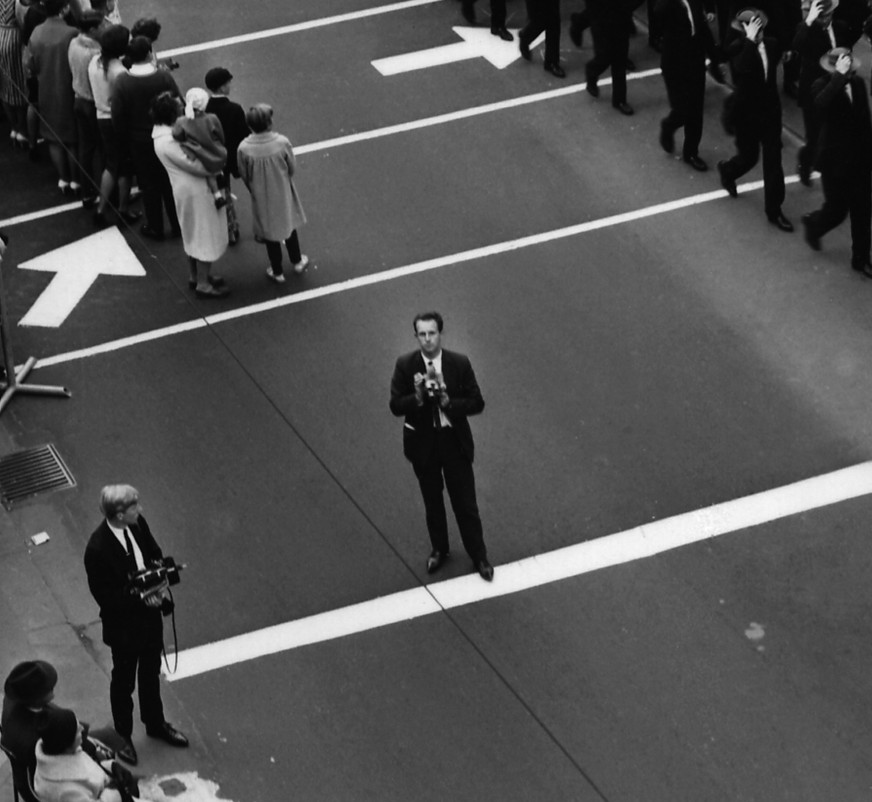
For Believing What You See: Trust and Vision from the French Revolution to Generative AI, Research Event Series, School of Art, Communication and English (SACE), University of Sydney, 10 October 2025.
In the 1870s somebody in the Australian colonies assembled 36 carte-de-visite photographs of the celebrities of the day into an album. There was nothing so unusual about that, except that along with 34 living people the album included 13 of the living dead — spirits who had crossed beyond the veil of death but still wished to participate in nineteenth century progress through the medium of photography. This album, which is in the National Gallery of Australia, was compiled at a time when established beliefs were being tested on all fronts — by new sciences, new technologies, new ideologies, and new religions. Increasingly, the battle for belief was being played out along one major democratic front: the evidence of one’s own eyes. It was the potential sensitivity of collodion and albumen emulsions to both terrestrial and supernatural light, and the potential interpenetration of corporeal and plasmic matter, that allowed spirit and human to mingle in one person’s modest album. Our compiler chose to believe what they saw in the photographs, and assembled for themselves a rich, multidimensional world that extended far beyond the colonial frontier where they lived.
 Martyn Jolly