New Canberra Museum and Gallery exhibition Lens Love explores the self, subject and environment
Sally Pryor
Canberra Times
November 30, 2013

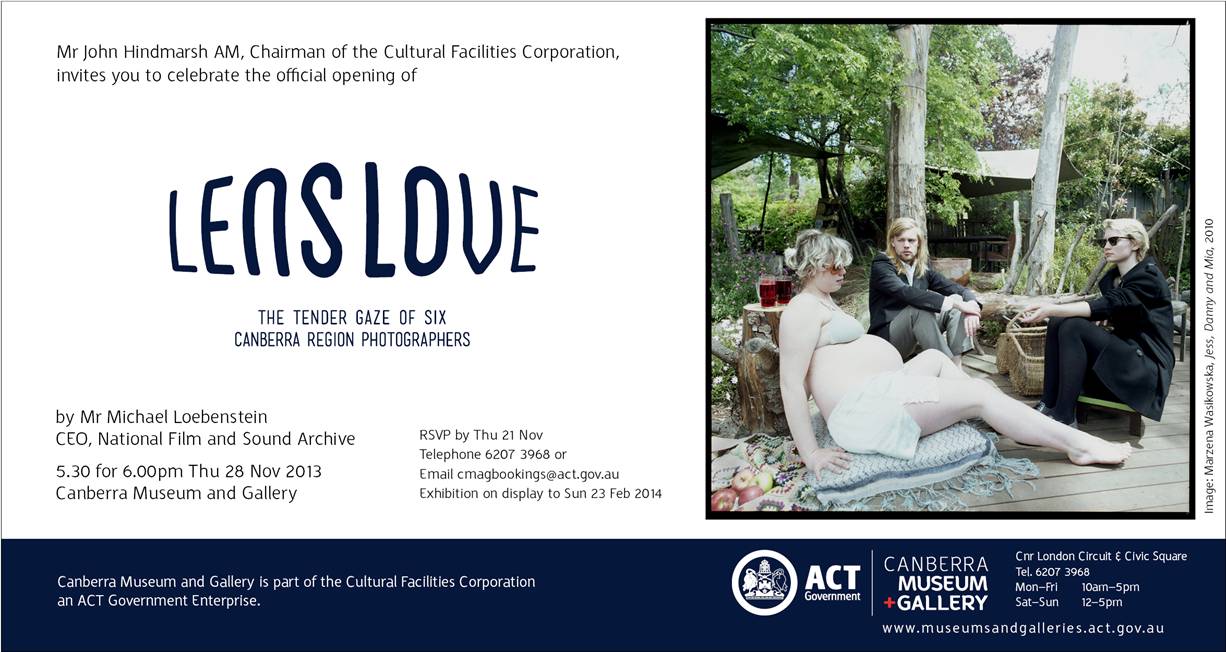
Marzena Wasikowska’s Jess, Oskar, Kai and Mia.
It’s one of the most common complaints of modern life – the increasing tendency to photograph life when you should be living it instead. Snapping images of weddings and babies and parties and soon-to-be-devoured meals, as a way of affirming life’s existence when just being there isn’t enough. And why wouldn’t we, when cameras are constantly on hand, be moved to capture every single meaningful moment?
But when photography is more than just an impulsive social interaction, the process of living through images can be much more complicated. A new exhibition at Canberra Museum and Gallery shows how six local photographers have negotiated the porous boundaries between the self, the subject and the surrounding environment.
Gallery director Shane Breynard, who curated the show, says he set out from a cerebral standpoint – photographic film theory from the 1970s and ’80s that focuses on ”the gaze” as ”a concept for that period where the infant becomes aware of themselves”.

Lee Grant, from the series Belco pride.
”They get a shock that they’re an object in the world among other objects – they’re not just a flood of sensation. So I’ve had fun using that as a bit of a thread to select and group works together,” he says.
”Indeed, it’s something that is common among these photographers, that they all have a real sensitivity to the way today, in the modern world, we live half of our lives through an awareness of ourselves in images … we kind of live across time and in the relations of how we might be seen in an image.”
The six artists he chose have ta common anthropological vision of people and their place in the world as well as distinctive preoccupations.

Denise Ferris’s The long hot summer.
Polish-born artist Marzena Wasikowska has three series of photographs in the show, and all relate to her family, including large-scale montages showing her three adult children, and their friends, spouses or children.
The images are immediately striking, and not just because of the instantly recognisable face of her middle daughter, actor Mia Wasikowska, but because of their careful, painterly composition. These are people who have grown up under their mother’s watchful, artistic eye, and their resulting lack of self-consciousness is palpable.
She also presents a study of a recent trip to Poland, her third since leaving her homeland at the age of 11, with images presented in grids that are made all the more poignant through their disconnectedness from each other.

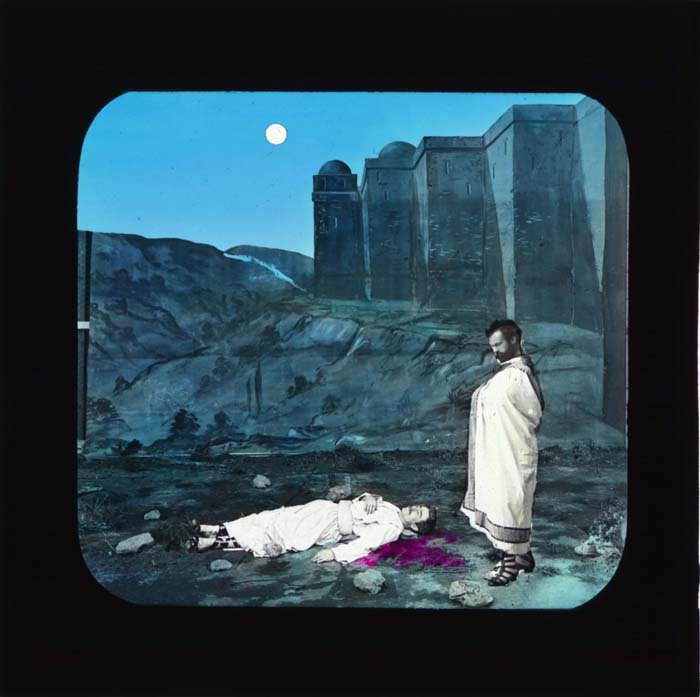
Detail from Martyn Jolly’s ACT Bushfire Memorial Images
Wasikowska’s husband, John Reid, also has works in the show, including his classic Fishman and Walking the Solar System series, both eccentric conceptual forays into the wilderness that immerse him as a subject at the mercy of the elements.
The youngest artist in the show, Lee Grant, is already known for her Belco Pride works – a series exploring her connection to the suburban Canberra of her childhood and adolescence. But her academic past as an anthropologist also shines through in the wary gaze of her subjects, from a group of teenage girls in a fast-food restaurant, to a well-dressed African family lined up in front of their house. Her Korea Project and Oriental Dinnerseries – Grant has a Korean mother – is also an examination of the refracted identity of Asians in Australia.
Head of the ANU school of art Denise Ferris presents works that are as inextricably bound up in the landscape as she is. From where she lives in the Perisher Valley, she has recorded the beauty and the fragility of the often harsh landscape of the mountains, in the midst of winter or the blaze of summer. Her images are sometimes populated with human figures, sometimes partially obscured by snow and thick clothing.
”This picks up on Lens Love, the title of the exhibition,” says Breynard. ”This is a place that Denise adores, and as she’s taking these photographs, there’s something there that she’s searching for and wants to grab and articulate. And it’s not just the landscape without people in it – there’s something about the connection and the way people use the landscape.”
Martyn Jolly has long been fascinated by archival images, and the effect created when he zeroes in on particular details, and removes the surrounding context. His series Faces of the Living Dead uses images from an archive at Cambridge University, images that are today known to be fakes – men and women caught up in the 1870s craze of ”communing” with dead relatives through photographs. The images, which include hazy presences floating around the faces of the grieving hopefuls, are cropped in for maximum and pathetic effect. Jolly also includes his series commissioned as part of the 2003 bushfire memorial – a reproduction of the columns of images he produced depicting the aftermath and recovery. He has used the same technique to crop the images close as a way of highlighting the drama and pathos.
Cathy Laudenbach is fascinated by how stories and experiences interact with particular places, leaving marks that aren’t always discernible to the naked eye.
In one series, The Beauty and the Terror, she has been inspired by the story of Daisy Bates, the Australian journalist who, in the early 1900s, retired to the Australian bush to devote herself to protecting Aboriginal people. Laudenbach includes no people in the images, but a presence is implied through shadows and objects.
”She’s divining, almost, a colonial inhabitation of this landscape,” says Breynard. ”There’s a sense in these photos of something that you can’t grasp – a story unfolding, or a mystery you can’t quite get, or a presence of a spirit.”
Like Jolly, she is also taken by notions of the supernatural, and in another series, The Familiars, she photographs rooms in which people have reported ghostly encounters.
”Today, it’s something characteristic of our time with our smartphones – we point at something and say, ‘That’s a good photo’, and we take it and file it away, and then we look at it again to connect with a time,” says Breynard. ”But these artists, I think, really slow down that time. There’s awkwardness in that, it’s their own searching … They slow you down, and they connect you with the mystery and ineffability of stuff you think you know.”
■ Lens Love, at Canberra Museum and Gallery, runs until February 23.
Read more: http://www.canberratimes.com.au/entertainment/new-canberra-museum-and-gallery-exhibition-lens-love-explores-the-self-subject-and-environment-20131129-2yh6m.html#ixzz2mD9WrG5n








 Martyn Jolly