Hopeless Romantics

Faces of the Living Dead on silk at ANU School of Art Foyer

Faces of the Living Dead on silk at ANU School of Art Foyer

Faces of the Living Dead on Silk

Faces of the Living Dead on Silk

Faces of the Living Dead on Silk

Faces of the Living Dead on Silk

Ursula Frederick asked me to be in a show to accompany an ANU conference on love. I resurrected some of my Ada Deane spirit photographs which I had printed on silk some years ago, and draped then onto model hands I brought from Lincraft. This is what I wrote for the catalogeue:

 The 1920s was a big decade for love, loss and yearning, as a host of loved ones were lost to cataclysmic events like the First World War and the flu epidemic. The 1920s was also a big decade for new media, as amateur photography became pervasive and electronic media like the radio connected people across vast distances. In this climate gnawing absences could often become ghostly presences in certain over active imaginations, and Spiritualism was in heyday.

In the 1920s the char-woman and pedigree dog breeder Ada Emma Deane conducted photographic séances at London’s Society for Psychical Research. People yearning to reconnect with their lost loved ones once more would send in a box of photographic plates which she would magnetize to the psychic spectrum by placing the box beneath her blouse against her chest. When they arrived for the séance the plates would be further sensitized as they placed their hands on the box, and she placed her hands on their’s. They would then sit on a wicker-work settee and, as Ada fussed around with her rickety old camera, think of the face they longed to see once more. Later, in the alchemical cave of Ada’s darkroom they would slip the plate into the developer and watch as their face appeared in the glass, to be followed shortly by another face, an ‘extra’ returned from beyond the grave.

I’ve had a long-standing interest in spirit photographs, which I see as simply an extreme amplification of the way all of us use portrait photographs of our loved ones. I’ve mainly written about them, but occasionally I have experimented with them too, trying to get right into the slippery, mucousy, labile, placental, ectoplasmic, ephemeral secretions of the photograph.  These details from Ada’s spirit photographs are printed on expensive wedding dress silk which I brought from a shop in Sydney. It’s designed to shimmer as it flows around the body of the bride.

Ursula has a great catalogue too.

Shaping Canberra, 2013

The Citizens of Canberra in Shaping Canberra, ANU School of Art Gallery 2013

The Citizens of Canberra in Shaping Canberra, ANU School of Art Gallery 2013

The Citizens of Canberra in Shaping Canberra, ANU School of Art Gallery 2013

The Citizens of Canberra in Shaping Canberra, ANU School of Art Gallery 2013

The Citizens of Canberra in Shaping Canberra, ANU School of Art Gallery 2013

The Citizens of Canberra in Shaping Canberra, ANU School of Art Gallery 2013

This year it’s been great to be invited to be in shows: by Cathy Laudenbauch and Patsy Payne for a show at the Front in Canberra called Undertone, and by Mary Hutchinson and Ruth Hingston for a show called Shaping Canberra at the ANU School of Art Gallery. The Shaping Canberra show went along with a conference also called Shaping Canberra, at which I gave a paper called Art from Archives, the paper’s in the writing part of this blog, at the end I talk about the work I did for the show thus:

“I’ll finish by talking a little bit about a small installation I have in the show which is opening tonight. In my head I divide the history of Canberra into two periods. There is the utopian period from its foundation to self-government, where Canberra was used by the Commonwealth Government as a model of an ideal Australian polity, and a kind of ideal template for a future Australian city. During this utopian period, which in my imagination peaks in the 1960s,  Canberra was tolerated as a noble experiment by most Australians. Then there is the distopian period from self-government till now, where Canberra is regarded by Australians and governments alike as parasitical, perverse, pretentious, indulgent and ‘out of touch’. In both these Canberras there are no actual people. In the distopian Canberra of today the people who live here are despised as a vitiated, degenerated, foppish sub-category of the real Australian. They are people of literally no account. As Clive Palmer said last week: ‘In Canberra they have the best roads, but nobody to drive on them’. However the utopian Canberra was also devoid of actual people, the few people that appear in the photographs are national cyphers, actors in a political fantasy, like the schematic figures that occur in architectural drawings.

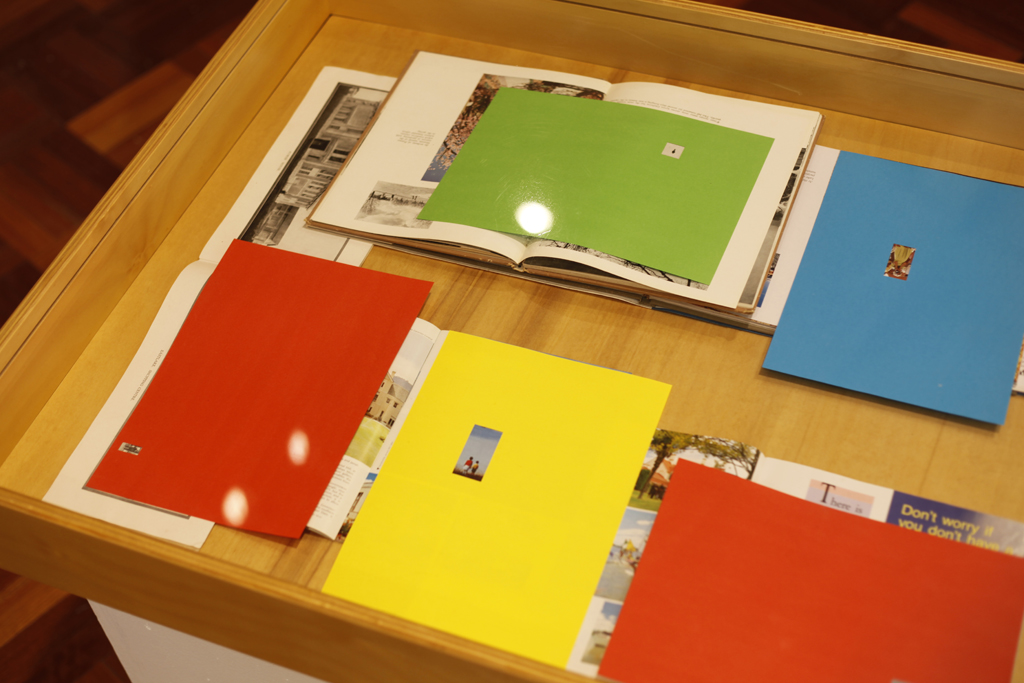
 So I’ve collected tourist brochures and NCDC publications from the utopian period of Canberra, making my own archive. Using an ‘Office Works’ aesthetic I have covered up the generic photographs with coloured sheets of A4 paper, obscuring the various civic vistas of national potentiality but revealing hapless pedestrians or passers by accidentally caught in the photographer’s camera, thereby pulling them out of their unwitting role as national cyphers, an perhaps returning to them their individuality as people.

 My work is cool and ironic, it is a million miles from the fervent spiritual juju of indigenous artists. It is affectionate, rather than interrogative. But nonetheless I think that on some level we are all engaged with the same occultish power of the archive.”

If you were at the conference you can read the other papers at:

http://hrc.anu.edu.au/confidential-papers

Magic Lanterns

I’ve purchased two magic lanterns and some nineteenth century slipping slides, lever slides and chromatropes, as well as a large collection of nineteenth century life model slides, from an auction. I’ve got the two lanterns working with LED floodlights that produce no heat or UV light. I’m having a fantastic time playing with these wonderful things. But as practice-led research I have discovered that it is extraordinarily difficult to change and focus the slides,  and manipulate and animate  the slides smoothly. Lanternists in the nineteenth century would have needed to do that as well as keep their patter going in a large hall without amplification, regulate the gas supply to their limelight, and control often unruly audiences. I’m looking forward to spending some time with Trove because I want to read the newspaper reviews of these performances, when Australian audiences were training themselves to sit together in the dark. Below is some of the equipment I’m working with, and a link to a seminar I organised last year.

The Projected Image Heritage of Australia and New Zealand

My 'iron duke' lecture hall lantern

My ‘iron duke’ lecture hall lantern

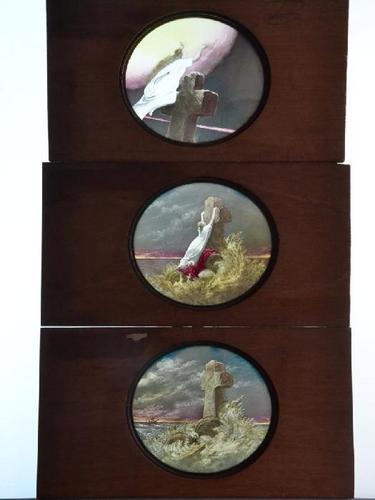
Rock of Ages hymn slides, as projected outdoors by the Salvation Army in 1894 in Melbourne

Rock of Ages hymn slides, as projected outdoors by the Salvation Army in 1894 in Melbourne

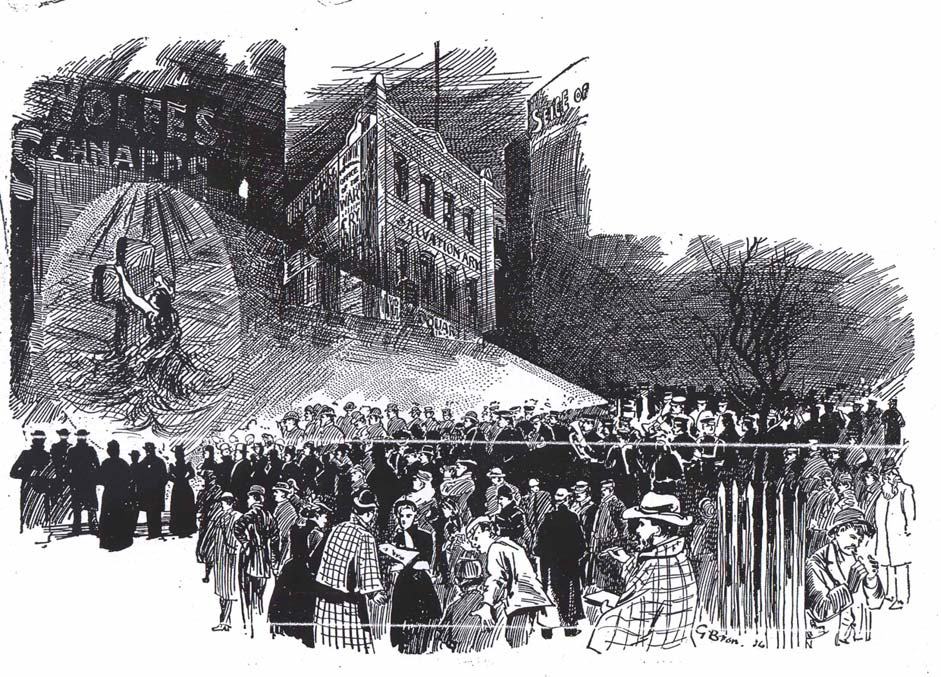
Salvation Army outdoor projection of Rock of Ages hymn slide on the side of a hotel, Melbourne 1894

Salvation Army outdoor projection of Rock of Ages hymn slide on the side of a hotel, Melbourne 1894

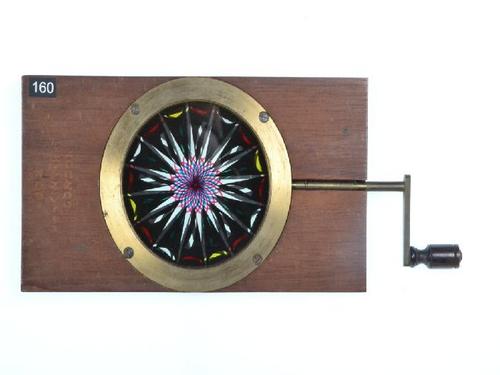
A chromatrope

A chromatrope

A chromatrope

A chromatrope

A slipping slide, moving the glass slightly produces a moire patterns from the scratched paint

A slipping slide, moving the glass slightly produces a moire patterns from the scratched paint

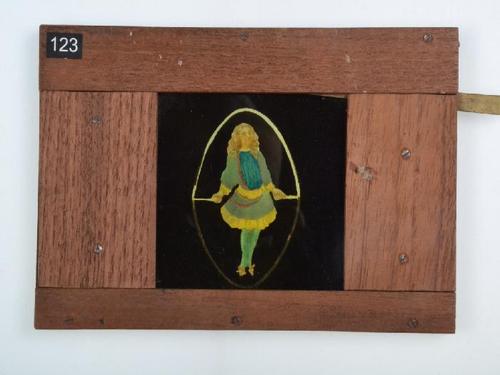
Skipping girl slide

Skipping girl slide

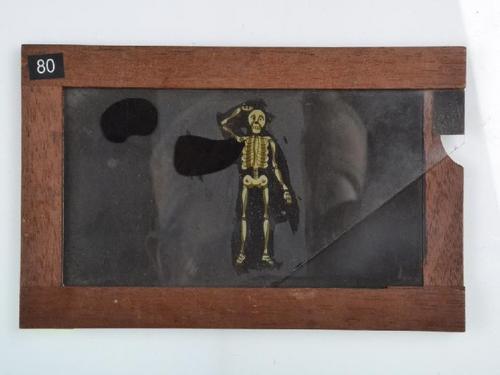
The skeleton removes its head

The skeleton removes its head

My 'parlour' lantern

My ‘parlour’ lantern

Shaping Canberra

This year it’s been great to be invited to be in shows: by Cathy Laudenbauch and Patsy Payne for a show at the Front in Canberra called Undertone, and by Mary Hutchinson and Ruth Hingston for a show called Shaping Canberra at the ANU School of Art Gallery. The Shaping Canberra show went along with a conference also called Shaping Canberra, at which I gave a paper called Art from Archives, the paper’s in the writing part of this blog, at the end I talk about the work I did for the show thus:

I’ll finish by talking a little bit about a small installation I have in the show which is opening tonight. In my head I divide the history of Canberra into two periods. There is the utopian period from its foundation to self-government, where Canberra was used by the Commonwealth Government as a model of an ideal Australian polity, and a kind of ideal template for a future Australian city. During this utopian period, which in my imagination peaks in the 1960s,  Canberra was tolerated as a noble experiment by most Australians. Then there is the distopian period from self-government till now, where Canberra is regarded by Australians and governments alike as parasitical, perverse, pretentious, indulgent and ‘out of touch’. In both these Canberras there are no actual people. In the distopian Canberra of today the people who live here are despised as a vitiated, degenerated, foppish sub-category of the real Australian. They are people of literally no account. As Clive Palmer said last week: ‘In Canberra they have the best roads, but nobody to drive on them’. However the utopian Canberra was also devoid of actual people, the few people that appear in the photographs are national cyphers, actors in a political fantasy, like the schematic figures that occur in architectural drawings.

So I’ve collected tourist brochures and NCDC publications from the utopian period of Canberra, making my own archive. Using an ‘Office Works’ aesthetic I have covered up the generic photographs with coloured sheets of A4 paper, obscuring the various civic vistas of national potentiality but revealing hapless pedestrians or passers by accidentally caught in the photographer’s camera, thereby pulling them out of their unwitting role as national cyphers, an perhaps returning to them their individuality as people.


My work is cool and ironic, it is a million miles from the fervent spiritual juju of indigenous artists. It is affectionate, rather than interrogative. But nonetheless I think that on some level we are all engaged with the same occultish power of the archive.