Looking at The Photograph and Australia exhibition at the Art Gallery of New South Wales

This important show rejects conventional narratives and thematics, as well as standard modes of looking at photography as they have developed in art museums recently. Instead of leaning back and taking it all in, we have to bend down and peer closely. The viewer is given no quarter, and the installation brooks no lapses of attention. Visitors must work hard and long to divine their own meaning from either sepia smudges in tiny cartes de visite, or the fugitive sheen of daguerreotypes. There is little help from the labels which for the most part eschew the conventional narrativising comforts of extended captions (Yes, I know, we are meant to buy the book) and provide only the bare museal bones on which the viewer is required to build their own understanding.

Because the show is committed overwhelmingly to the auratic power of the photograph-object, and many of its objects have faded and were in any case initially scaled to domestic or bureaucratic situations rather than museum consumption, it is up to the dramaturgy of the hang to carry the show for visitors. Its emotional pitch is set by the doleful procession of aborigines who accompany us through the galleries to its very end with Kerry’s kitschly racist postcards. In contrast the panoramas of Vaniman, which are also threaded through the show, ironically play against them like a cheerfully optimistic chorus.

The architectural engine room of the show is the installation in the central void. Here the audacious curatorial strategy of using certain contemporary works to dramatically set off the historical works is most dramatically played out. In this space we can’t really look at the Moffats and the Maynards hanging above us, they are too high. As we bend ourselves to work over the vitrines, they look down at us like the crazy ancestral portraits in a haunted mansion (thanks Anne). This same reflective strategy works very well with the Ferrans in the Beattie room, where they spookily re-set the tone of the whole space. But the Laing work in the twentieth century critique section is not good enough to activate its space. The magnificent Ford installation has lot of work to do as it sits across from the astronomical photographs — two constellations of time, I guess — but this curatorial stroke also works. The vintage backlit X-rays placed between them — including the old skeletal hand with a wedding ring memento mori — are a treat, and maybe even make the Gills redundant?

There are many other spine tingles to reward our labour; while some icons, such as say Cazneaux’s Spirit of Endurance, are deftly detourned with some new surprising Cazneaux images. But sometime other image clusters, such as say the one with the two Poignants and the Bishop aren’t given quite enough curatorial spin, and perhaps allow us to lose the concentration which the show makes essential.

The show is committed to quantity, which it sees as the essence of the medium, thus we are not given the usual serving of one Goodman Daguerreotype, but the whole extended family of them. The auratic power of the patinated print is the show’s obsession, but it is wonderful to see the X-rays and a real, live, Holterman negative. I wish there had been other occasional ‘break out’ spaces to allow us to exercise other scopic regimes than just the ‘intense peer’. Some printed pages to touch, or some stereo viewers to look through, maybe?

Because of the show’s persistent close-up intensity, the sudden transition at the end to the projection of Pound’s computer installation, which certainly has the wit and elan we would expect, is too sudden. Although, flanking a programming work based on Google with a cascade of carte’s and a line of postcards makes its point! (For me Pound’s real punchline actually came in the gift shop, have a look)

There I was, going through the final bank of cartes, peering at what felt like was my gazillionth albumen surface. What was it? It was barely discernable even as an image. The label wasn’t much help, it just said J Davis, Sydney, 1860s to 1890s. So this pale smudge could have been taken any time during a thirty-year period. I think, but I’m still not sure, that it was somebody’s prize fruit tree, which they were obviously so proud of they made a carte of it. It had almost disappeared but there it was still, in the AGNSW, demanding to be seen.

The Photograph and Australia, AGNSW
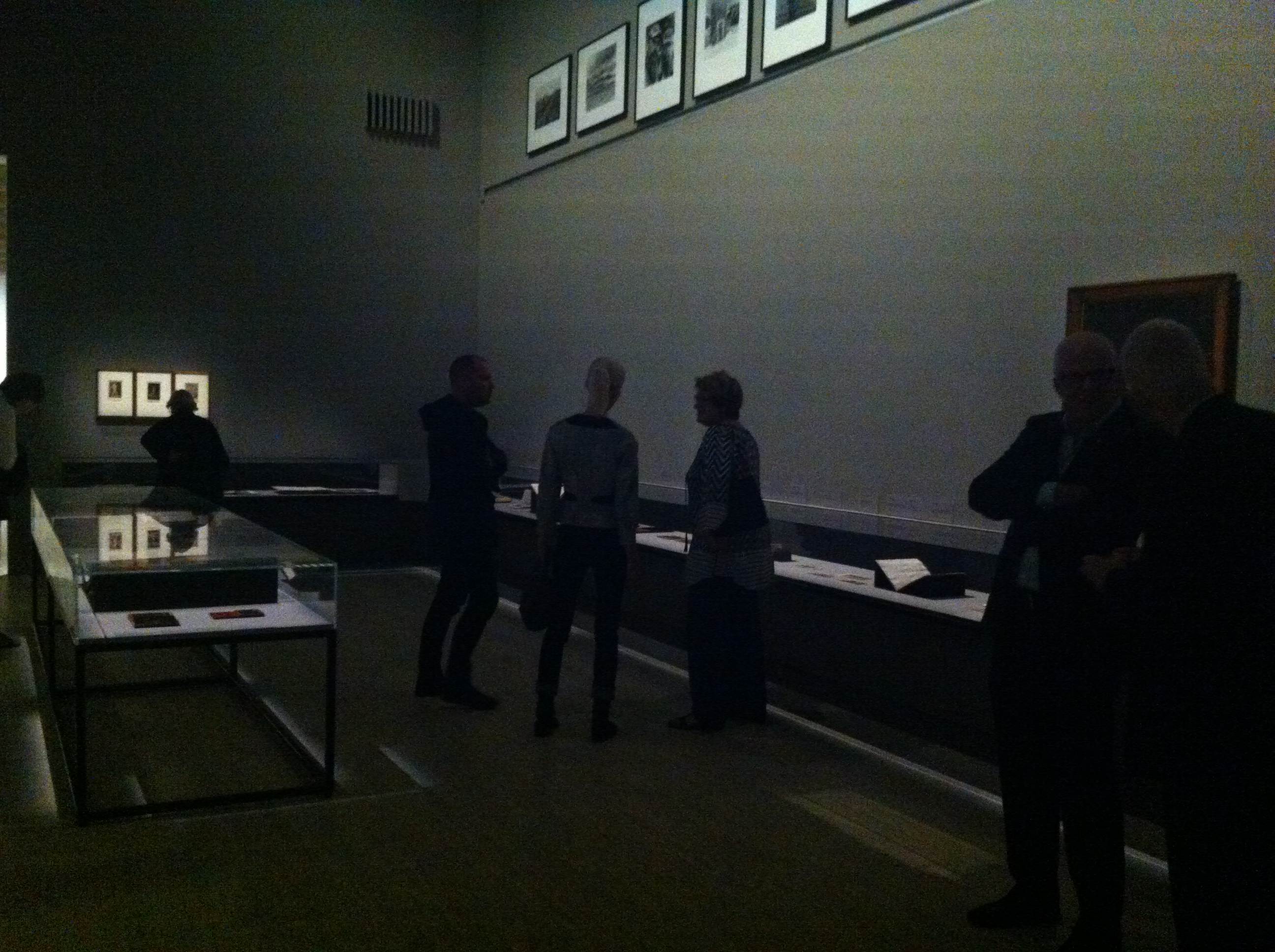
The Photograph and Australia, AGNSW

The Photograph and Australia, AGNSW
The Photograph and Australia, AGNSW


Rolfoclasm Continues

The Variety Club mural before the Rolfoclasm

The Variety Club mural before the Rolfoclasm

Rolfoclasm continues. Not only has he now been stripped of his Australian Honours, but he’s been painted out of the Variety mural at Victoria Markets and replaced with Stuart Wagstaff! But, hang on a minute, wasn’t Wagstaff the face of Benson and Hedges for decades? Didn’t the 116 ciggie ads — ‘when only the best will do’ —  which he knowingly made right up until the day cigarette advertising was finally banned in 1976 (then remaining on the B & H payroll until 1993) lead to the deaths of thousands of innocent Aussies? This shows the moral ambiguities which await any ‘clast when they self righteously take upon themselves the power of ‘clasm.

My Enlighten Canberra Projection

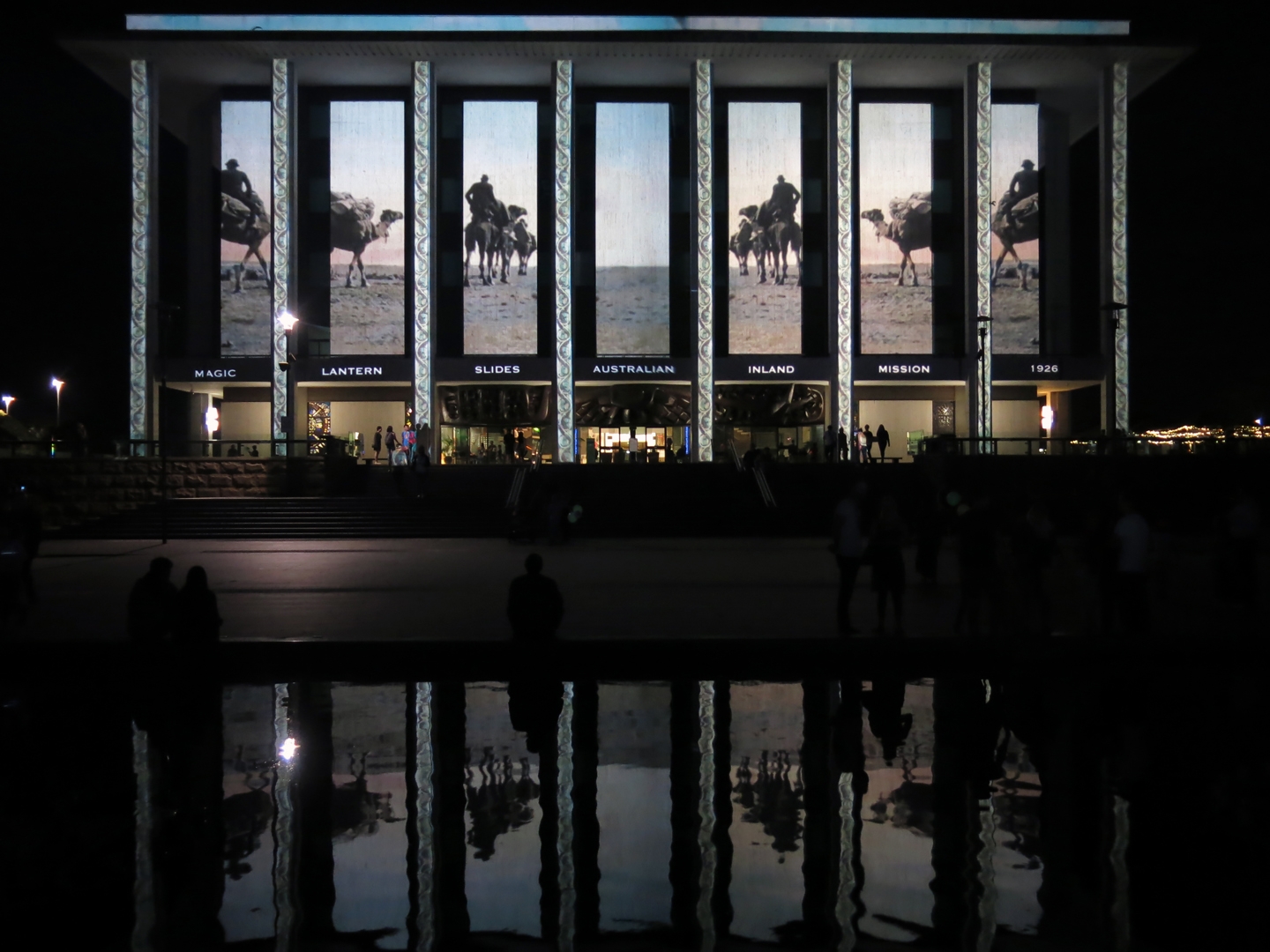
Martyn Jolly NLA projection for Enlighten Canberra

Martyn Jolly NLA projection for Enlighten Canberra

My ANU colleagues Lucien Leon, Kit Devine, Marcia Lochhead, Zoe Tulip, and myself, each designed an Enlighten Canberra projection for the National Library of Australia. Mine was derived from one of the hundreds of beautiful hand tinted magic lantern slides in the Library.

The explanatory text: The Reverend John Flynn was Superintendent of the Australian Inland Mission for almost forty years from 1912. A keen photographer, Flynn used magic lantern slides in the lectures he gave to publicise the work of the mission in providing medical, nursing and pastoral services to the people of the inland. The Library now holds a large collection of these beautifully hand-tinted images. The one used for this projection was taken in 1926 by a ‘Miss Colley’ and documents the Oodnadatta to Alice Springs Mail. Presumably it was used by Flynn to illustrate the vast distances  of the inland.

Braddon, Bloody Braddon

From the program to the

You Are Here Festival

March 18-22 2015

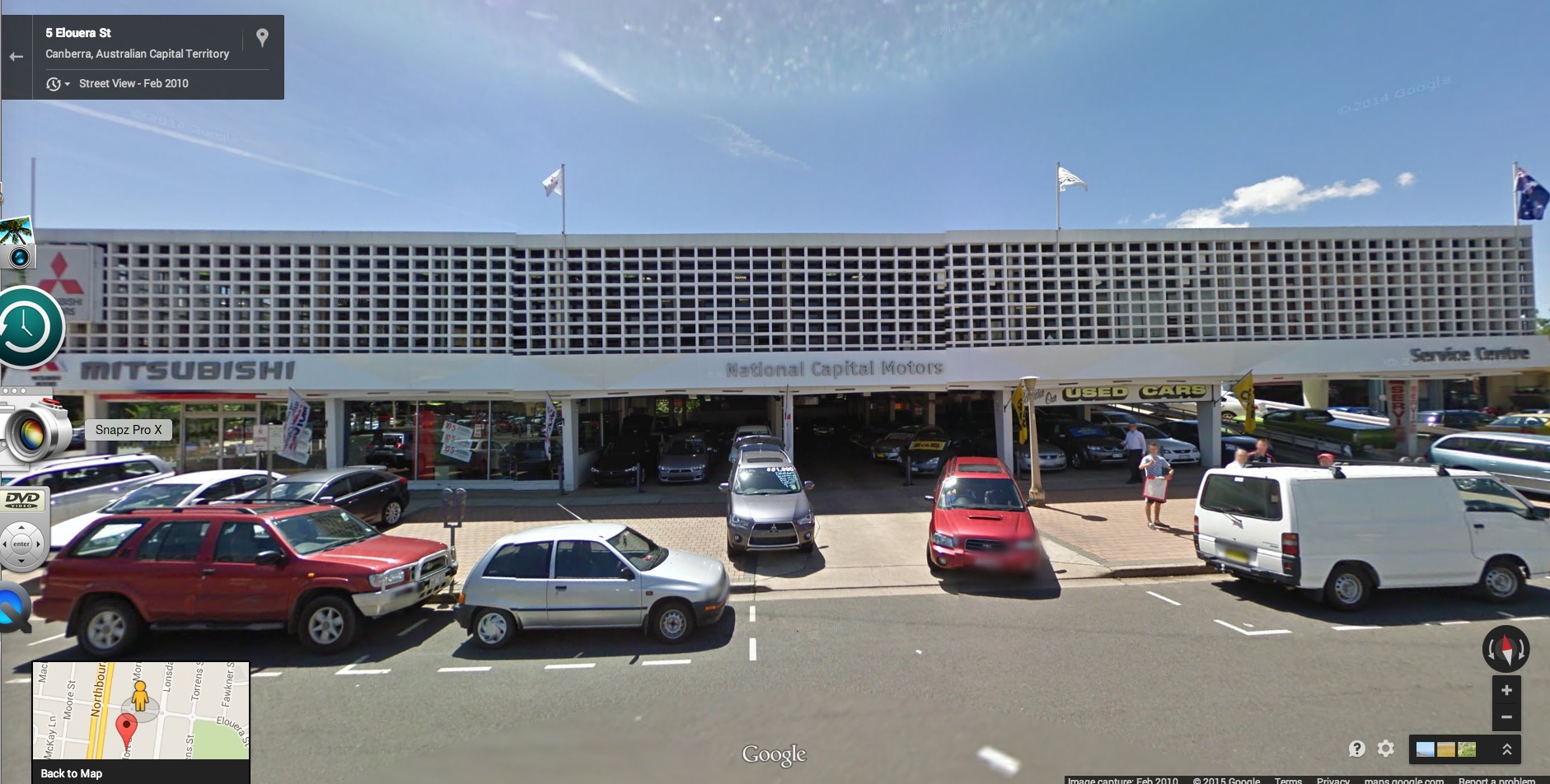
National Capital Motors from Google Street View

National Capital Motors from Google Street View

Braddon

The world snorted with derision when, for the second year in a row, the OECD nominated Canberra as the world’s best city. Critics pointed out that, although it had come out with the biggest numbers in the OECD’s nine ‘wellbeing indicators’, which included education, jobs, incomes and environment, this did not make for a great city. In fact, they chortled, Canberra is a terrible city. In The Guardian’s words: ‘Canberra is a deathly place.  It is a city conceived as a monument to the roundabout and the retail park, a bleak and relentless landscape of axial boulevards and manicured verges, dotted with puffed-up state buildings and gigantic shopping sheds. It is what a city looks like when it is left to politicians to plan.’ None of that is wrong (the ‘gigantic shopping sheds’ bit is particularly right). But it is very much an attenuated view from lofty London that begs many questions for those of us who are actually making a go of living here. For instance, maybe its monumental conception — Griffin’s grand design for utopian civic virtues — gives our city its brittly surreal, hyperreally heterotopic character for which many of us have developed a cool, wry affection. And maybe some of us like the regular irruptions into our day-to-day travels of raw bush and depthless sky, afforded by the skeletal nature of the relentless axial boulevards. And those axes have also begun to shelter at their fulcrums some fragile urban micro-climates which have slowly been developing over the years.

Since the 1960s, coincidentally Canberra’s heyday, urban discourse has shifted from the macro of the master plan to the micro of the precinct —the local area dense with textures, memories and experiences. Since the 1960s, across the world and without exception, many neighbourhoods of poverty or industry have been remade as waves of gentrification have swept over them. Artists have been the shock troops, reinforced by designers and architects, and followed by developers and trendies in a pattern as familiar and repeated as the tides. For fifty years urbanists have become adept at sniffing out the fluctuating nuances of the ‘local’ as waves of gentrification sweep back and forth. Antonioni’s 1966 masterpiece Blow Up, set in swinging London, is not only a film about the limits of knowledge in photography, it is also a film about the ever-transforming psycho-geographies of the postwar city. In his restless need to have everything he sees, the photographer visits a quiet nondescript London street to see a rundown junk shop he wants to buy. As soon as he notices two gay men incongruously walking a poodle there he knows, and the audience knows, that the local area’s character is already changing, and he must snap up the shop quickly. In Blow Up nothing is stable and nothing, not even the city, can ever completely becomes as it seems, before it must become something else. This is now the state for every city in the world, even Canberra.

For instance, ranged around the urban doughnut-hole of Civic are separated sites of local regeneration such as New Acton, Childers Street and Braddon. Of these perhaps only the transformation which Braddon is currently undergoing is intimately and intricately embedded in its past, however brief and prosaic that past may be. Braddon is basically only three parallel streets, and its car yards, hardware stores, panel beaters, takeaways and camping shops are only gradually giving way to coffee shops, restaurants, boutiques, bike shops and apartments. On their brief visit to Canberra the New York Times was kinder than The Guardian, identifying Braddon as Canberra’s ‘decidedly hipster underbelly’.

Pioneers such as the Helen Maxwell Gallery, once upstairs on Mort Street, predicted this urban renaissance many years ago, but couldn’t survive long enough to benefit from it; and some of the temporary pop-ups (who for a few months kept real estate spots warm before the temporary fencing went up around them) such as The Chop Shop, which was briefly located down an alley in Lonsdale Street, recognized past usages in their names. This rich and dense texture was just what sophisticated urbanists want, and is certainly what Canberra needs, probably more so than all the other ‘normal’ cities on the planet, so who am I to quibble?

Only to wish that because Canberra is different, there is the utmost delicacy as Braddon continues its inexorable makeover. Of course delicate urban renewal is what everyone wants, not least the developers themselves who love underbellies just like the rest of us, and for whom creative grunge has an intangible commercial value if handled correctly. But when it comes to the bottom line of the balance sheet, where income has to be plotted against expenditure down to the last percentile point over each individual square metre, the delicate presence of the past, or the tenuous tenancy of the under resourced, sometimes still lose out.

For instance Braddon has always been a car precinct (just as Canberra has always been a car city). From 1920 it was the site of Canberra Garage Limited, servicing the city’s fleet; and up until just a few years ago rev heads would spend their Saturday nights cruising up and down past the car yards, doing the circuit by languidly swinging round the roundabouts at Lonsdale and Torrens Streets; every now again pulling into the Caltex near the Mandalay at Girrawheen Street to pop their hoods for the admiring gazes of their mates; sometimes even attempting a burnout at the top of Lonsdale Street. If they ever ventured back to Braddon now the only circling they would be doing would be looking for a park.

One of the handsomest facades in Braddon was the delicate, white, open brickwork curtain that surrounded National Capital Motors on the corner of Mort and Elouera streets (perhaps the original site of Canberra Garage Limited?). But that piece of delightful architectural texture was flicked over like a house of cards to be replaced by a building of depressing, generic nastiness, with less architectural charm than the Centrelink office around the corner. All of the acres of recycled, undressed timber cladding, Dynabolted to the newly poured concrete walls of Braddon, can’t replace the authenticity of that lost texture. The only ghost I can find now of the facade is on Google Street View. The Google car had driven by National Capital Motors in 2010 and, thankfully, hasn’t been back to Braddon since. When it eventually does come back it will find quite a bit changed, but will implacably wipe away all the old ghosts with one sweep of its robotic camera.

In the meantime the de-Fyshwicking of Braddon continues, and for the pedestrian the mingling smells of gasoline and grease are regularly displaced by doughy, oily, blasts of hot air from each successive bistro kitchen’s exhaust. The pop-ups have popped off, and replacement aluminum and glass apartments have been cad-cammed into instantaneous existence. Street shop fronts have become enclosed retail experiences, and the artists left walking outside on the streets of Canberra’s erstwhile underbelly are beginning to feel the backs of their necks prickling as they are distantly surveilled by the area’s new residents from their be-Webered fifth-floor balconies.

These changes to Braddon are not just inevitable, they will probably end up being, on balance, ultimately good for Canberra too. They are nearly identical to the changes in a thousand similar inner city neighbourhoods around the world. But only nearly identical, not completely identical, because Canberra is different, Canberra, as we are frequently reminded by the rest of the world, is a special case. This makes any more than an absolutely necessary lack of delicacy in the ongoing gentrification of Braddon especially tragic, not that there will be of course.

Martyn Jolly (Thanks to Erin Hinton and Ursula Frederick for the tip-offs)

Oliver Wainwright, ‘50 years of gentrification: will all our cities turn into ‘deathly’ Canberra?’, The Guardian, 13 December, 2014

Emma Pearse, ‘36 Hours in Canberra, Australia’, New York Times, 5 June 2014

National Capital Motors from Google Street View

National Capital Motors from Google Street View

Thinking the Photobook Forum — Photobook Melbourne

I’m taking part in the forum Thinking the Photobook, as part of Photobook Melbourne. It’s on at ‘The Baron Said’, 83 Kerr Street Fitzroy, 5.30pm Sunday 15 February. What will I be talking about?

Question: How many Australian photobooks are in Parr and Badger’s massive, and massively selling, three volume encyclopaedia of almost 1000 photobooks?

Answer: Two only that I can find (Sleeth and Parke)

Question: Why are there so few?

Answer: Good question.

Beforehand Lee Grant is launching her new China book at the CCP, just up the road, at 3pm.

Uncanny Bracket Creep at In The Flesh, National Portrait Gallery

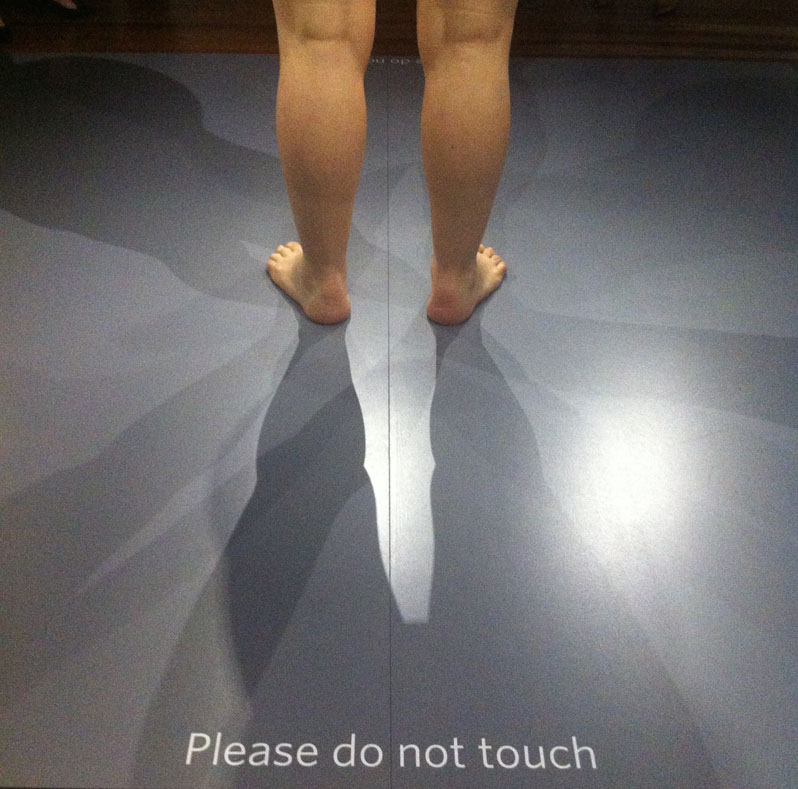
Did I experience ‘uncanny bracket creep’ last night at the National Portrait Gallery, at In the Flesh? I remember the little intake of breath I took ten or so years ago when I saw my first Ron Mueck or Patricia Piccinini sculpture, or the little retinal undulation at my first glimpse of a figure flipping for a few milliseconds between the real and the unreal. But seeing the same sculptures again now, palisaded  behind their PLEASE DO NOT TOUCH SIGNS, and theatrically lit like David Jones manikins, all I saw was plastic. Was I like an avid cinema goer in the 1950s who had viscerally  thrilled at King Kong in 1930s, but seeing him again at the drive-in was able to finally laugh off his plasticine jerks? Had the general advances of the technologies of verisimilitude retrained my sensorium, and rehoned my perceptual scepticism, leaving these sculptures behind along with all the other uncanny automata going back to the eighteenth century?

In the Flesh, National Portrait Gallery

In the Flesh, National Portrait Gallery

Profiled in United States Magic Lantern Society News, October 2014

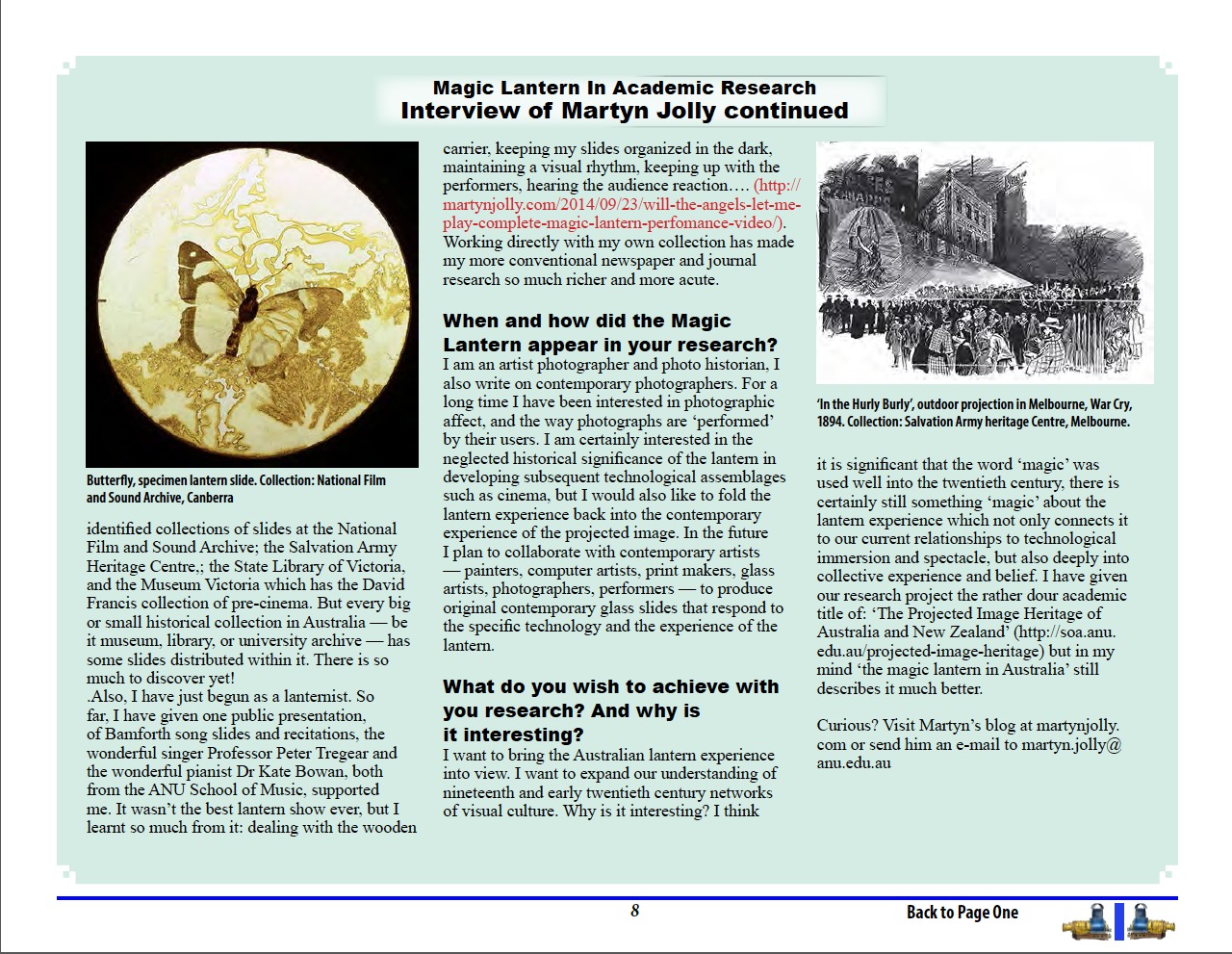
Sarah Dellmann, from the Department of Media and Culture Studies, Utrecht University, kindly profiled my research in the newsletter of the Magic Lantern Society of the United Stats and Canada. The relevant pages are below. The newsletters of both the UK and US societies are always chock full of interesting stuff, and as Sarah demonstrates connect enthusiasts and collectors and researchers.

Magic Lantern Society News, October 2014

Magic Lantern Society News, October 2014

Magic Lantern Society News, October 2014

Magic Lantern Society News, October 2014

Magic Lantern Society Newsletter

Rowan Conroy, John Ruskin, climate change, photography

Storm Clouds of the Twenty-First Century, my essay for:

Rowan Conroy: Natura Naturans

Barometer Gallery, 13 Gurner Steet Paddington

27th September – 11th October  2014

Storm Clouds of the Twenty-First Century

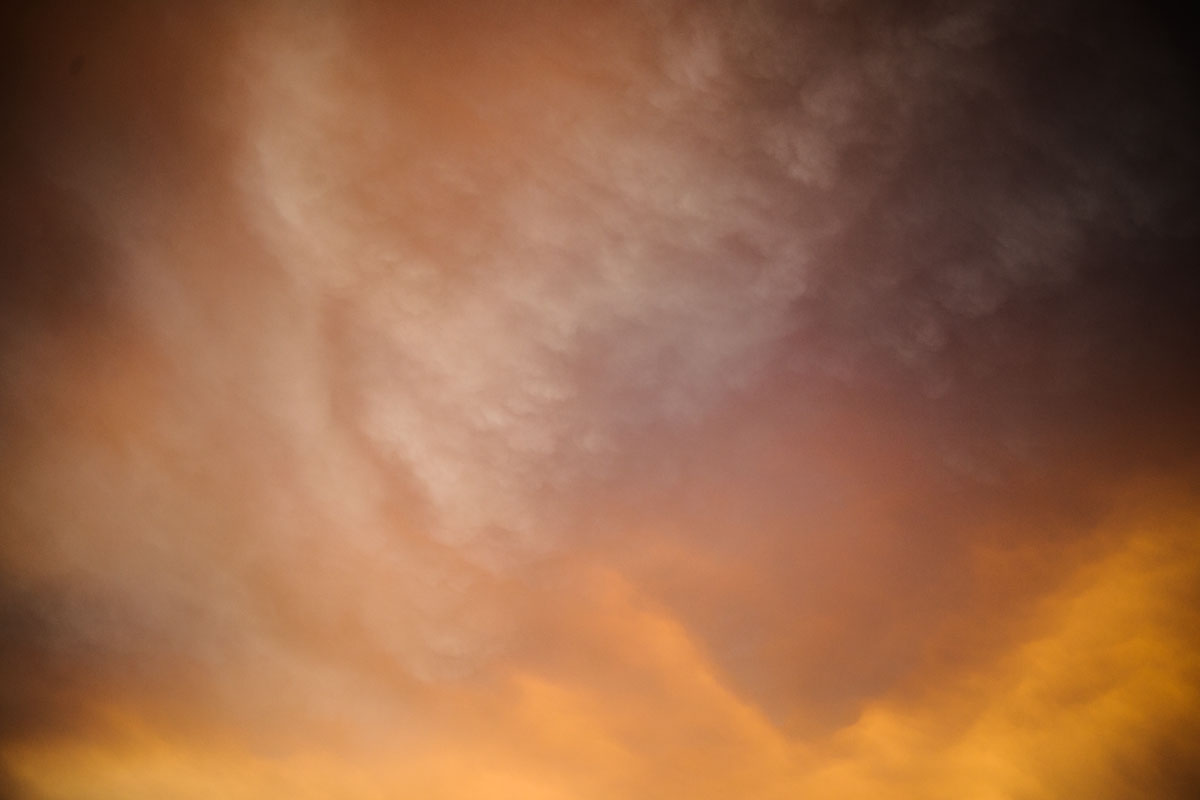
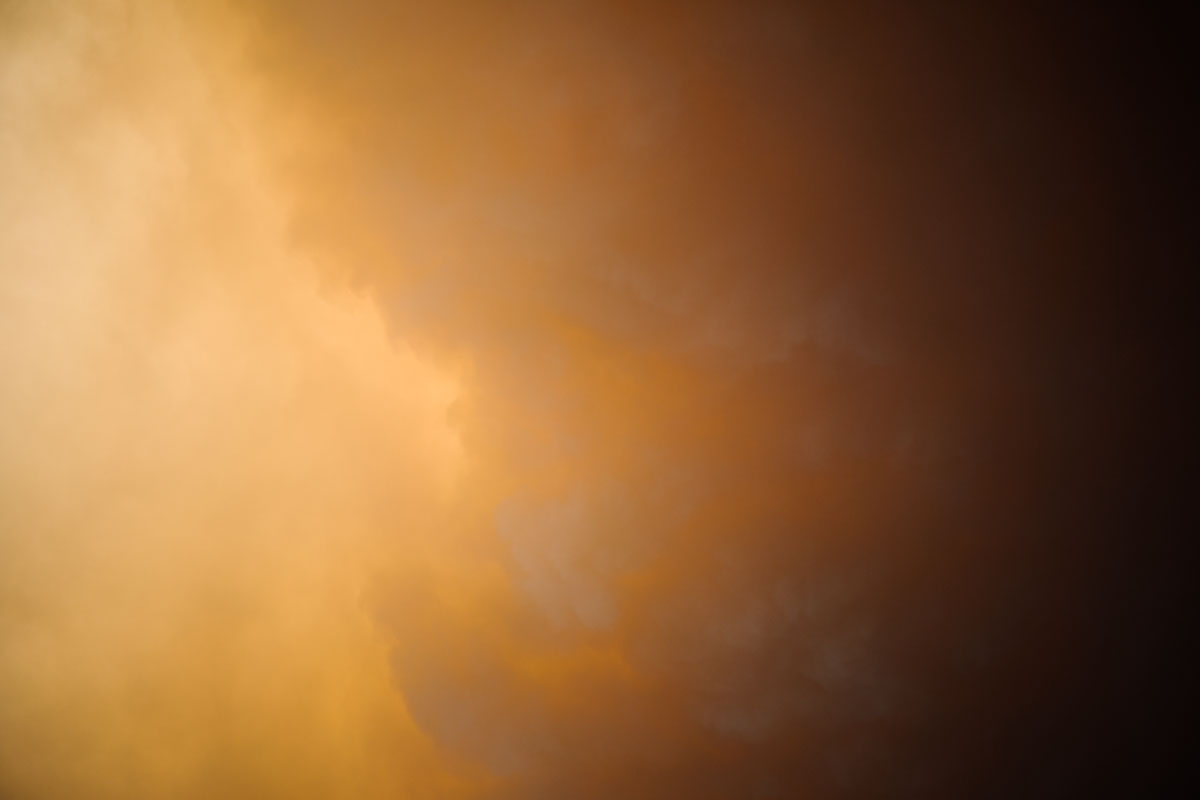
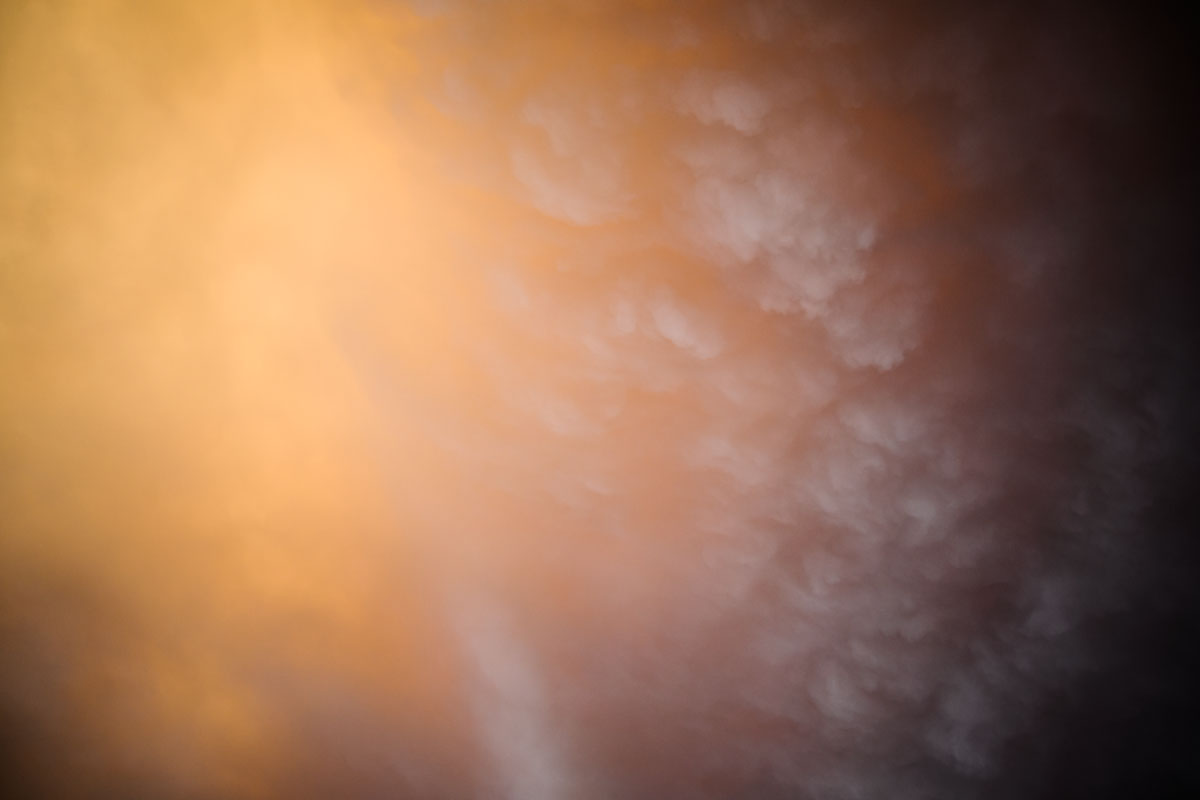
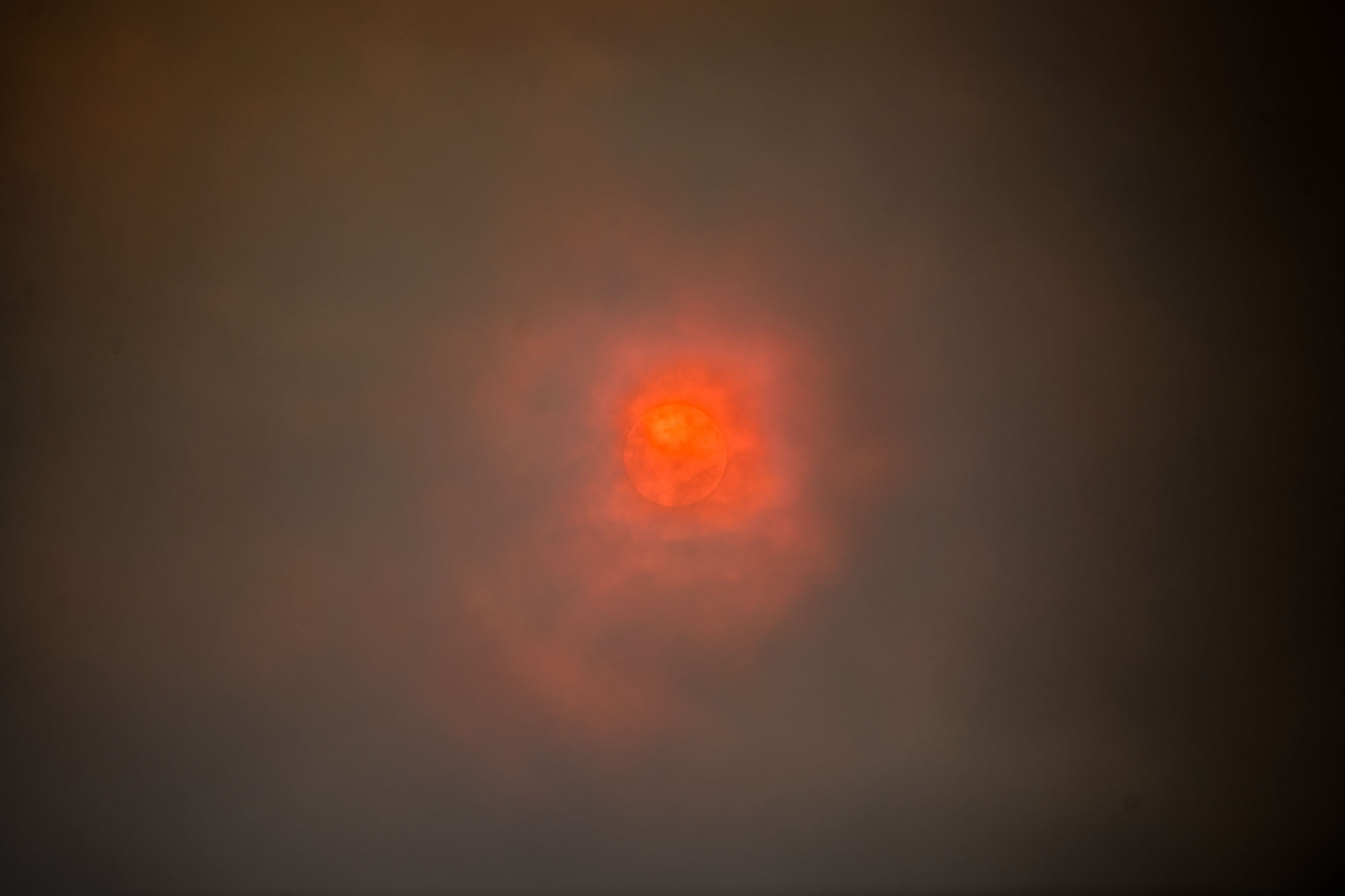
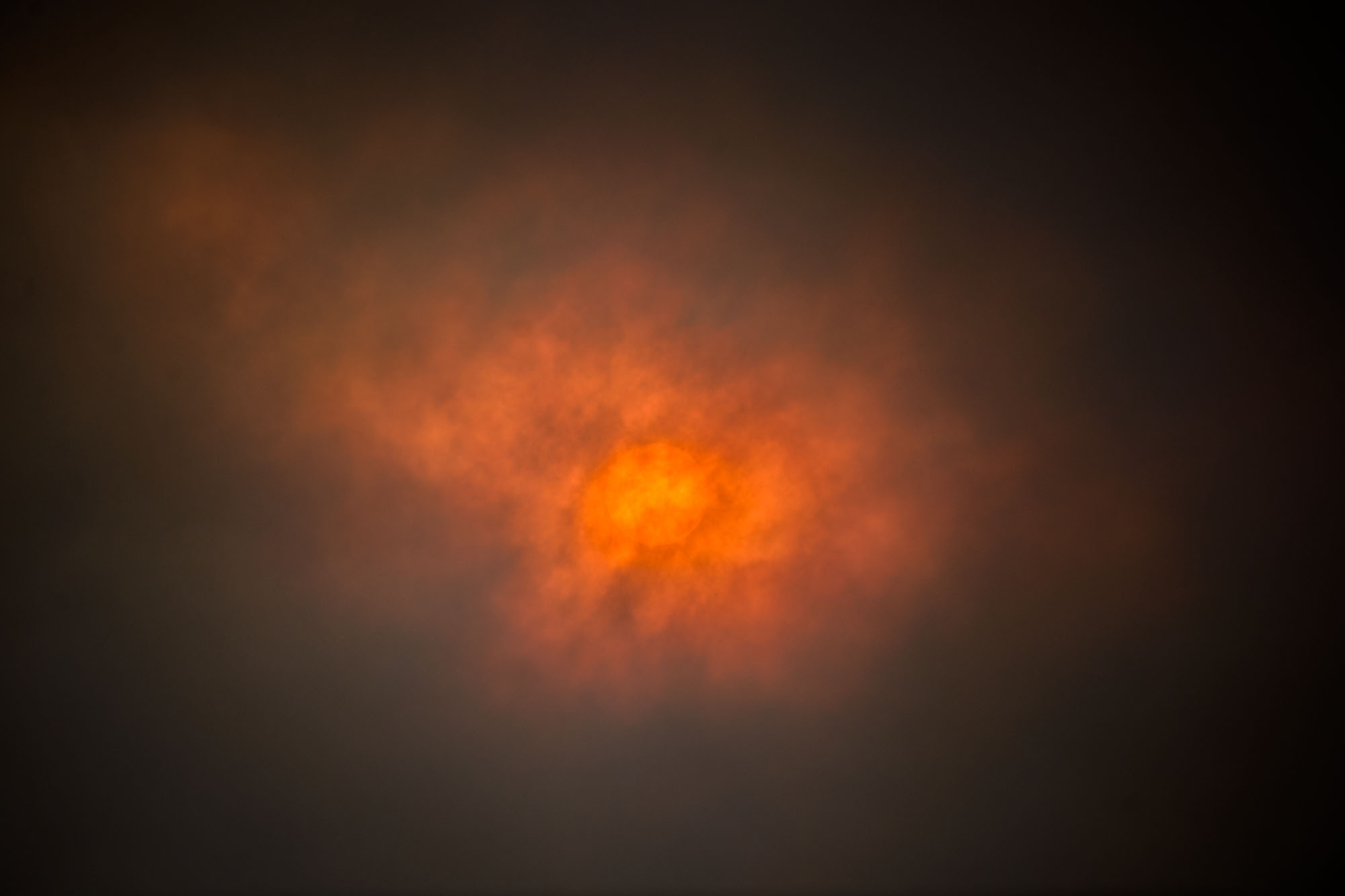
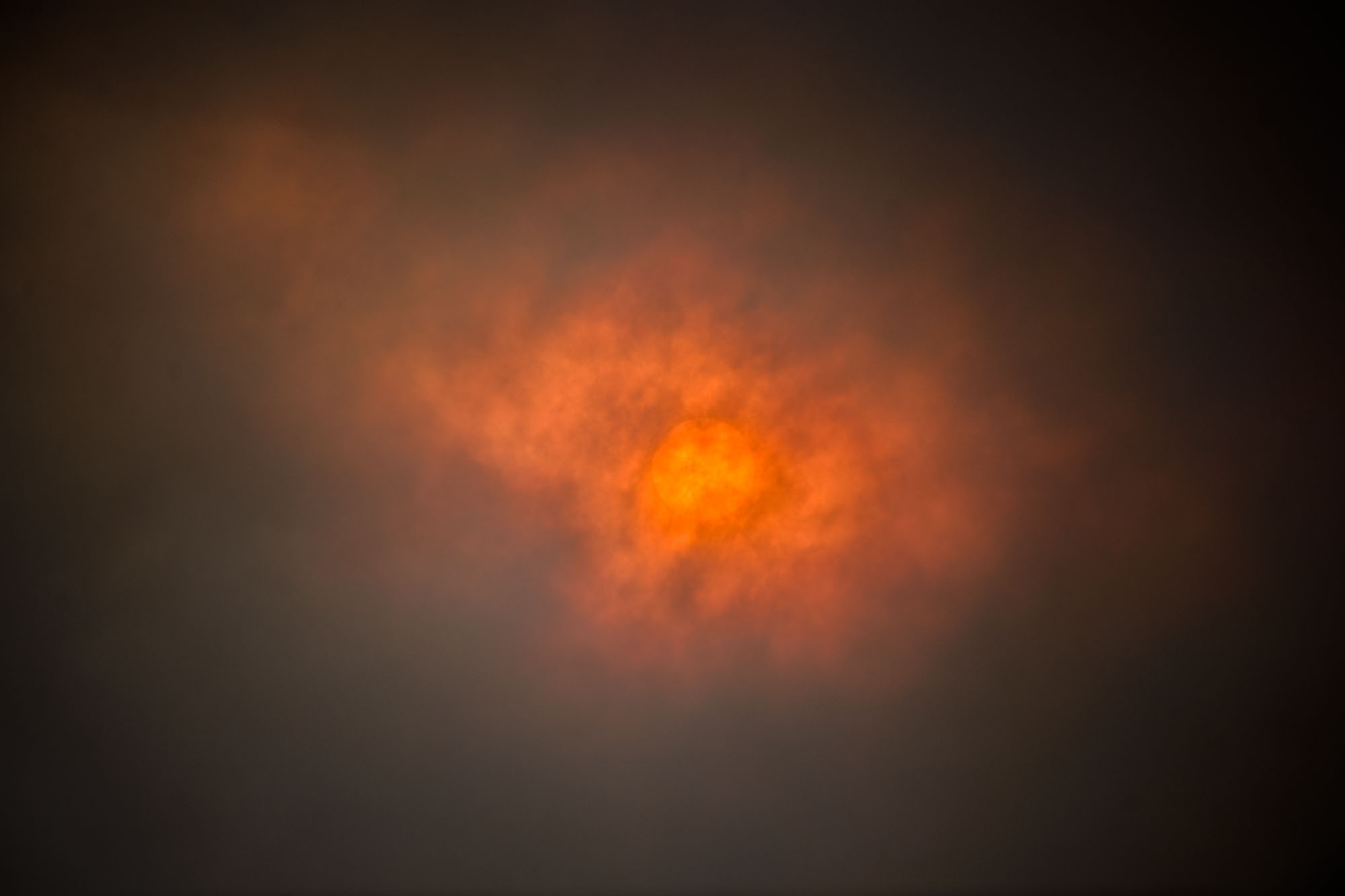
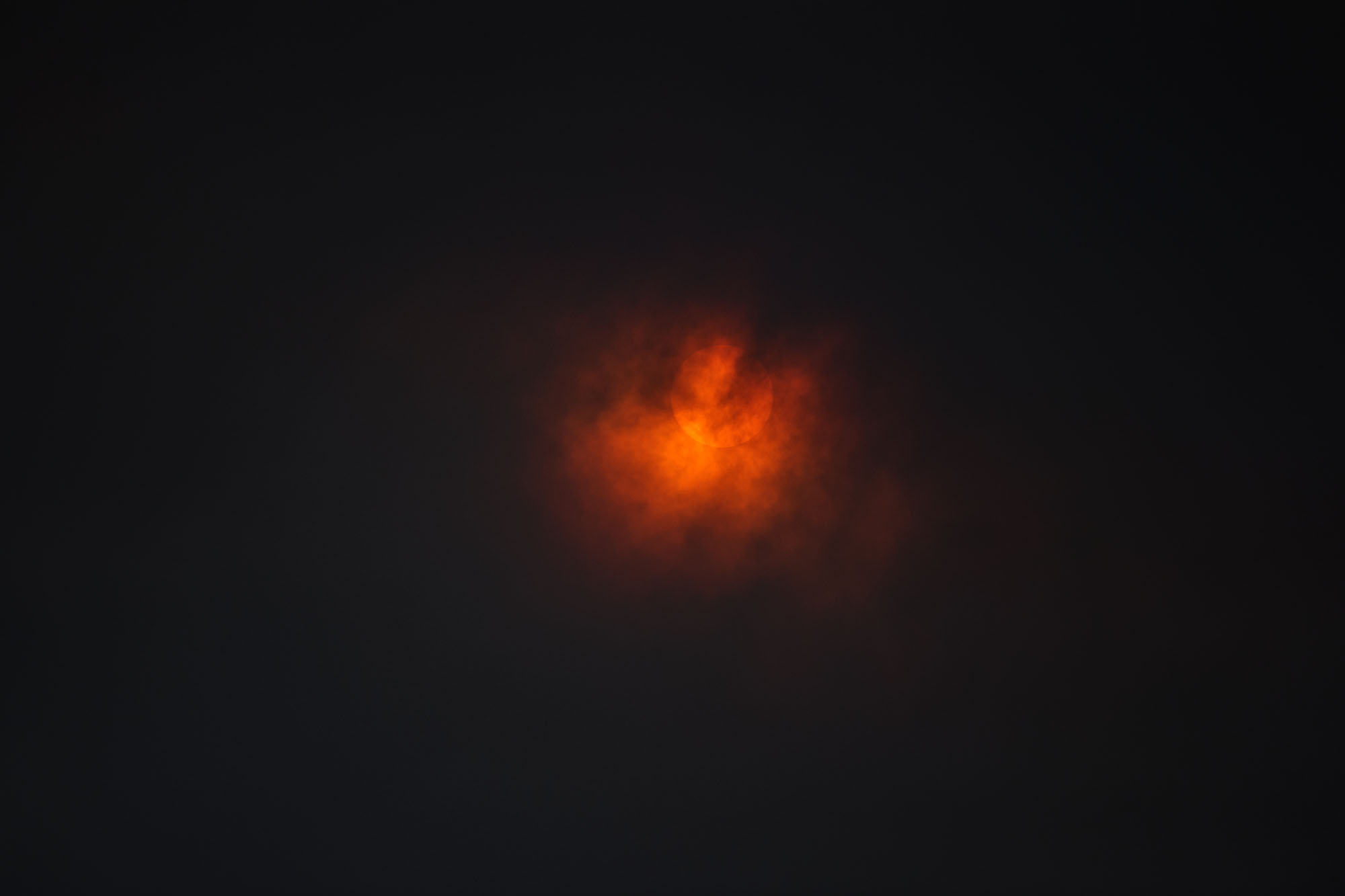
I’m sure Rowan Conroy wasn’t the only person photographing the sky from the bottom of Glebe Point Road that Thursday afternoon of 17 October 2013. As the dense smoke from the fires raging in the Blue Mountains rolled back over Sydney, I’d bet that plenty of people were using their cameras or iPhones to photograph the blotting out of the sun. Stranger may have even talked to stranger about the phenomenon, perhaps muttering under their breath words such as ‘awesome’, ‘apocalyptic’, ‘sublime’ or ‘portentous’. In a human gesture that goes back to the time of Stonehenge they all, including Conroy, looked deeply, and anxiously, into the sky. There was a sign there, the sky was telling us — the human race — something, but what? The sky portended doom, certainly, but what kind of doom exactly — was it nothing more than the business-as-usual doom of a cruelly cyclical mother nature, simply enacting the familiar Australian narrative of drought and flooding rains; or was there an additional doom, where climate change had already permanently pushed the weather into new realms of extremity.


Conroy’s carefully printed photographs are probably more terribly beautiful than the souvenir snaps other people took that afternoon. In some of his images, pewter-coloured puffs of smoke in the foreground chromatically shift the flame-tinged smoke in the background from copper to gold, giving the image a scaleless virtuality, like you see when you stare into the coals of a campfire for too long. In other shots, taken looking up towards the sun, we get the vertiginous feeling that we are a medieval sinner staring down into the bowels of hell. Still others stack up horizontal banks of cloud like an aerial geology that compresses the ragged remnants of dusky blue beneath. But each of the different terrible beauties of these photographs poses the same question — a question that worries many people: what is happening to our world?


Another worrier who looked into the skies was the nineteenth century art critic John Ruskin. To Ruskin nature was the origin of beauty on every level: aesthetic, moral and spiritual. But, in the early part of his career Ruskin warned his readers against a poetical conceit he called the ‘pathetic fallacy’, where weak people who are ‘over-clouded or over-dazzled’ by passionate emotion falsely attributed human feeling to nature itself. However to Ruskin this mistaken projection onto nature, where a flower is not a flower but a ‘a star, or a sun, or a fairy’s shield, or a forsaken maiden’, was still higher than the dull perception of an unfeeling person for whom the flower could never be anything but an unloved, symbolically inert organism. But, on a level higher than both these states, Ruskin placed the perception of one who was able to see the natural fact of the flower simultaneously intertwined with the spiritual associations and human feelings it evoked. Conroy does not succumb to the pathetic fallacy, his clouds are more than empty symbols of a fantasy apocalypse, they are also observed meteorological records, but records demanding a human response: this day happened, and it told us something.


About thirty years after writing on the pathetic fallacy, and towards the end of his life as he began to suffer bouts of mental illness, Ruskin wrote about the skies he had been observing and painting for decades. In the lecture The Storm-Cloud of the Nineteenth Century he claimed to have observed a new meteorological phenomenon that had arisen in the early 1870s. He called it the ‘plague wind’: a ‘dry black veil which no ray of sunshine can pierce’, looking as though ‘it were made of dead men’s souls’. When it blew, it blew tremulously, and made the leaves of trees shudder with a fitful distress. Its clouds, made of ‘sulphurous chimney-pot vomit’, were ‘thin, scraggy, filthy, mangy [and] miserable’; they did not redden the sun, but instead blanched it. In the scientific record of England’s climate there is scant actual evidence for the phenomena Ruskin observed (although temperatures in those decades were slightly lower than usual and rainfall slightly higher). But Ruskin’s observations weren’t scientific, they had succumbed to something like the pathetic fallacy he had previously condemned. His lecture, though based in close and highly-tuned personal observation, does more than just record the effect of industrial pollution on the environment, it also claims to see the moral and spiritual decay of England actually written in the sky.


Ruskin’s lecture was slightly mad, certainly, but it is a compelling, and relevant, read even today. In the last paragraph Ruskin says: ‘What is best to be done, do you ask me? The answer is plain. Whether you can affect the signs of the sky or not, you can the signs of the times. Whether you can bring the sun back or not, you can assuredly bring back your own cheerfulness, and your own honesty.’


Standing at the beginning of the climatic revolution of the twentieth-first century, rather than in the middle of the industrial revolution of nineteenth, perhaps ‘cheerfulness’ is no longer the best word to describe the ongoing communal resilience that will be required of us, but ‘honesty’ certainly is the best word to describe the change needed in our public discourse. To respond appropriately, and scientifically, to the threat of climate change we may need to embrace something like the revelatory vision of Ruskin. Conroy has.


Martyn Jolly


John Ruskin, ‘Of The Pathetic Fallacy’, Modern Painters, Volume 3, Part 4, 1856

John Ruskin, The Storm-Cloud of the Nineteenth Century, 1884

Brian J Day, ‘The Moral Intuition of Ruskin’s ‘Storm-Cloud’’, SEL Studies in English Literature 1500-1900, Volume 45, Number 4, Autumn 2005, pp917-933


Rowan Conroy, 'Natura Naturans', 2014

Rowan Conroy, ‘Natura Naturans’, 2014

Rowan Conroy, 'Natura Naturans', 2014

Rowan Conroy, ‘Natura Naturans’, 2014

Rowan Conroy, 'Natura Naturans', 2014

Rowan Conroy, ‘Natura Naturans’, 2014

Rowan Conroy, 'Natura Naturans', 2014

Rowan Conroy, ‘Natura Naturans’, 2014

Rowan Conroy, 'Natura Naturans', 2014

Rowan Conroy, ‘Natura Naturans’, 2014

Rowan Conroy, 'Natura Naturans', 2014

Rowan Conroy, ‘Natura Naturans’, 2014

Rowan Conroy, 'Natura Naturans', 2014

Rowan Conroy, ‘Natura Naturans’, 2014

Rowan Conroy, 'Natura Naturans', 2014

Rowan Conroy, ‘Natura Naturans’, 2014

Rowan Conroy, 'Natura Naturans', 2014

Rowan Conroy, ‘Natura Naturans’, 2014

Rowan Conroy, 'Natura Naturans', 2014

Rowan Conroy, ‘Natura Naturans’, 2014

Rowan Conroy, 'Natura Naturans', 2014

Rowan Conroy, ‘Natura Naturans’, 2014

Rowan Conroy, 'Natura Naturans', 2014

Rowan Conroy, ‘Natura Naturans’, 2014

Rowan Conroy, 'Natura Naturans', 2014

Rowan Conroy, ‘Natura Naturans’, 2014

Rowan Conroy, 'Natura Naturans', 2014

Rowan Conroy, ‘Natura Naturans’, 2014

Rowan Conroy, 'Natura Naturans', 2014

Rowan Conroy, ‘Natura Naturans’, 2014

Rowan Conroy, 'Natura Naturans', 2014

Rowan Conroy, ‘Natura Naturans’, 2014

Rowan Conroy, 'Natura Naturans', 2014

Rowan Conroy, ‘Natura Naturans’, 2014

Will the Angels Let Me Play — complete magic lantern perfomance video

On July 24, 2014, I was able to project a show of five magic lantern song-slide sets and one recitation set from my ‘Iron Duke’ lantern of 1905, with some additional effects added from a smaller 1890s lantern. Professor Peter Tregear and Dr Kate Bowan from the ANU School of Music sang and played the original words and music, and they were fabulous. Trevor Anderson from the National Film and Sound Archive also operated the ‘effects’ lantern for the angel effect in Jane Conquest. The event was part of the History, Cinema Digital Archives organised by Jill Matthews from the Humanities Research Centre and held in the theatrette of the NFSA. Here is our original abstract:

Martyn Jolly, Kate Bowan and Peter Tregear: ‘Will the Angels Let Me Play’, and other songs and recitations: a performance of magic lantern slides with song and piano

Collections such as the National Film and Sound Archive or Museum Victoria hold hundreds of magic lantern ‘song slides’. These sets of hand-coloured glass transparencies were produced in the early twentieth century to promote the sale of the sheet music for popular songs. They were projected by a magic lantern and accompanied by musicians and singers. Their popularity peaked with the First World War. The slides that remain, with their sentimental and melodramatic storylines, surreal photographic montages, and lurid hand-colouring, are still fascinating when we see them on the museum light box, or see the digitized copy in a museum database. But they were made to be performed, and were part of a technical ensemble which included the magic lantern, a musician’s performance and, most importantly, a singer’s voice. For this presentation this complete ensemble will be brought together once more, the slides will be projected by vintage magic lanterns and accompanied by live music and singing from the original sheet music. Will this be a reenactment, like we might see at an historical theme park? Or will it be authentic interpretation, such as an early music ensemble might perform on their antique instruments in a concert hall? Why bother with an original magic lantern when the optics and resolution of a contemporary scanner and data projector can reveal more detail more conveniently? And, no matter how brilliant the performers are, is it even possible to re-enter the affective power of a long ago performance when so much has changed in the meantime? Through this practice-led research experiment, and through subsequent discussion with the audience, these questions and other will be explored.

Bronwyn Coupe has now edited a video of the complete performance, cunningly disguising my mistakes with edited-in digital copies of a few of the slides, but retaining the flavour of my projections, and the brilliance of Kate and Peter. Here it is:

Will the Angels Let Me Play and other songs and recitations, a performance re-enactment for magic lantern, voice and piano

I learnt a lot from the experience. Fortunately I had Ian Christie turning the pages of my cue sheets for me, otherwise I wouldn’t have been able to keep up with the changes for any of the songs! As it was I muddled two. Despite my rehearsals I need to have a better system for quickly accessing the slides in the dark, I was scrabbling around. I also think I should have realised that there was a certain amount of redundancy built into the slide sets by the manufacturers, and I could have left some out which would have given me more time to load the slide changer. The authority and smoothness (or lack of it) with which I changed and focussed the slides also became very important for the audience’s experience. The light levels in the auditorium— to satisfy both projection from the lanterns with their relatively low-lumen output from the LED floodlights I had in them, as well as the necessity for Kate and Peter to be able to read the music — was also crucial. I have been reading nineteenth and early twentieth century newspaper review of lantern shows in Australia and exactly these same issues are frequently reported on — both negatively and positively — by the writers. The audience discussion afterwards didn’t decisively answer any of the questions raised in the abstract. However it covered the historical accuracy, or inaccuracy, of our ‘re-enactment’ — a big issue with some of the experts in the audience — and the general visual culture of the period — in both America and the UK where the slides were made, and in Australia where they were shown. Also discussed were small but crucial details such as the lack of gain in the painted wall on which I was projecting, compared to the modern cinema screen on which the digital versions were projected. But there was enough there to go on with.