Tag Archives: Australian photographers
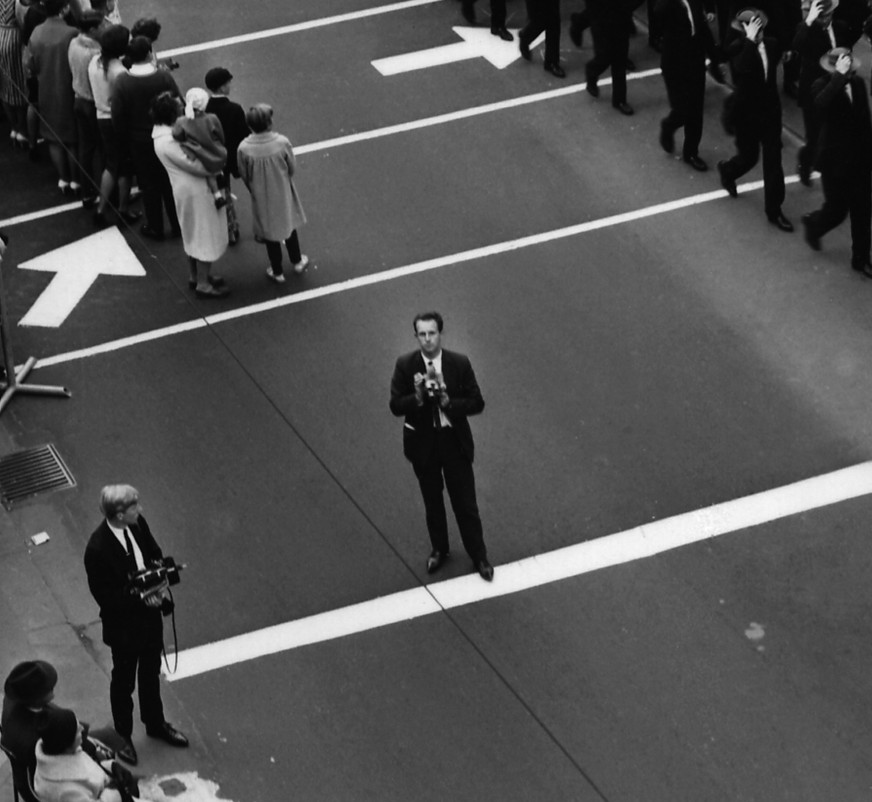
Rennie Ellis: Melbourne Out Loud, State Library Victoria
I’ve written a review of this exhibition for Australian Historical Studies.
It discusses exhibition installation, the archive, and Ellis’s technique. Here’s the first paragraph:
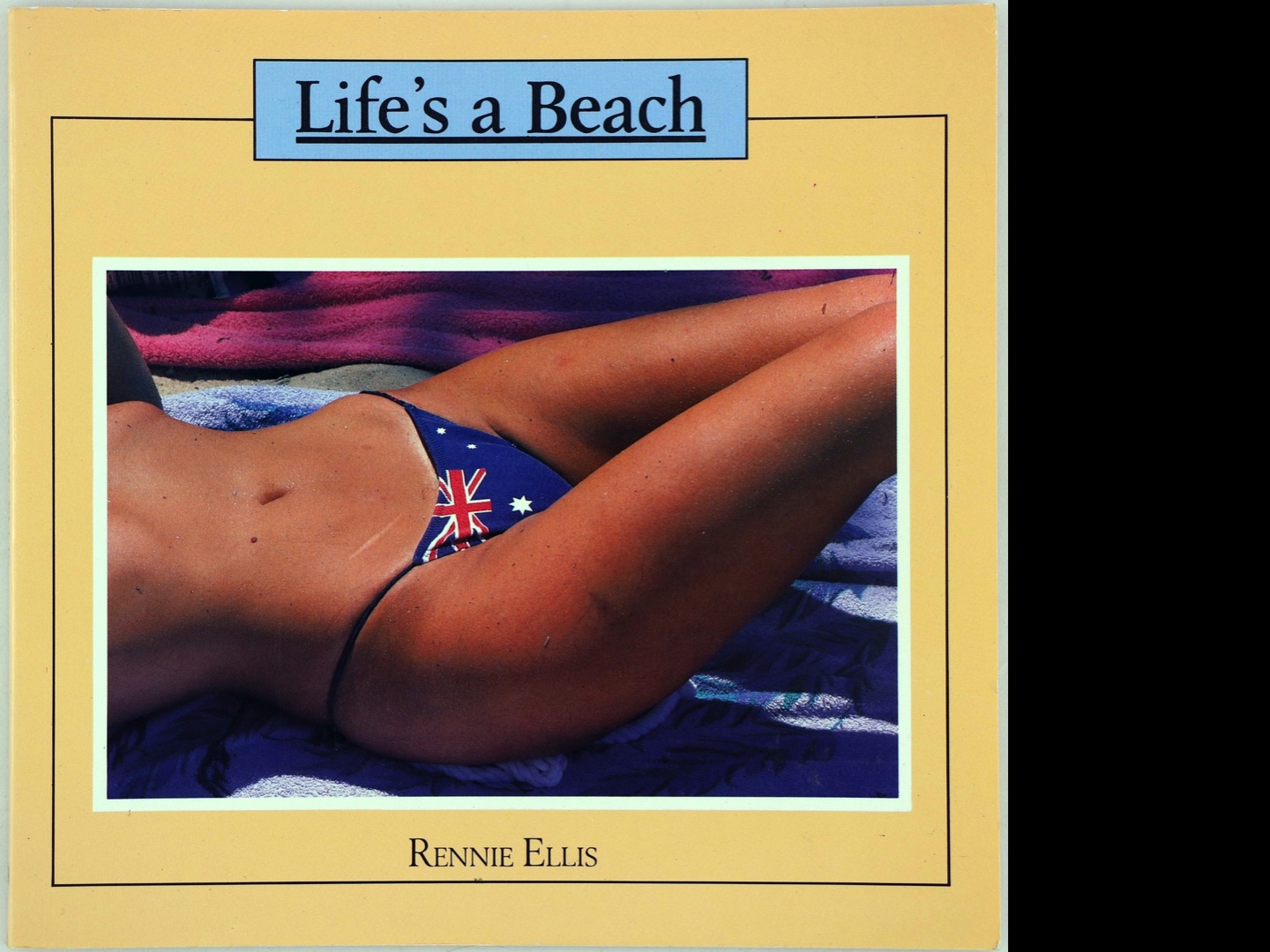
“I have to confess, I used to be snooty about Rennie Ellis (1940-2003). When I was a postmodern cadet at art school and being taught to deconstruct the photographic gaze, I condemned the cheap souvenir books he was producing then — such as Life’s a Beach (1983) and Life’s a Parade (1986) — for pandering to the viewer’s pervy propensities. How wrong can you be. He is one of Australia’s greatest photographers and was, as the photography historian Gael Newton comments within this exhibition, years ahead of us art school types when it came to autoethnography.”
Staging Australia
Essay from: Focus: Australian Government Photographers.
National Archives of Australia, 2023. ISBN 978-1-922209-32-0
Can official photography be interesting? This might seem an odd question to ask, since clearly the National Archives of Australia thinks it can be – hence their exhibition Focus: Australian government photographers.
But this exhibition is swimming against the current of most other photography exhibitions these days. It is not about an urgent social or political cause. It is not devoted to the personal ‘vision’ of a particular photographer. It is not a competition, where anyone can have a go. It does not take us to exotic locations (perhaps it does sometimes) or dramatic events (perhaps it does sometimes), and it does not seek to uncover previously hidden truths (although perhaps, in the end, it does reveal some micro-secrets to us).
Instead, these are publicity photographs for the Australian Government, taken in the second half of the last century. Each one had a job to do on behalf of the government’s various departments, such as trade, immigration and foreign affairs. Each was to be used to promote our science and technology, to show off our industry, our infrastructure, our lifestyle. They were to be used to attract potential migrants with visions of a prosperous, youthful nation; to present to potential trading partners evidence of our cities as modern and safe, our countryside as vast and full of resources, our politicians as capable and trustworthy, and so on.
Such photographs are built on order and predictability, even repeatability. As the years progressed the technologies changed: from the large-format four-by-five-inch black and white sheet film used in the 1950s to the medium format film in both black-and-white and colour used from the mid-1960s, to the 35 mm slide film exclusively in colour used from the 1980s. But the content remained consistent: children, soldiers, scientists, mothers, factory workers, shoppers, sports people, wildlife and so on.
Over the decades the photographs grew into an archive that now numbers hundreds of thousands of images. More importantly, this archive was built systematically. Since 1939, when the Department of Information was first set up at the onset of the Second World War, every photographer entered every photograph they took into a logbook, with names, places and titles. Written in pencil or biro beside each entry was its series identification number and individual control symbol, which still track it in the online catalogue today. There is something beautiful about these creased and dog-eared logbooks as they have accumulated over the decades. The bindings change, the ink and handwriting change, but the system remains the same as the photographers’ entries range across Australia and its region. All of this is preserved in the National Archives’ digital catalogue and can be accessed by any user at a click.
The public accessibility of such a large, well-indexed picture archive has meant that it has already been extensively used by historians and researchers. It has already been supplementing our visual memory as a nation. But the original metadata, recorded by the photographers at various levels of detail as they went about their day-to-day jobs, has produced an enormous integrated dataset.
Of course, as a dataset, various algorithmic affordances are now offered. Archive users are now able to sort the hundreds of thousands of images, this way or that way. For example, they could mine the metadata geographically, displaying all the photographs recorded as being taken in a particular town. With AI working inside the image itself – for instance, on the facial coordinates of all the faces captured by the cameras over the decades – users could extract all the happy people, or all the sad people, for example. Individual photographs could be linked together. Users could pull out of the mix a string of people wearing bow ties, say, or those holding up signs. Or, for that matter, all the people wearing bow ties who are holding up signs. This is the potential remapping of the data space that all that patient work by those photographers has enabled. I can’t wait to be able to do that, and more, in the future. Finely honed, automatic algorithmic searches are one way of opening windows into such an enormous, sprawling, relatively homogenous archive.
But this exhibition has taken a different approach. The archive showcased here was built up by a succession of different photographers. Often their names aren’t even recorded in the catalogue, and in some cases their careers are little known. These photographers weren’t working for themselves; they were applying their skills, talents and personal visual styles to doing a job for this or that government department. They were public servants – public servants with cameras, notebooks and darkrooms. But by considering them as individuals and recognising their professional photography skills in their own right, rather than just as a service to the archive, we can take a fresh look at the images they produced, and at Australian photography as a whole.
Even though these photographers worked for the government, this exhibition has given them back their personalities, their skills, their enthusiasms. The research into the individual careers of the photographers takes us far beyond the single role of ‘government photographer’, and into every aspect of the history of Australian photography. Some, such as Neil Murray, started out as ‘street photographers’, taking photographs on spec of people dressed up for a day out shopping or out on the town. Many were migrants, like the Danish Mike Jensen or the British Eric Wadsworth. Others, such as Jim Fitzpatrick, had years of front-line experience for the newsreel organisation Cinesound, the Daily Telegraph and the RAAF, and as a result his photographs jump off the page. Some, such as Eric Wadsworth or Mervyn Bishop, were newspaper photographers. Many came through the photographic retail industry, from Kodak or Harringtons. Still others, such as John Crowther, began with technical training in chemistry and optics, or as darkroom printers, such as Barry Le Lievre.
From these different corners of Australian photography, all got jobs as government photographers. Recently, after a long period of denigration, the idea of ‘public servant’ has begun to be rehabilitated. We now realise we need them. It turns out that outsourcing to supposedly nimble consultants on short-term contracts cannot substitute for the systematic accumulation of collective knowledge and the long-term honing of individual expertise, particularly when activated by a collective sense of both the ‘public’ and ‘service’. Who knew.
Some could give Orwellian connotations to the names of the departments the photographers worked for, such as the Department of Information (1939–50), the Australian News and Information Bureau (1950–73), the Australian Information Service in the Department of Media (1973–87), the Australian Overseas Information Service (1987–94), the International Public Affairs Branch of the Department of Foreign Affairs and Trade (1994–96) and the Trade Publicity Directorate. And yes, in some sense the people captured by the government photographers are turned into propaganda cyphers. The job of these photographers was literally to stage Australia for a presumed audience: potential overseas trading partners, potential migrants, potential departmental clients. So, yes, the people caught by their cameras are in some sense conscripted, probably without model releases or written permission, to ‘play a part’ as happy Australians, whether they are happy or not.
But the skill of the photographer is such that a little bit of the subject’s selves, outside their role within the ‘public’ scenario of the photograph, is set free within the picture as well. And here are to be found the delights of this exhibition. That is one reason why this exhibition is so timely. It is visual argument against the current atomisation of the public space we share into privatised bubbles, or points of view exclusively focused on the individual. Although staged and somewhat stilted, and representing a now outdated Australia, there is something still fresh in this collective representation.
Yet these are publicity photographs. They weren’t taken for the gallery wall; they were taken for the printed page. They were made to be reproduced in departmental reports, in immigration brochures, and in popular picture magazine stories, posters and advertisements. They needed to be pictorially robust, and able to hold their own on pages crowded with text, graphics and other photographs. This explains the compositional ‘tricks’ many of the photographers employed. For instance, John Crowther frequently put a second visual frame within his camera’s frame. He loved to shoot through door and windows so that even the ‘up’ and ‘down’ escalators of Canberra’s Monaro Mall frame the shoppers at the Embassy Fruit Market in 1966.

Embassy Fruit Market at the Monaro Mall, Canberra 1966. Photographer John Crowther. NAA: A1200, L55270
The photographers were also attracted to repeated patterns and visual repetition in their photographs. Sitters are frequently lined up in rows, giving a sense of order and control. The photographers always sought the visual drama in even the most mundane assignment. This show contains several examples of workers being framed within giant concrete pipes, giving a James Bond glamour to the building of Australia’s infrastructure. At other times, the photographers were attracted to the dynamic energy of swirling crowds as in, for instance, Bill Pedersen’s glorious sea of lady’s hats and gloves at the Centenary Melbourne Cup Carnival of 1960, or Jim Fitzpatrick’s 1968 photograph depicting shoppers descending on $5.99 shoes at David Jones in Sydney.

Fashionable spectators don hats and gloves at the Centenary Melbourne Cup Carnival, Melbourne, Victoria 1960. Photographer Bill Pedersen. NAA: A1500, K6328

Shoppers descend on $5.99 shoes at David Jones, Sydney 1968. Photographer Jim Fitzpatrick. NAA: A1200, L77320
This exhibition contains a selection of the Indigenous news photographer Mervyn Bishop. Of all the photographers here, he was most concerned with the consent and cooperation of his sitters, and when looking at his photographs it is always fascinating to plot the various directions of their eyes and trace the interaction of their gazes. In 1975 he made his most famous photograph, which shows Prime Minister Gough Whitlam pouring sand into the hands of traditional Northern Territory landowner Vincent Lingiari, but in this instantly recognisable Australian ‘icon’ the gazes of Whitlam and Lingiari glance off each other. The year before, at the Royal Queensland Exhibition, however, a backstage Mornington Island dancer adjusts his ceremonial headpiece while looking happily and openly at Bishop. He’s pumped, ready to perform a traditional dance for the crowd at the ‘Ekka’. In the same year at Yarrabah, Queensland, a young girl is emboldened to return Bishop’s stare, assertively parrying the government camera’s gaze.

Mornington Island dancer sharing Lardil culture with audiences at the Brisbane Exhibition, 1975. Photographer Mervyn Bishop. NAA: A8739, A13/8/75/11
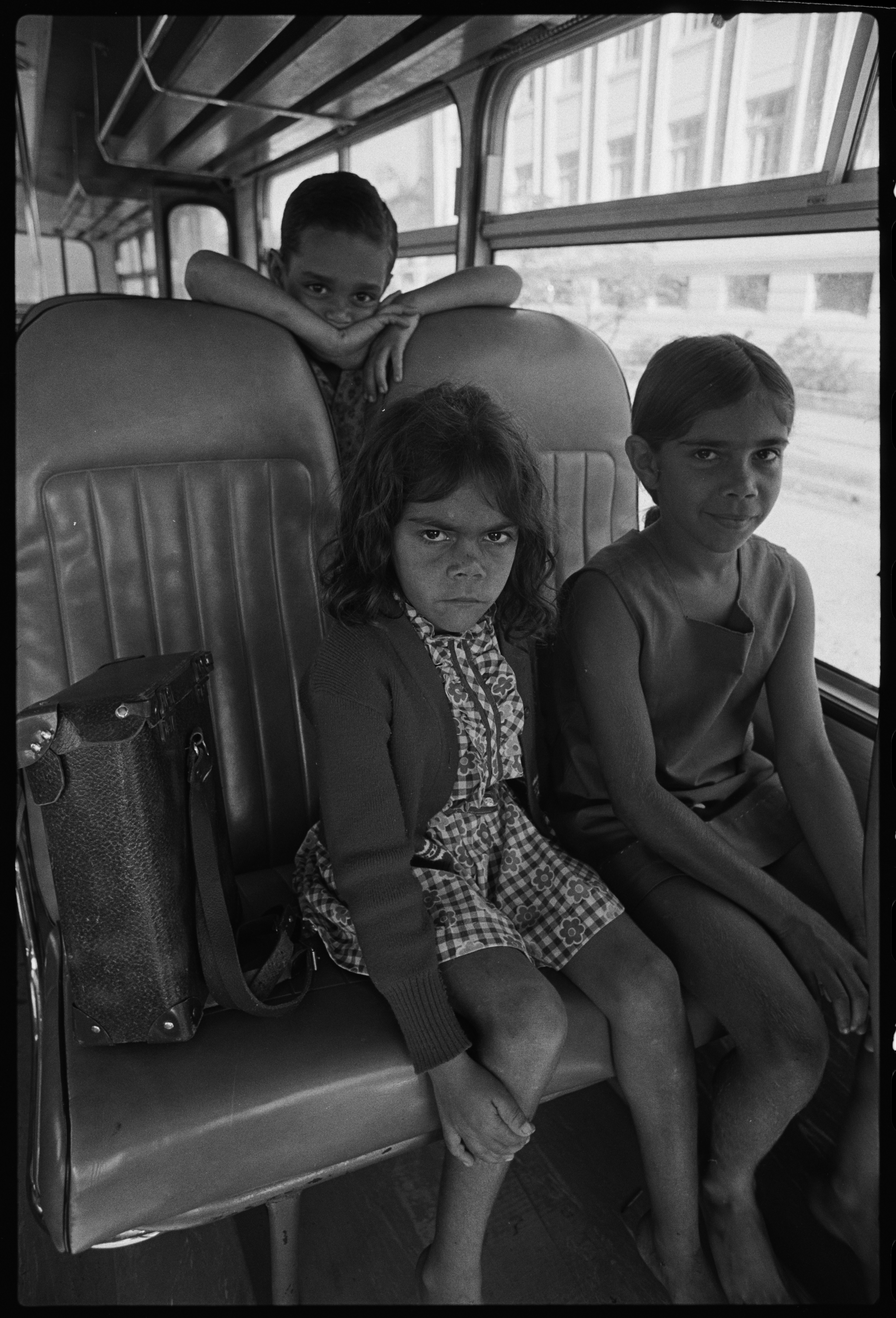
Staring down the photographer on a bus, Yarrabah, Queensland 1974. Photographer Mervyn Bishop. NAA: A8739, A26/8/74/25
Other photographers attempted to impose a tighter, more controlled choreography on their subjects. Neil Murray, who trained as a civil engineer, must have spent hours carefully placing his models, who hold their poses like mannequins, in his perfectly engineered compositions. It’s like watching a Jacques Tati film as our eye is led into the evenly lit transit lounge of Trans-Australia Airlines at Essendon Airport, Victoria, photographed around 1946; or through the impossibly clean 4-kilometre-long assembly line of the Ford Motor Company, Broadmeadows, Victoria, in 1960.

Trans-Australia Airlines lounge, Essendon Airport, Victoria c. 1946. Photographer Neil Murray. NAA: A1200, L3864

Cars move along the 4-kilometre assembly line at the Ford Motor Company, Broadmeadows, Victoria 1960. Photographer Neil Murray. NAA: A1200, L34225
Keith Byron, who spent some time in the United States, also had an acute eye for composition. But sometimes small, contingent details intrude themselves. In 1969 his eye was caught by the picturesque betting man in the Members Only enclosure at the Balnarring picnic races, who has sensibly covered his hat with a fly net. But we, the viewers, can’t help noticing the kids, led by a young girl, squashed against the gate behind him, who have also been caught by Byron’s powerful flashgun.

Veteran punter outsmarts flies in the Members area at the Balnarring Picnic Races, Victoria 1969. Photographer Keith Byron. NAA: A1200, L79798
The flashgun was also frequently used to good effect by Bill Pedersen. For example, it picks out the front row of a young crowd who are all shouting at their visiting hero, Koichi Ose, who plays Shintaro in the Japanese samurai TV show Shintaro, enormously popular with boys of a certain age in 1965. But the presence of the government camera has distracted one young fan from Ose’s sword feats, and his eyes briefly slide off to the photographer himself as the flash goes off.

Young fans call out to Shintaro (Kiochi Ose), star of the Japanese television show The Samurai, as he performs feats with his sword, Sydney 1965. Photographer Bill Pedersen. NAA: A1200, L53173
Bill Brindle, who had worked for the Australian Women’s Weekly before joining the Department of Information, also had an eye for the theatrical. In 1958 he had a woman jump into the air to release two weather balloons outside St James Theatre on Melbourne’s cinema entertainment strip in Bourke Street. She is advertising an Australian Commonwealth Film Unit short film about the Giles Weather Station, Balloons and spinifex, which has been chosen to support the cinema’s main feature All at sea, yet another wheezy comedy from England’s venerable Ealing film studios. In Brindle’s photograph a row of five men, presumably from the Commonwealth Film Unit, look on and dutifully enjoy the stunt. But, out of focus in the background behind this slightly surreal scene, passers-by turn and stare, or in the case of one smartly suited woman, stride away up the street.
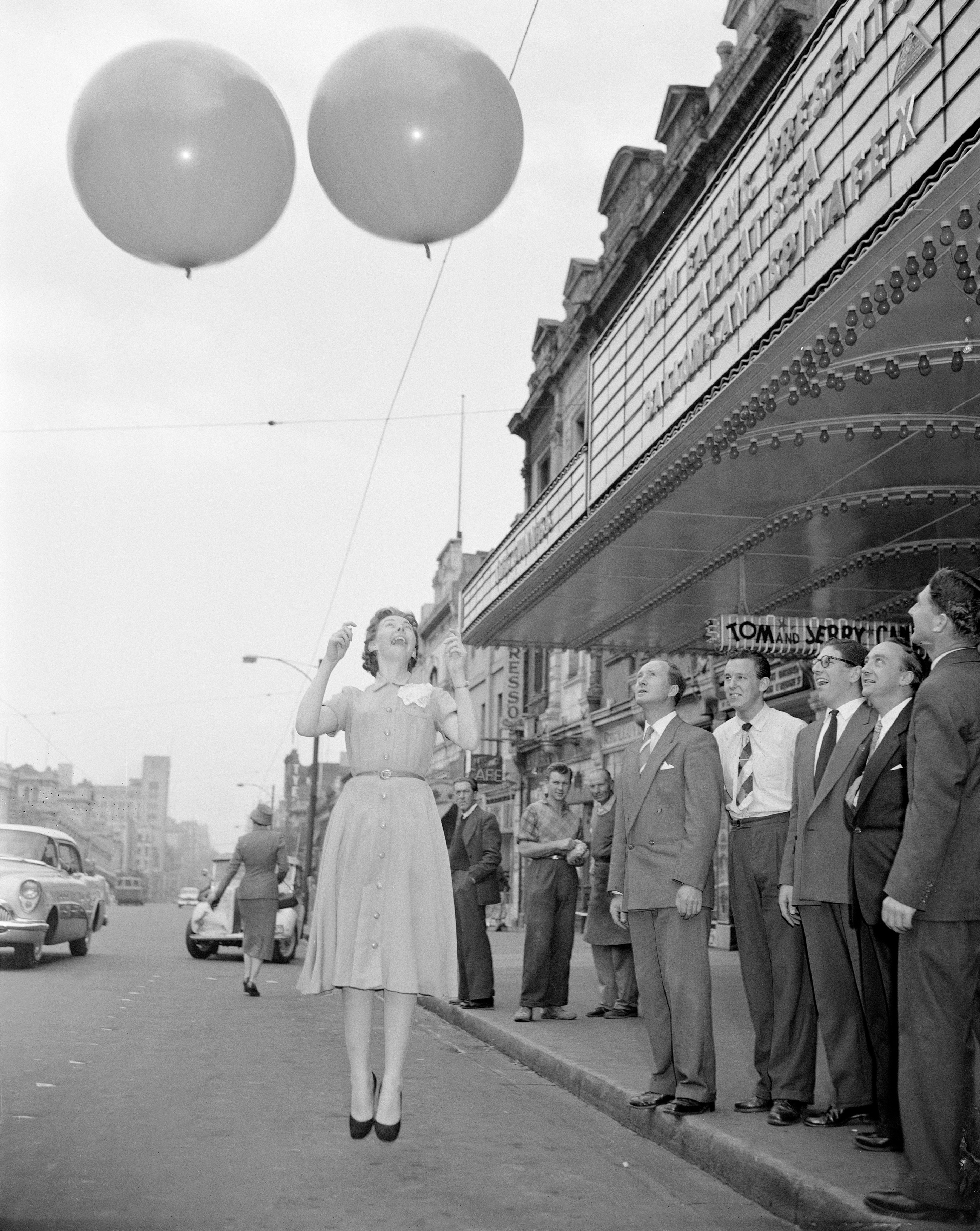
Posing with weather balloons outside the St James Theatre & Metro on Bourke Street to promote the screening the Australian Commonwealth Film Unit and Bureau of Meteorology documentary, Balloons and spinifex, Melbourne 1958. Photographer Wilfred Brindle. NAA: A1200, L26100
In another slightly stilted Bill Brindle photograph, staged at the Oenpelli (Gunbalanya) mission in the Northern Territory, a line of young Aboriginal men along a stockyard railing have been told to cheer on an older Aboriginal stockman who is breaking in a horse for the camera. Brindle had to use two sheets of large-format film to get the right combination of rearing horse and line of waving hats. But despite this careful choreography it is the three young Aboriginal kids at the end of the row, who don’t yet have hats to wave and wrap their legs around the top rail in squirming apprehension, who most engage our attention.
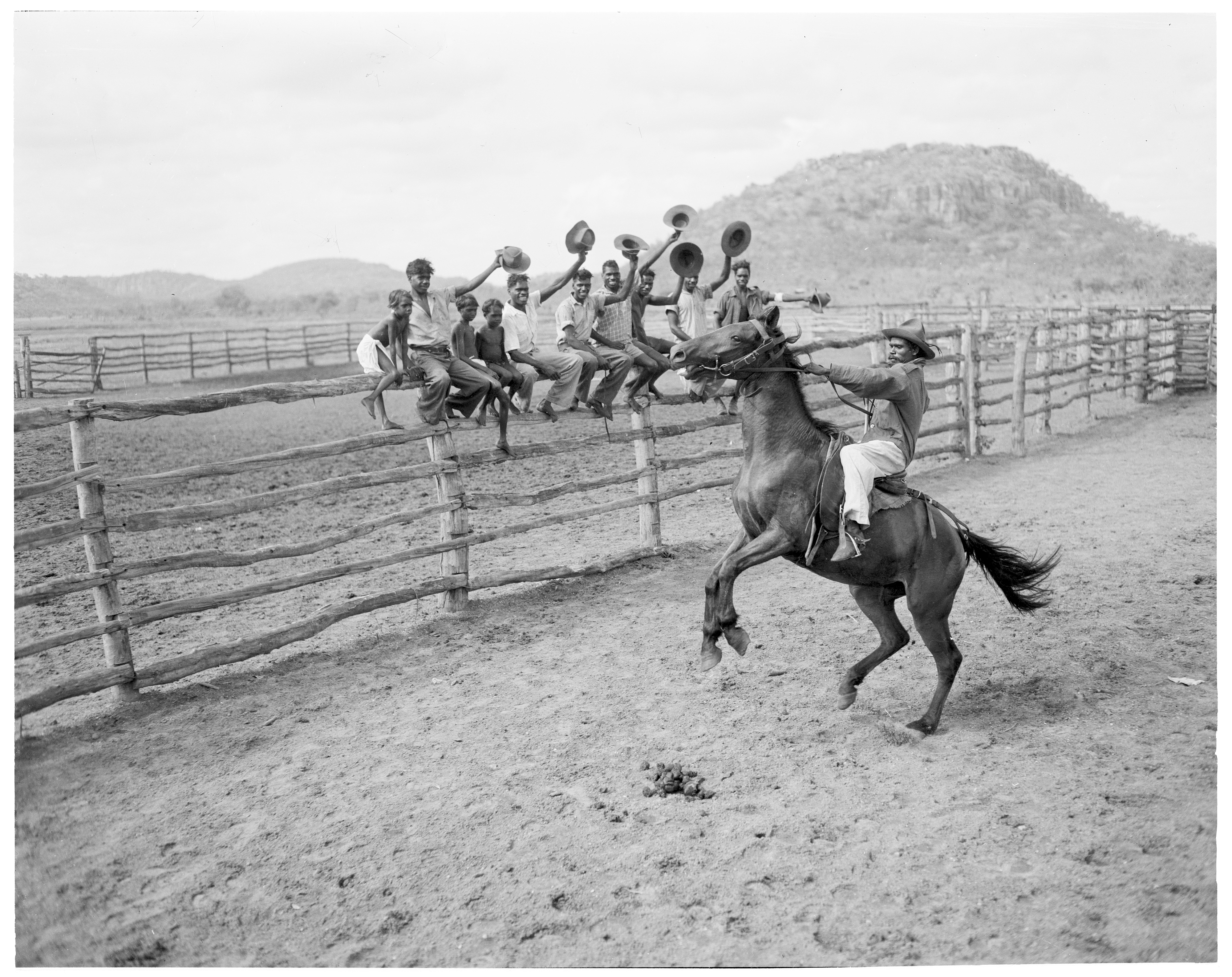
Stockman breaking in a horse at the Oenpelli (Gunbalanya) Church of England Mission in Arnhem Land, Northern Territory 1950. Photographer Wilfred Brindle. NAA: A1200, L13068A
For contemporary viewers it is these insistent incidental details and fragmentary occurrences, extraneous to the photographer’s original intention or initial government assignment, and resistant to cataloguing, tagging or even, perhaps, AI, which open out the archive to the true pleasure and value of these photographs.
Sometimes the photographer themselves seems to subvert their own publicity message. For instance, all the men posed studiously checking on quality control in Eric Wadsworth’s various factories, from a Toyota car parts factory in Altona, Victoria, to a Prestige stocking factory in Brunswick, Melbourne, seem to be ‘on message’ – in authoritative command of the industrial process. But our hearts go out to the poor worker woman, bent over her machine, sewing the massive thick orange blankets that are beginning to engulf her at the James Miller carpet factory, Warragul, Victoria, in 1971.

Machinist at work at the James Miller carpet factory, Warragul, Victoria 1971. Photographer Eric Wadsworth. NAA: A1500, K28661
Photographs like this, where the glowering orange of the blankets is fundamental to its impact, demonstrate how quickly the photographers became adept at deploying colour which was increasingly required by publications. Colour is intrinsic, for example, to the outback photographs of Mike Jensen, the 35 mm off-the-cuff street-life photographs of John Houldsworth, or to the fashion photographs of Bill Payne.
The idea of professionally skilled photographers employed as public servants to serve Australia’s publicity interests at home and abroad made it through to 1996, when it finally fell victim to government ‘cost-cutting’. Only Norman Plant, who had caught his passion for photography in his father’s amateur darkroom with a box brownie, before studying at the Royal Melbourne Institute of Technology and working in photography studios and as photojournalist, and who had been a government photographer for 28 years, was left to turn out the lights. Publicity photography was thereafter outsourced for specific projects and now, of course, almost 30 years later, young PAs handle ‘the socials’ from their smart phones.
The vast, systematic archive these government photographers built over five decades will continue to be used by historians and researchers for the historical information it contains. And it will continue to release its micro-secrets – the wayward glance of somebody’s eyes, the way they held their body, their fleeting expression, the patterns they made as they congregated together, and so on. But it is only able to give us all this because of the work of the original photographers. They weren’t geniuses, they weren’t special, they were professionals doing their job. They were public servants.
Martyn Jolly
Girls Galore!
Girls Galore!: Photography in Australian Men’s
Magazines in the 1960s
Journal of Australian Studies

Figure 9 : Darl magazine, Sydney, c1966. Collection: author.
ABSTRACT
Men’s magazines have formed a significant part of Australian illustrated magazine publishing since 1936. In this article, I broadly survey the field up until 1971, concentrating particularly on bikini and nude photography, which defined the category. I then focus on the period of the 1960s, when men’s magazines were most relevant to Australia’s rapidly changing sexual politics and its censorship debates. I reveal that, although they were by their nature visually repetitious, far from being a marginal or trivial category, they were deeply implicated in the development of broader Australian visual culture and its sexual politics, and fundamental to wider innovations in publishing, as well as the careers of several important Australian photographers.
‘Installation View’ in The Conversation
Photograph by Leela Schauble. Courtesy the artist.
https://theconversation.com/friday-essay-10-photography-exhibitions-that-defined-australia-166755
Free Download! ‘Frontier and Metropole, Science and Colonisation: The Systematic Exhibitions of Richard Daintree’

Figure 21. Detail from Centennial Photographic Company, Philadelphia International Exhibition, ‘Queensland Court, Philadelphia ’76, Evening Before Opening’, 1876.
Abstract
Richard Daintree is well known as an Australian colonial photographer and geologist. I look at six international exhibitions he created from 1872 to 1879 that promoted the colony of Queensland by systematically integrating spectacular grids of painted photographs with displays of scientific samples. By analysing installation views, I argue that the popular success of these exhibitions came from the use of various new photographic technologies within the space of the exhibition, where the frontier directly interacted with the metropole. Further, I argue that Daintree’s personal passion for the science of geology profoundly structured the colonialist narrative of his exhibitions, which combined the latest apparatuses of scientific knowledge and imperial communication, revealing him to be an innovative and internationally significant creator of synthesised exhibitionary experiences.
Salon Pictures, Museum Records, and Album Snapshots: Australian Photography in the Context of the First World War

History of Photography Journal
Volume 43, Issue 1, 2019, pages 60-83
Martyn Jolly & Daniel Palmer
Among the various new modes for making photographs that were explored by Australian photographers in the first decades of the twentieth century, three in particular – Pictorialist images, authentic records, and personal snapshots – had far-reaching implications for the institutions of Australian photography. Pictorialist photographs are now the foundation of many Australian art museum collections; photographic records produced at the time have become iconic in Australian public history, forming the backbone of many social history collections; and personal snapshots from the period are increasingly reproduced in social histories. Historians of Australian photography have discussed and analysed each of these modes1, but they have tended to treat them separately, or even in opposition to each other, and to concentrate on the distinct careers of individual photographers. This article looks at this crucial period, and these key photographic modes, from the point of view of the worldwide networks and systems for the distribution, exhibition, collection, and indexing of photographs. We show how these modes, far from being distinct, overlapped one another as each grappled with the same issues of nation, history, and memory, and as each articulated their nationalistic concerns through international networks and idioms.
Celebrating Wesley Stacey and Rennie Ellis’s book ‘Kings Cross Sydney: A Personal Look at the Cross
For Vivid Ideas, Vivid Festival, Sydney. ‘Kings Bloody Cross, Surface Glitter and Underground Guts’, at The World Bar, Saturday 3 June, 2017 (I’ve stuck the power point slides in amongst the text)
Today I want to sing the praises of a small and obscure photography book published in 1971. Australia doesn’t have a particularly big tradition of photobooks, perhaps our population has always been too small to sustain local publishers who specialise in photobooks. So it’s pretty hard to call to mind any important Australian photobooks, whereas European ones like Brassai’s Paris by Night, or American ones like Robert Frank’s The Americans, spring readily to mind. Nonetheless there are a few Australian photobooks that, in their own way, are significant and integral works of art as well as being important cultural documents. And it pains me that they are not remembered, particularly by today’s young Australian photographers who all profess to be into photobooks, but only it seems if they are imported from Europe or the US. Of course Mathew Sleeth’s Tour of Duty from 2004 is a classic, and there are a few others which are celebrated perhaps. But remembering Australian photobooks from their heyday, the period from the mid 1960s until the early 1970s, when they were part of mainstream culture as well as being sites for experimentation, is particularly important.
In the history of Australian photography it is not the 1960s, but the 1970s that is commonly celebrated as the watershed decade where, following the 1972 election of a socially enlightened Labor government, there was a creative flowering entailing both a renaissance in the Australian film industry, and a ‘photography boom’ consisting of new photography galleries, new photography collections, new funding opportunities, and a new role for a younger generation of art-school trained photographers.[1] However, if attention is paid to the many photobooks that were produced, distributed, bought and read in large numbers before the magical date of 1972, the picture we can form of not only Australian photography, but also of Australian culture as a whole, deepens considerably.
There were two absolutely cracker books published in that period, one was Southern Exposure published by David Beal and Donald Horne in 1967, and the other was Kings Cross Sydney: A Personal Look at the Cross published by Rennie Ellis and Wesley Stacey in 1971. And today I want to celebrate the latter.
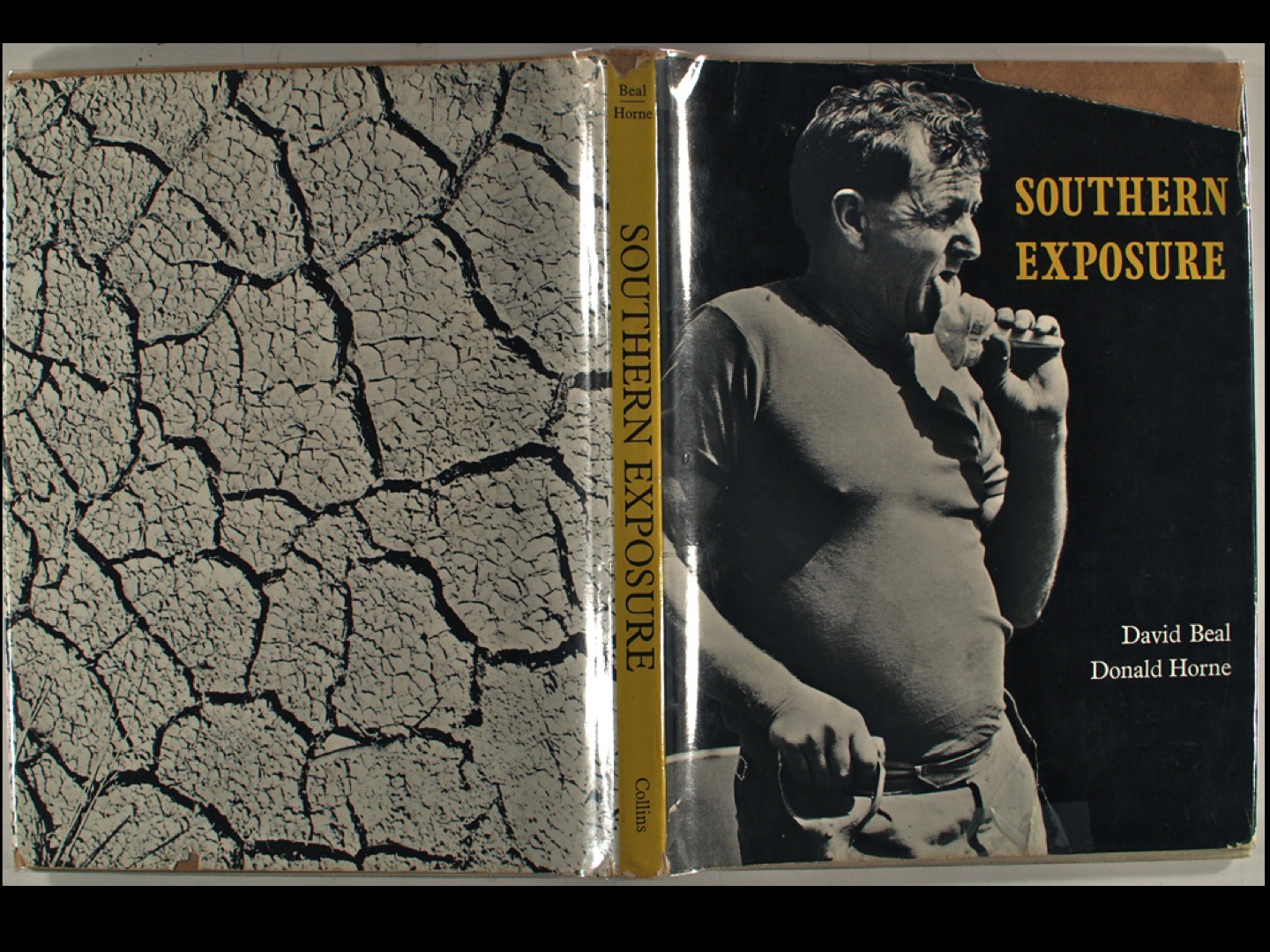
Southern Exposure, 1967
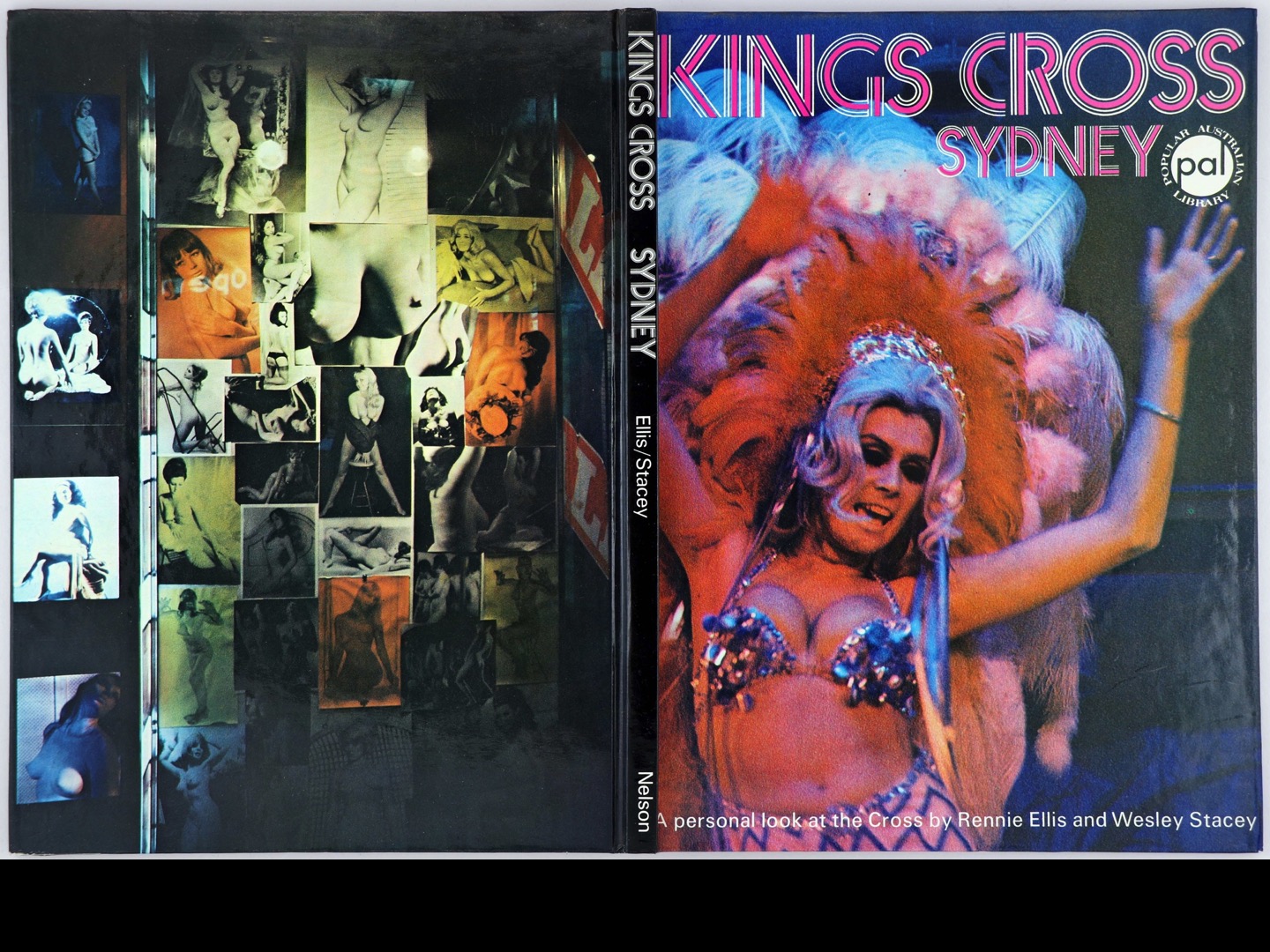
Kings Cross Sydney, 1971
During this period Australian photobooks tended to be coffee table tourist souvenirs. They were the kind of book an aunt you never saw during the year might give you for Christmas; or you would send back to your grandparents in the UK or Greece; or you would put in you bag after a few weeks of R&R ion case you needed a souvenir for someone. But during this period some photobooks began to be published which attempted to go beyond the standard Australiana tourist genre. They began to be timely, about Australian society as it was at the time, rather than timeless, about a generic Australia; and they were quite explicitly about the new Australian identity that was emerging in the post war period. Driving this change was unprecedented wealth flowing from a mining boom, continuing mass migration from Southern Europe, and a geopolitical realignment towards the US, evidenced by an escalating commitment to the Vietnam War from 1966 onwards and, in the case of Kings Cross, the presence of a quarter of a million American servicemen in Australia, who spent seventy million dollars on their R&R leave between 1967 and 1971.
Significantly, the Australian film industry did not undergo its renaissance until the 1970s. There were only a handful of feature films made in Australia during the sixties, and most of those were made by overseas directors. A good example of this is They’re a Weird Mob. Featuring Kings Cross, it was based on an extraordinarily popular Australian novel, and starred some of Australia’s best-loved actors, but it was made by an English director. [2] However, although Australian feature films were few in number in the 1960s, at least sixty significant Australiana picture books were published during the same period.

The sixties also saw a radical increase in the number of independent, start-up publishers, historically analogous to the internet startups of today. The value of Australian publishing increased eight fold between 1961 and 1979; and from 1961 to 1971 membership of the Australian Book Publishers Association increased from thirty-seven to sixty-seven, of which nearly forty were Australian owned.[3] Many of these publishers, such as Rigby, Lansdowne, Nelson and Jacaranda were substantial, while others were more like today’s internet start-ups and were literally kitchen table operations. Horwitz, whose books sold for less than a dollar, catered to the lurid pulp fiction market. However not all of Horwitz’s books were pulp fiction. Some, such as the gritty Vietnam: The Cruel War by Anthony Syme, which sold for 65 cents, engaged with the politics of the period.

Other start-up publishers who also focussed on the cheaper end of the market, such as Sun Books, explicitly addressed the burgeoning of intellectual interest in issues of Australian history identity.

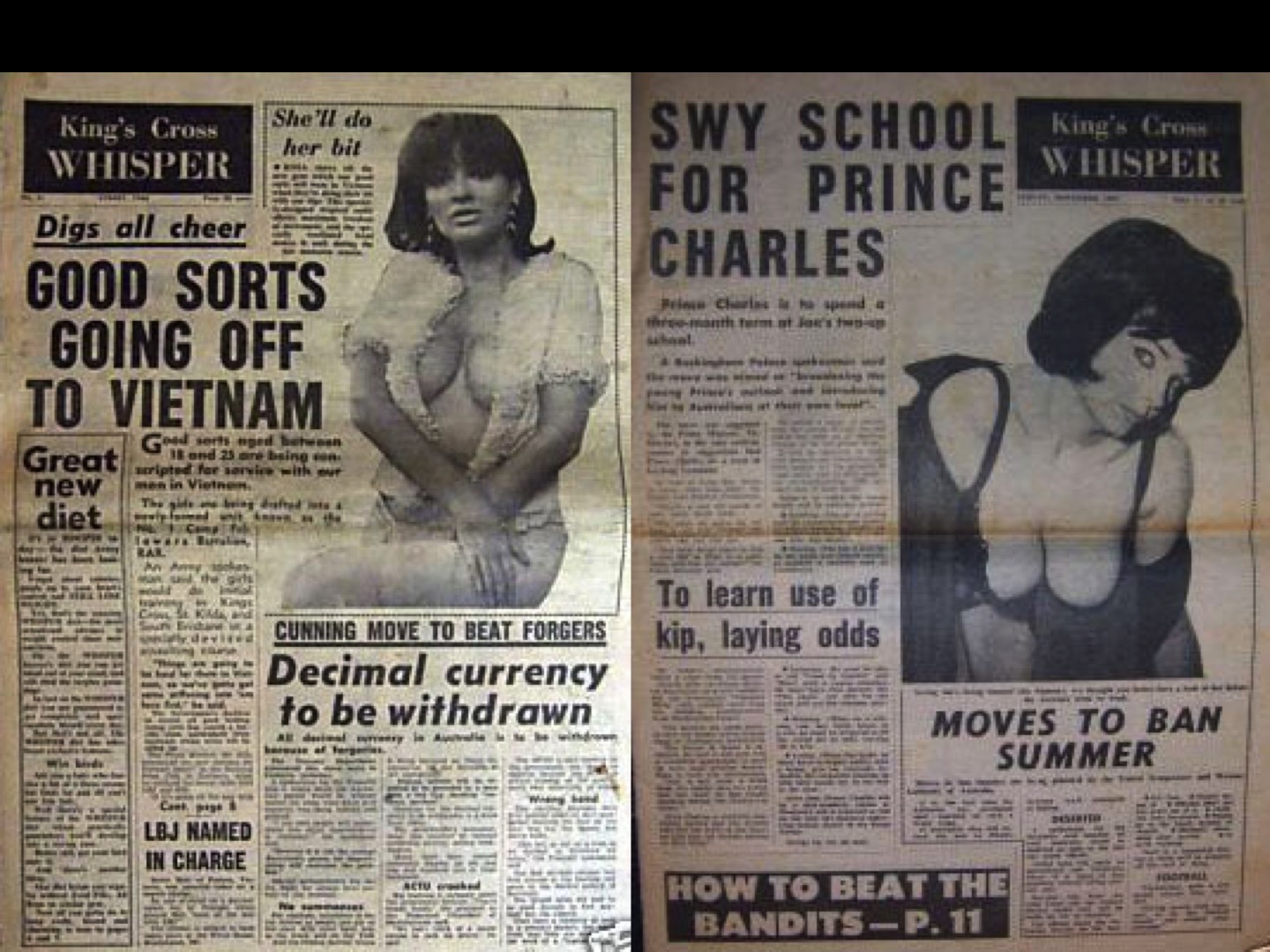
In many ways these book publishers formed a continuum with the magazine publishers, who published middle class travel magazines like Walkabout, domestically oriented magazines such as the dominant Women’s Weekly, and barbershop magazines such as Australasian Post, People or Pix. From 1965 this suburban newsagent’s range was joined by a burgeoning of inner city street magazines which focussed on satire, sex and radical politics. These included Oz, which reached a circulation of 30,000, but also magazines like Kings Cross Whisper, which reached a circulation of 100,000, and the quickly banned sex magazines like Sexy, Searchlight, Obscenity, Ribald and Censor, as well as student magazines that dealt with radical politics like Honi Soit and Tharunka.[4]

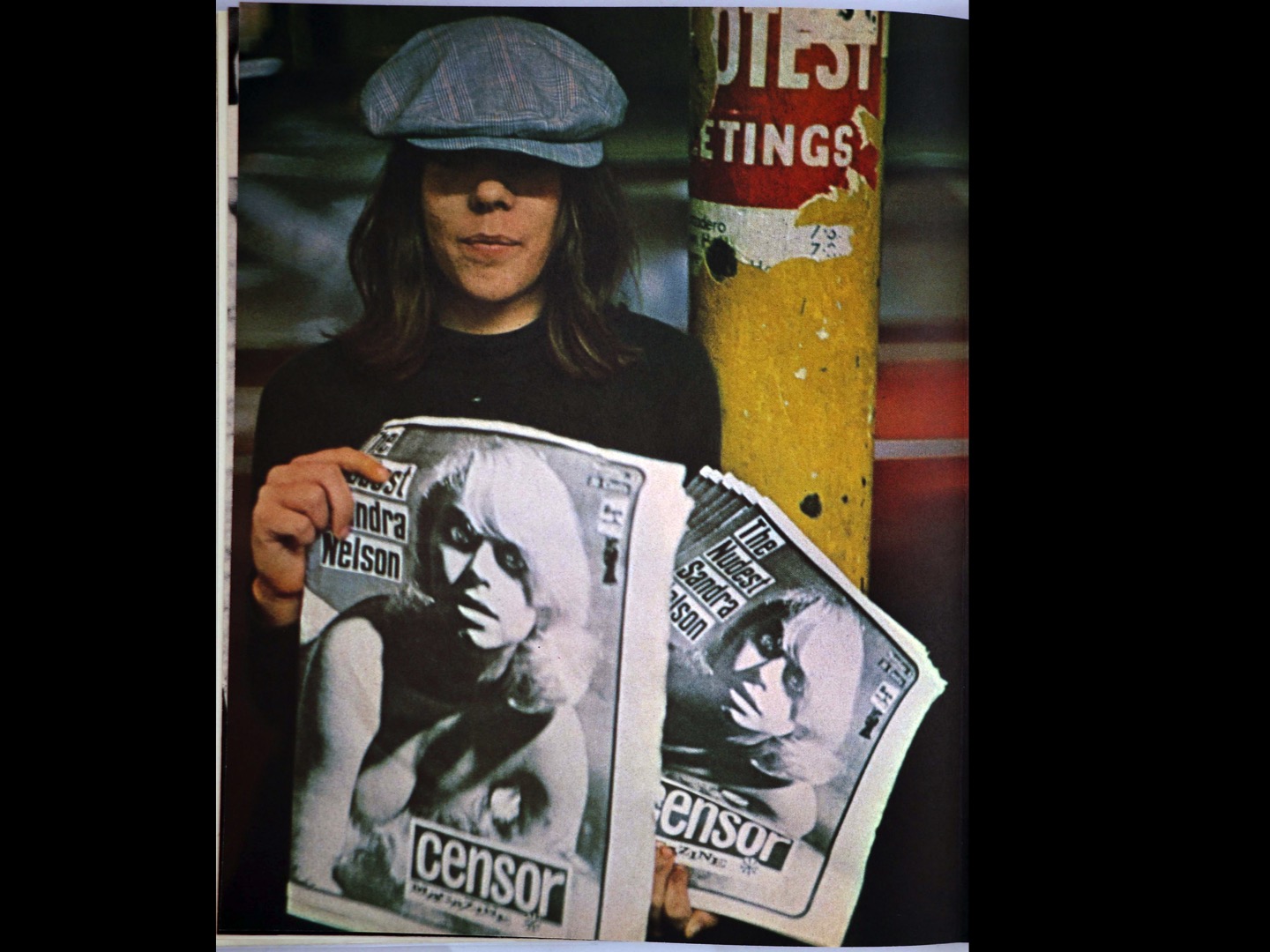
Jozel Vissel, Paper Seller, Kings Cross, From Life In Australia, edited by David Beal and Craig McGregor, 1968, p228
Kings Cross was already featuring in this explosion of Australian publishing. It already had, since at least the 1920s, become a media trope within Australia. It was a locus of a powerful kind of ‘aspirational anxiety’ within Australia. Louis Nowra has described Kings Cross as:
a piece of urban DNA where the two spirals interweave the safe and the dangerous, the Australian and the foreign, the old-fashioned glamour and trashy sexual exploitation, the underworld and city professionals, the seedy and glamorous, the hetero and gay, sexual freedom and commercial sex, the underclass and the rich, the beautiful and tawdry.[5]
And, as an emerging popular media spectacle, Kings Cross was similarly a place of Bohemian artiness and Parisian boulevards, at the same time as it was a place of crime, drinking and sex. It was where airy aspirational fantasies of Australia finally graduating as a cosmopolitan country were mixed with deep atavistic fears of rampant sexuality and lawlessness.
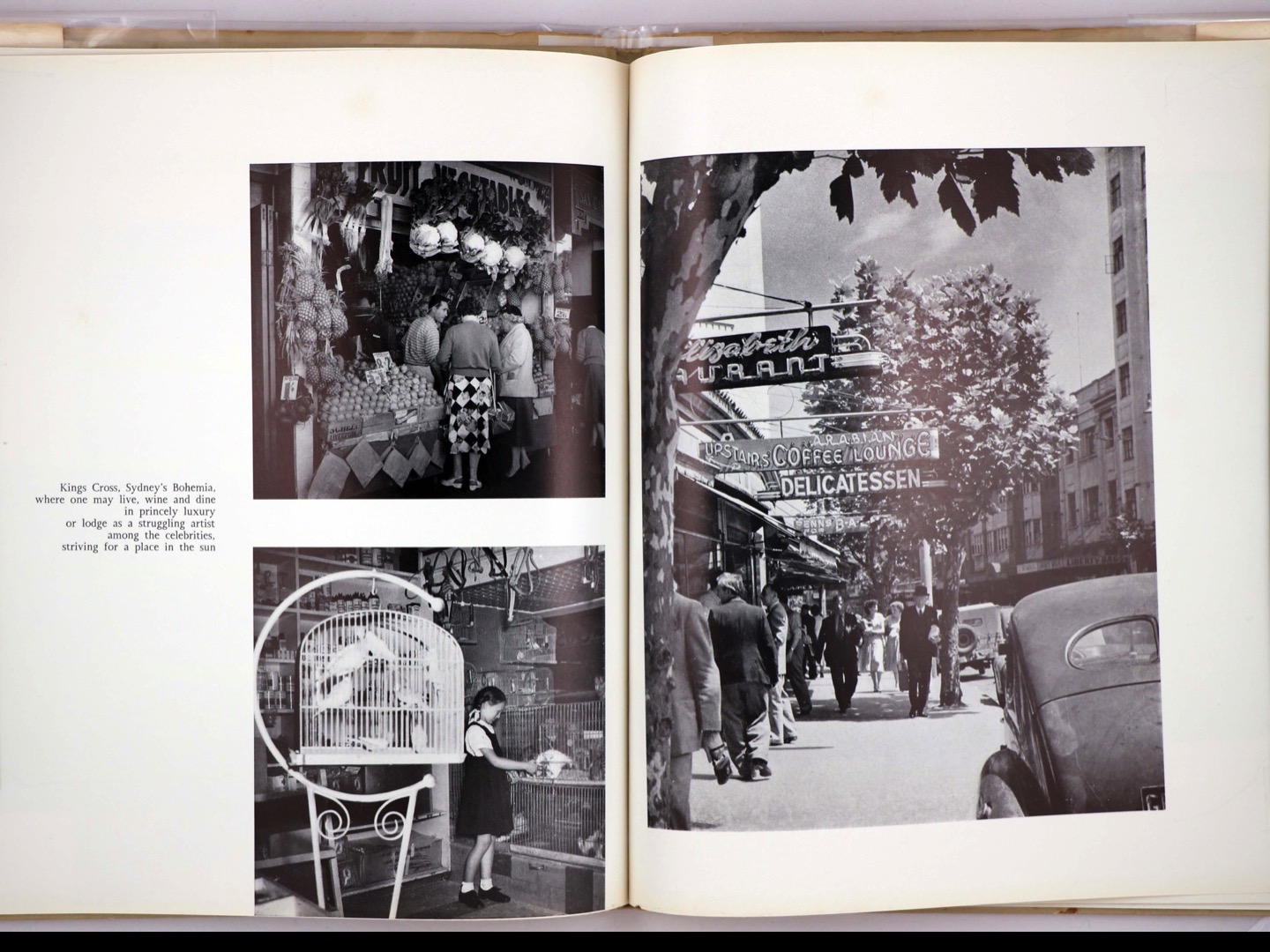
Max Dupain, Soul of a City, published by Oswald Ziegler
The popular iconography of the Cross had been developing in the 1940s and 50s. Max Dupain contributed photographs of women in pretty print dresses strolling under the plane trees of Macleay Street to many Sydney books during those decades. But it really took off in the 1960s — on a broad visual front. The Cross not only featured in the film They’re a Weird Mob, it also became the staple location for Horwitz pulp fiction novels, and in 1965 was the subject of a Channel Nine TV documentary called The Glittering Mile.
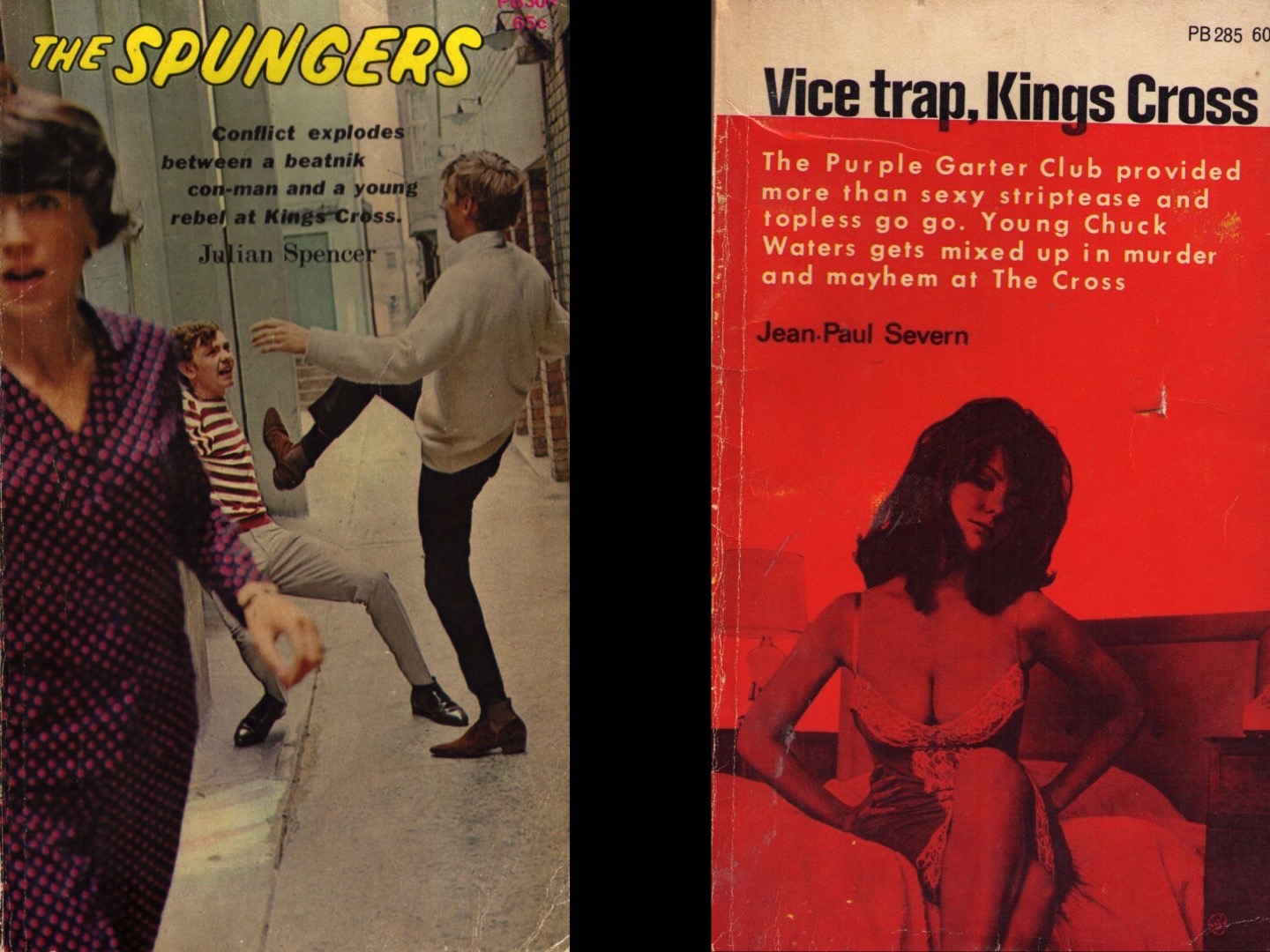


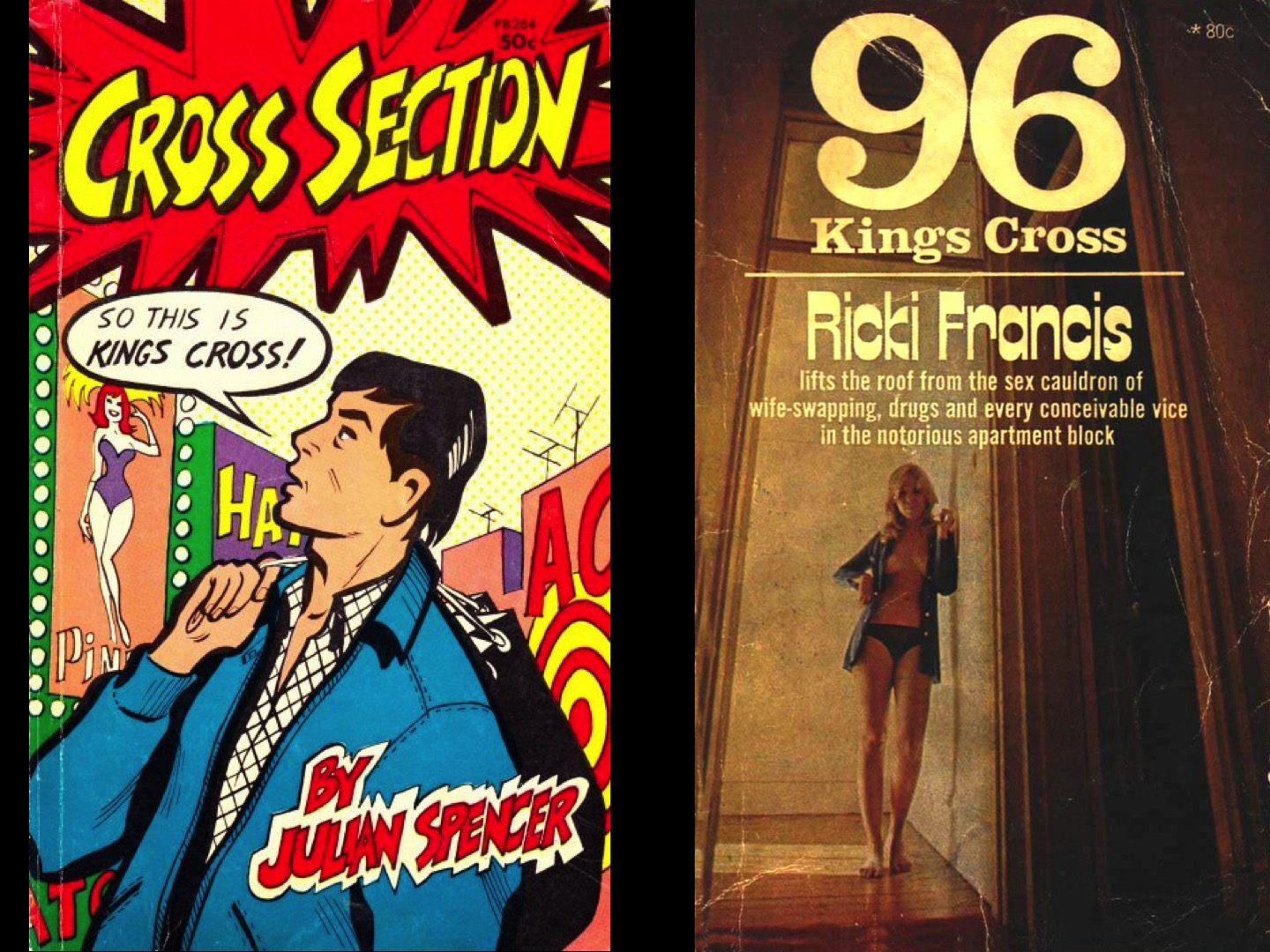
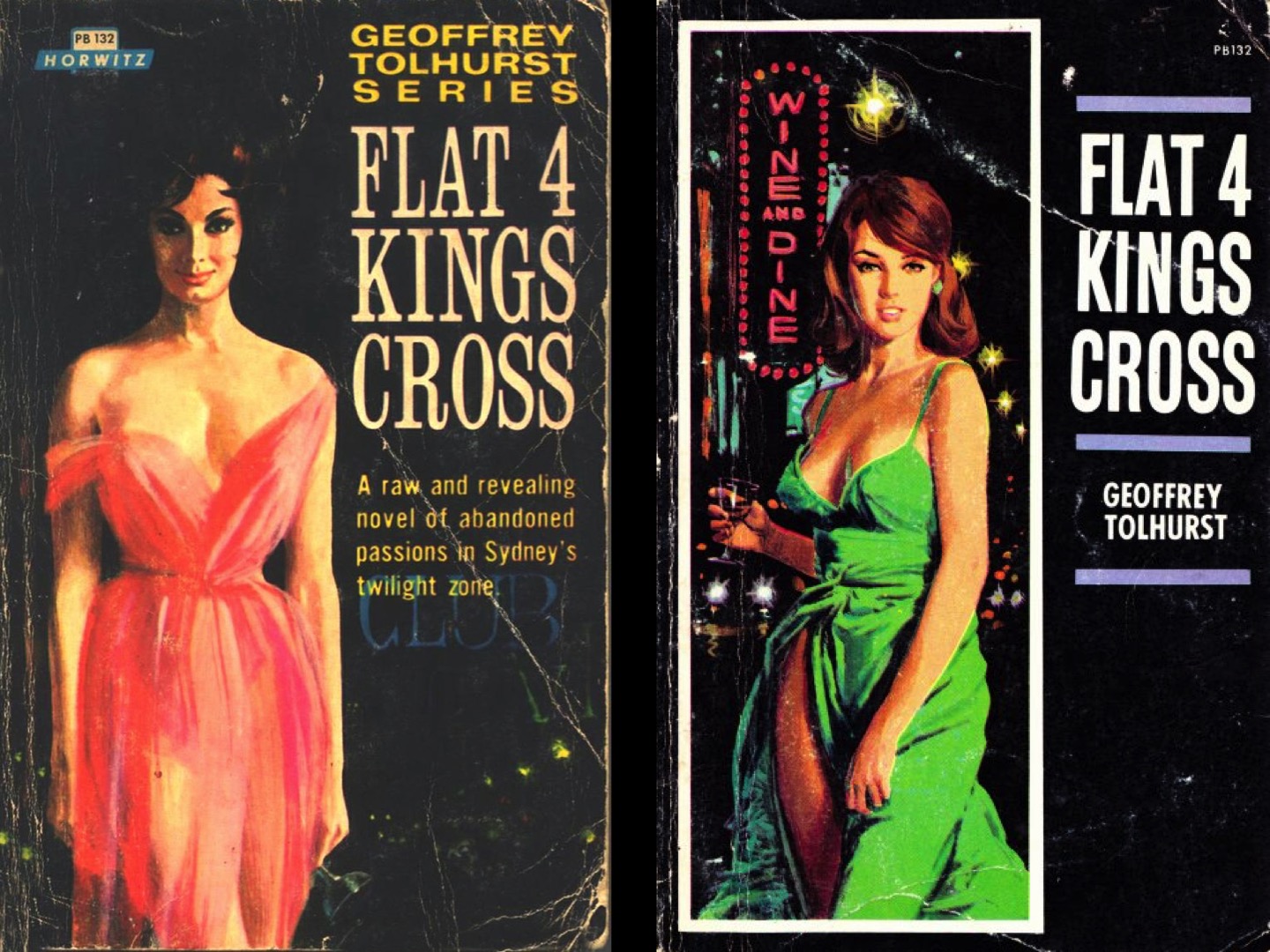


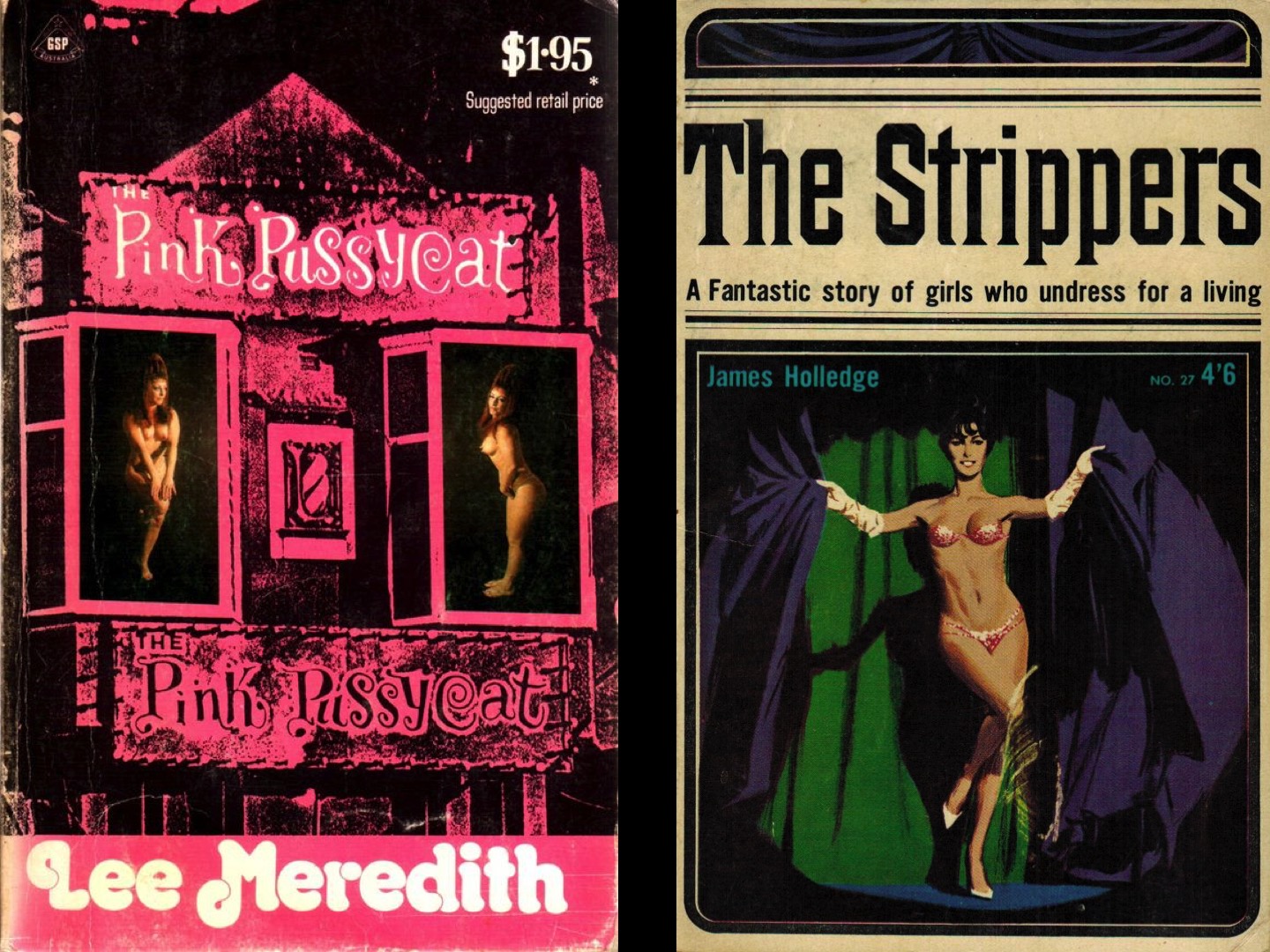

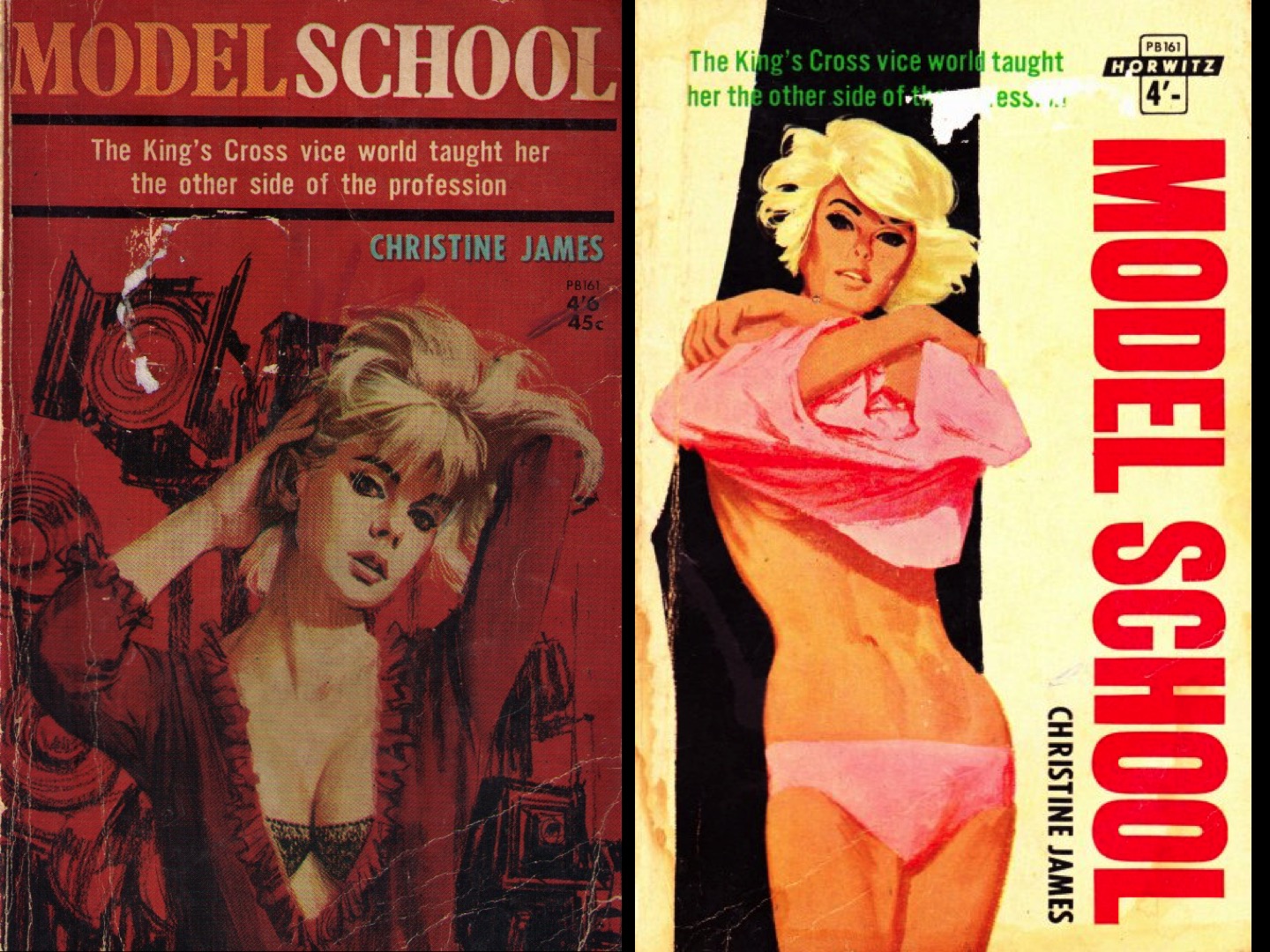
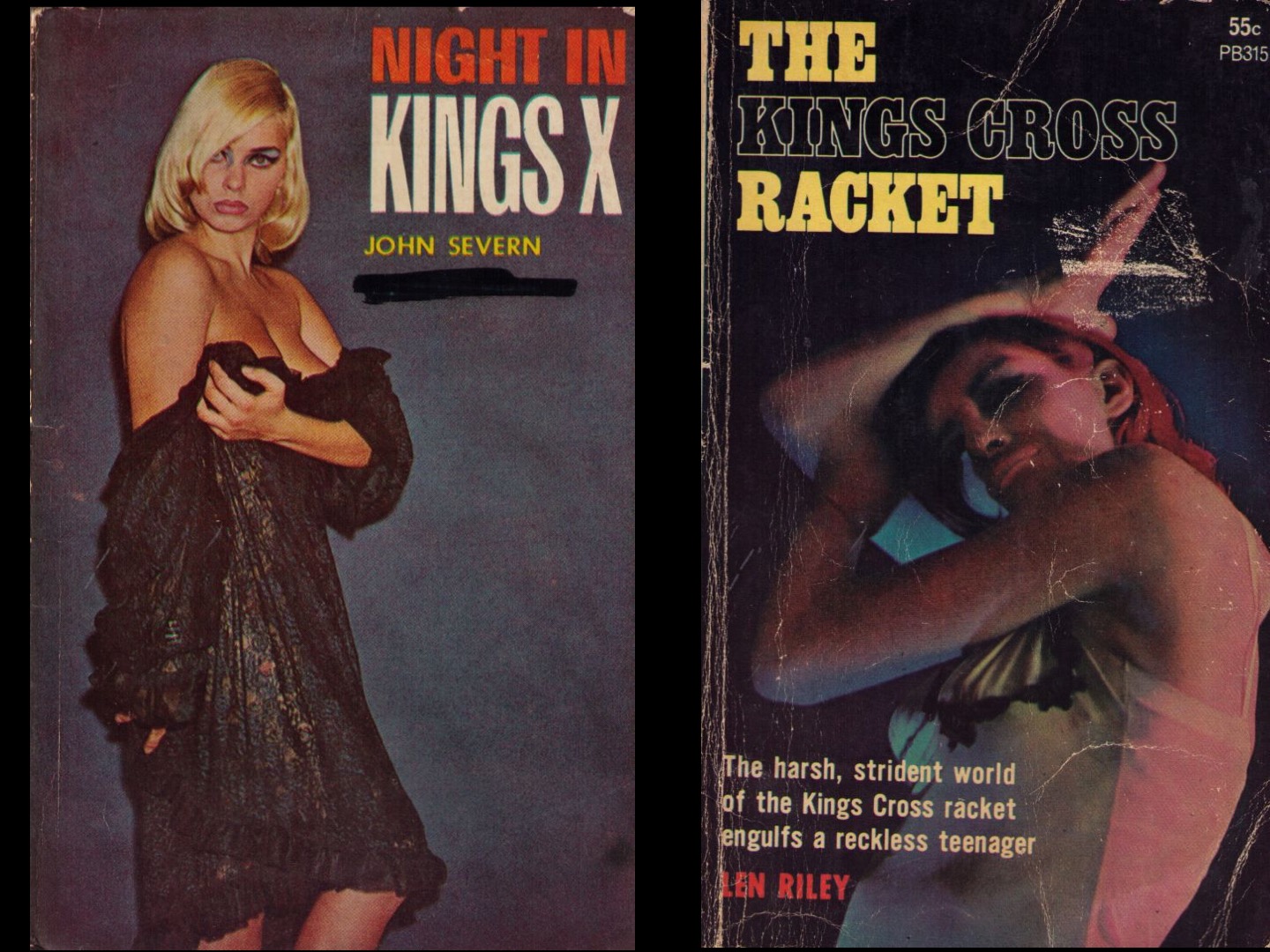
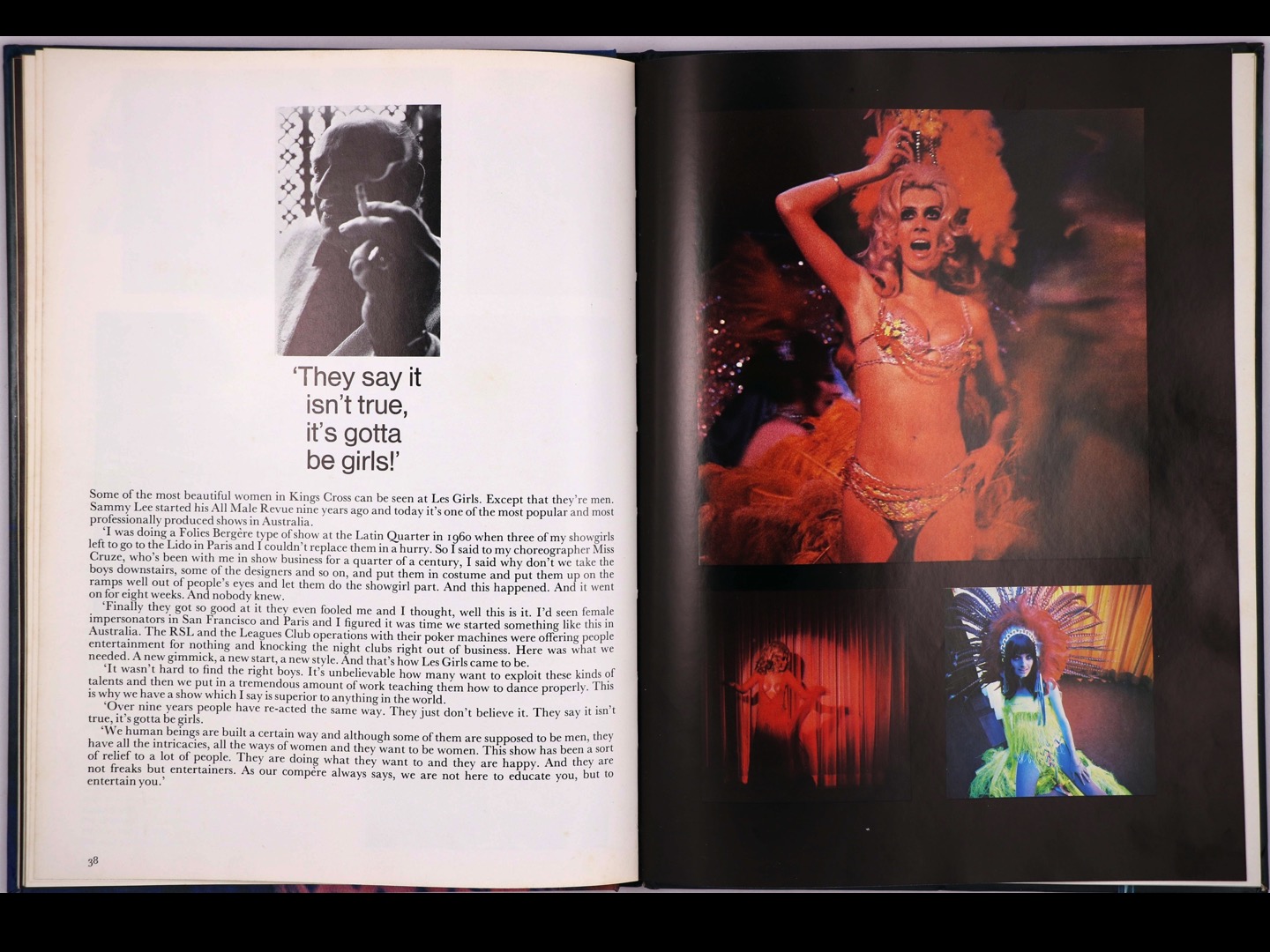
The Glittering Mile in many ways sets a template for subsequent Cross iconography. It starts with a bit of history: the convict windmills and colonial villas on the ridge above the town reached by an aboriginal track through the scrub which eventually became William Street, and so on. It interviews what had already become a familiar cast of characters: the 1920s flapper Dulcie Deamer, the witch Rosalee Norton, the manager of the Pink Pussycat Last Card Louie, and so on. But it also adds a new character, a stunning looking Carlotta barely out of her teens, and before her sex change, who was interviewed backstage at The Jewel Box, a predecessor to Les Girls. And, like many other documentaries it takes us through a twenty-four hour period in the life of the Cross: from the the day when we surveil the same pretty print dresses we had seen in Max Dupain, to the night where we track strippers rushing between jobs. We are shown, on our TV screens in 1965, strippers performing inside strip clubs, and men soliciting prostitutes. It might have been these brief glimpses which led to calls for the TV documentary to be banned.
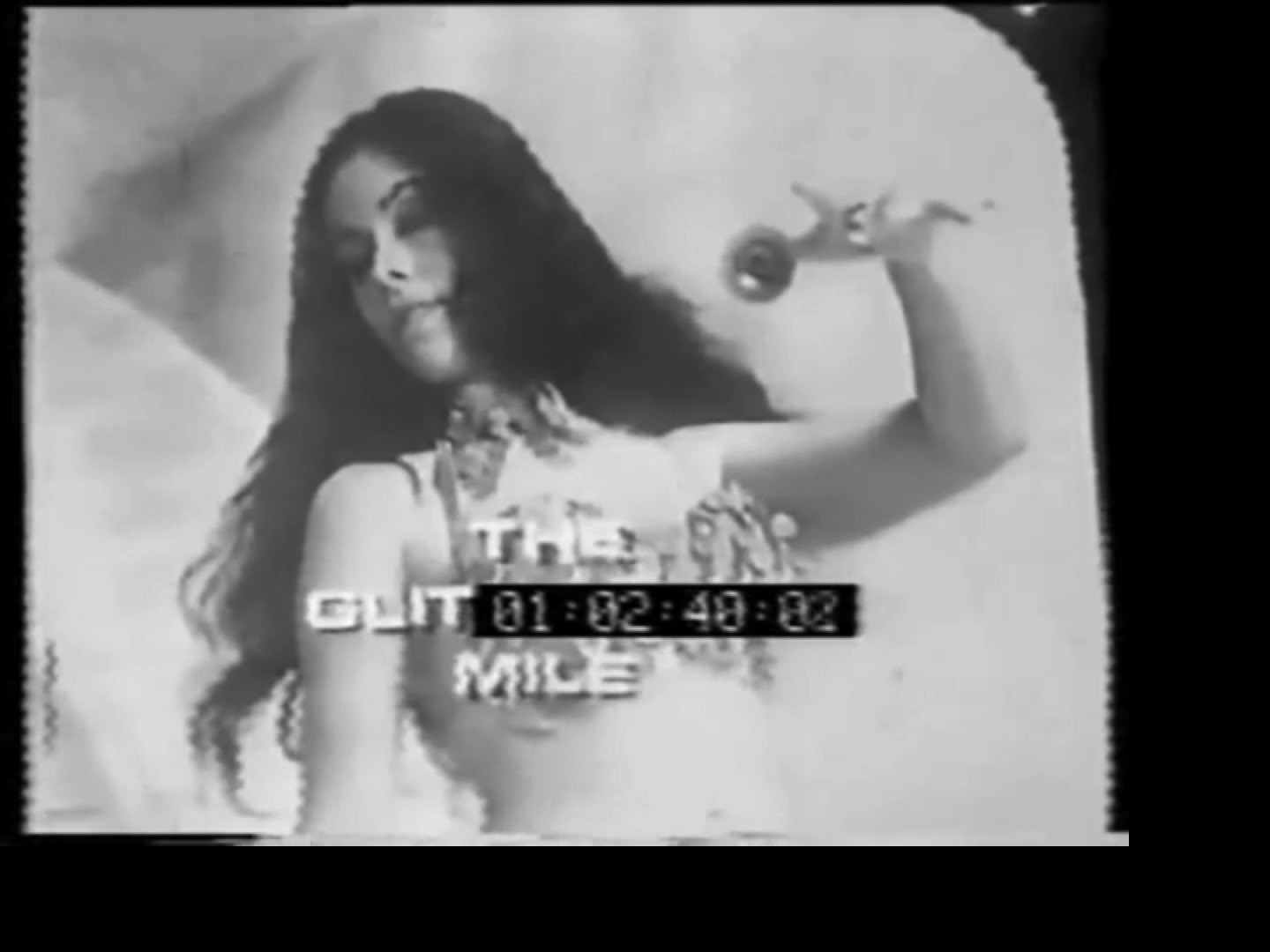
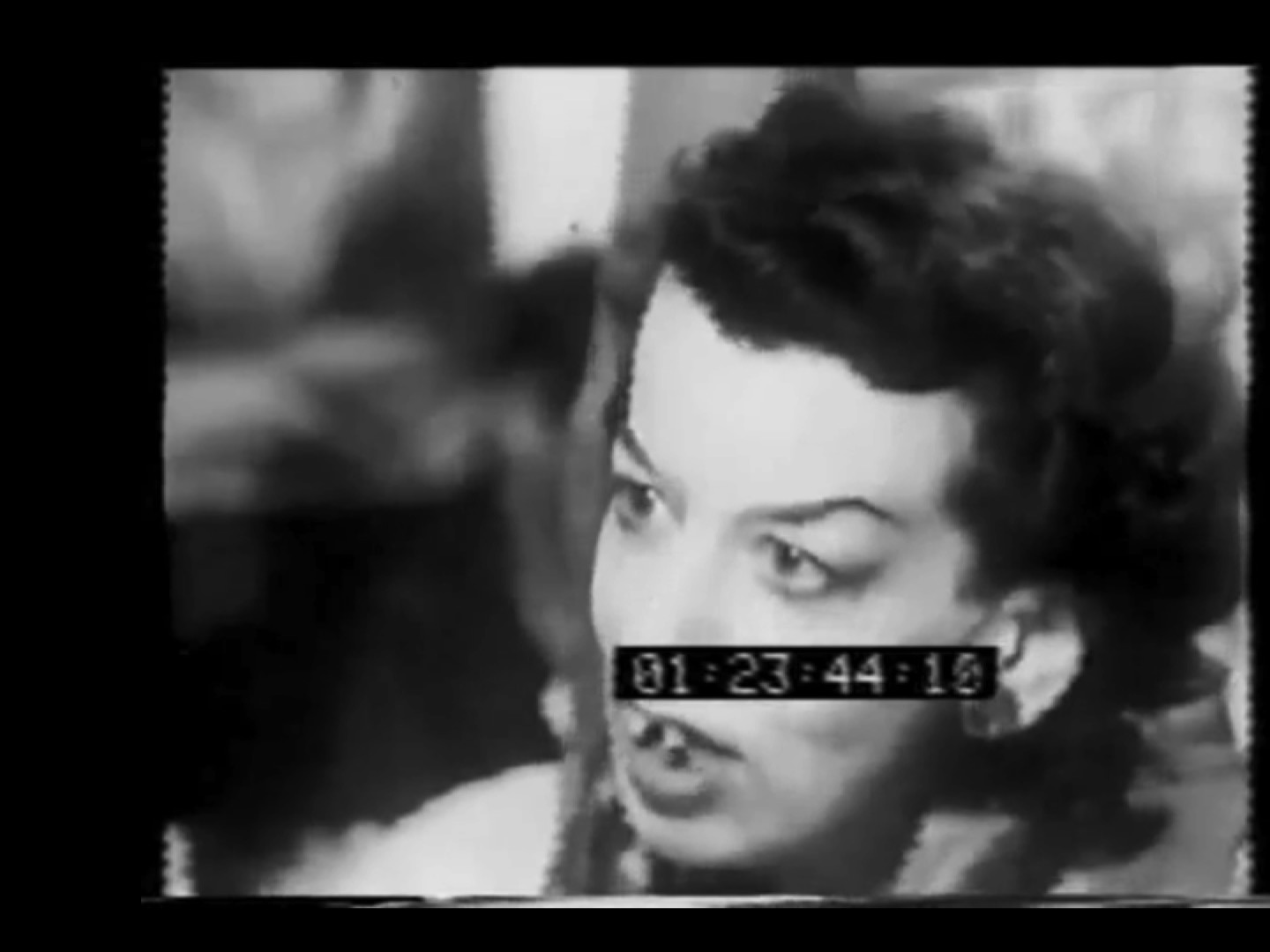


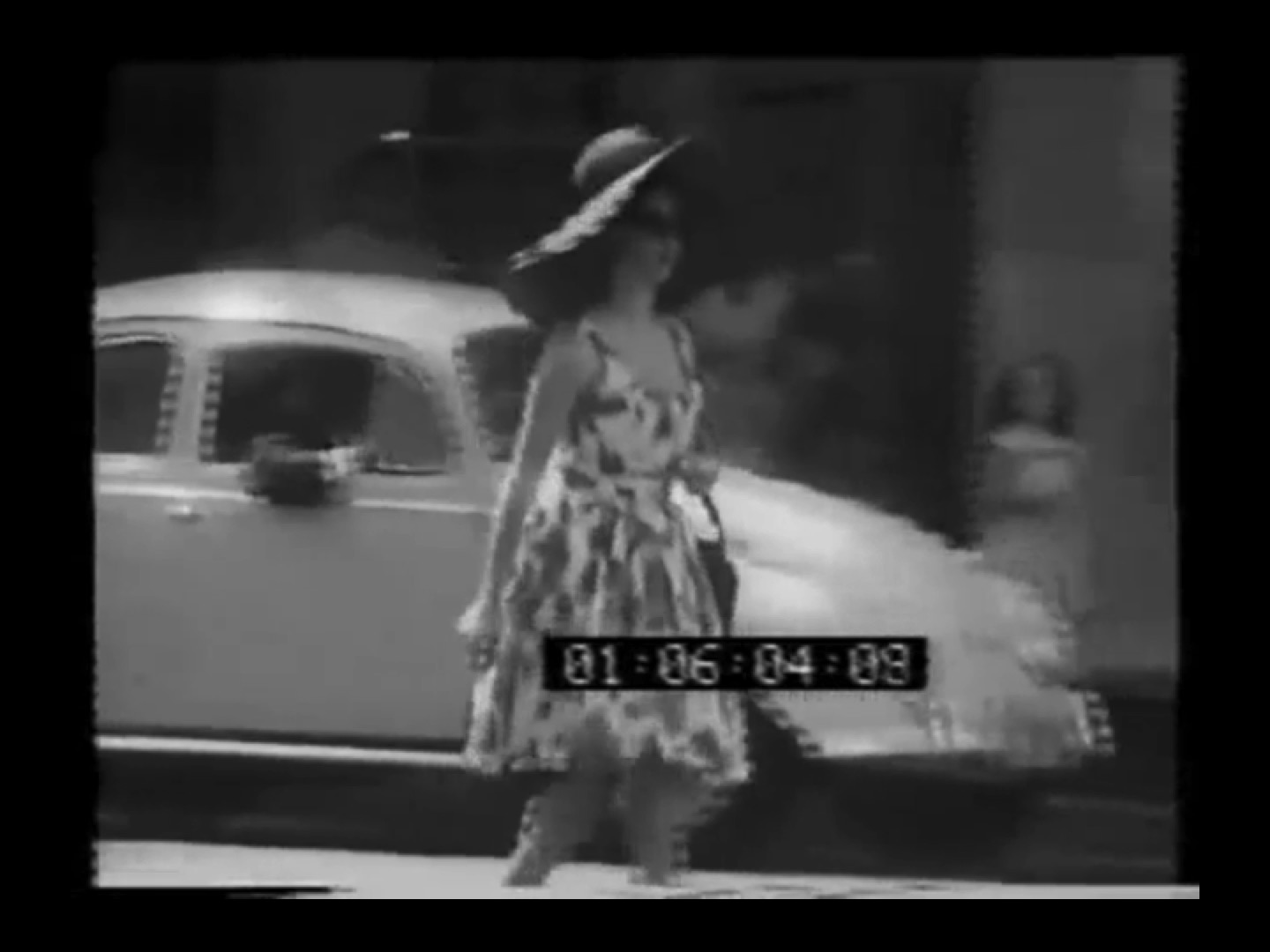


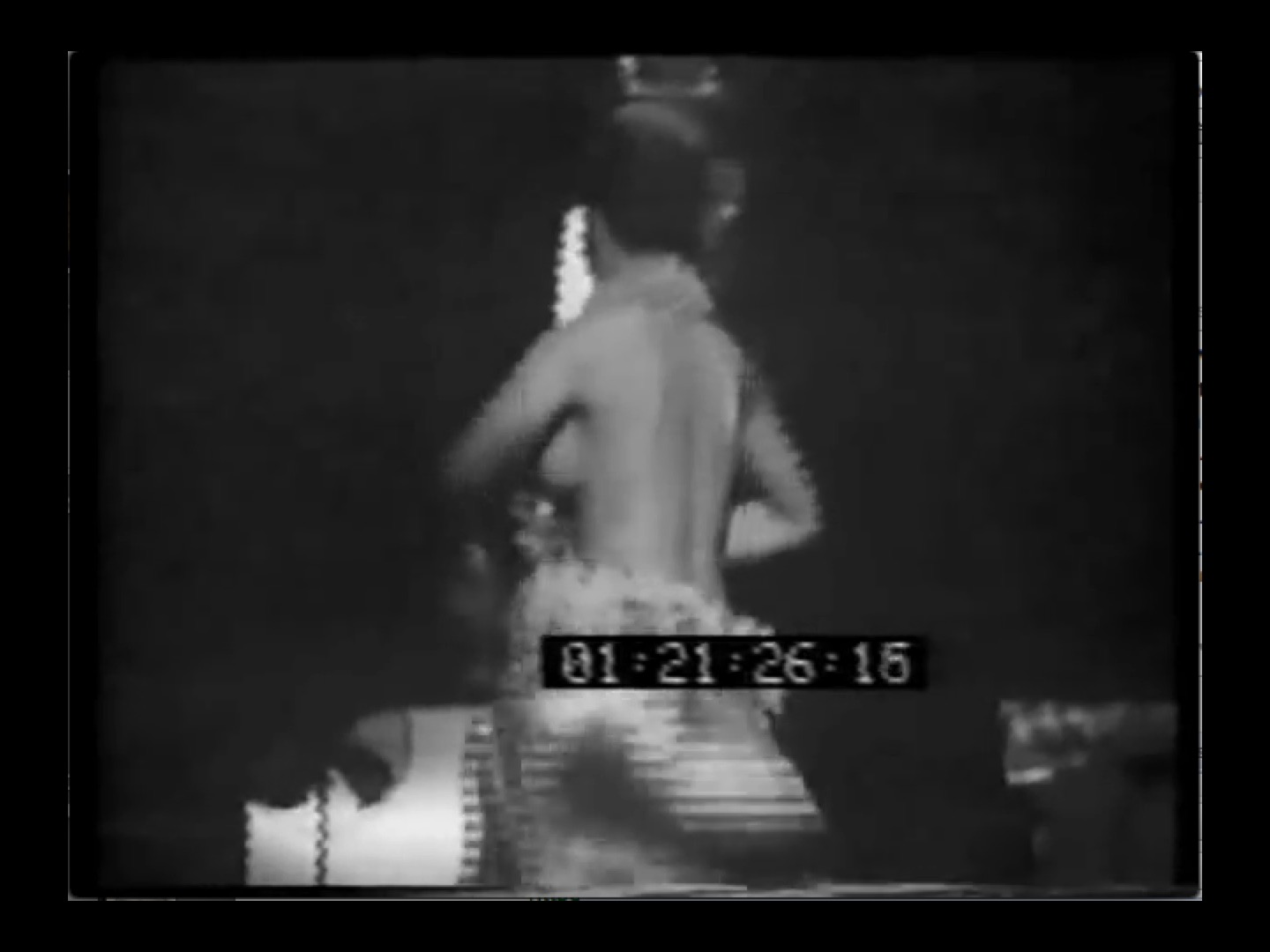
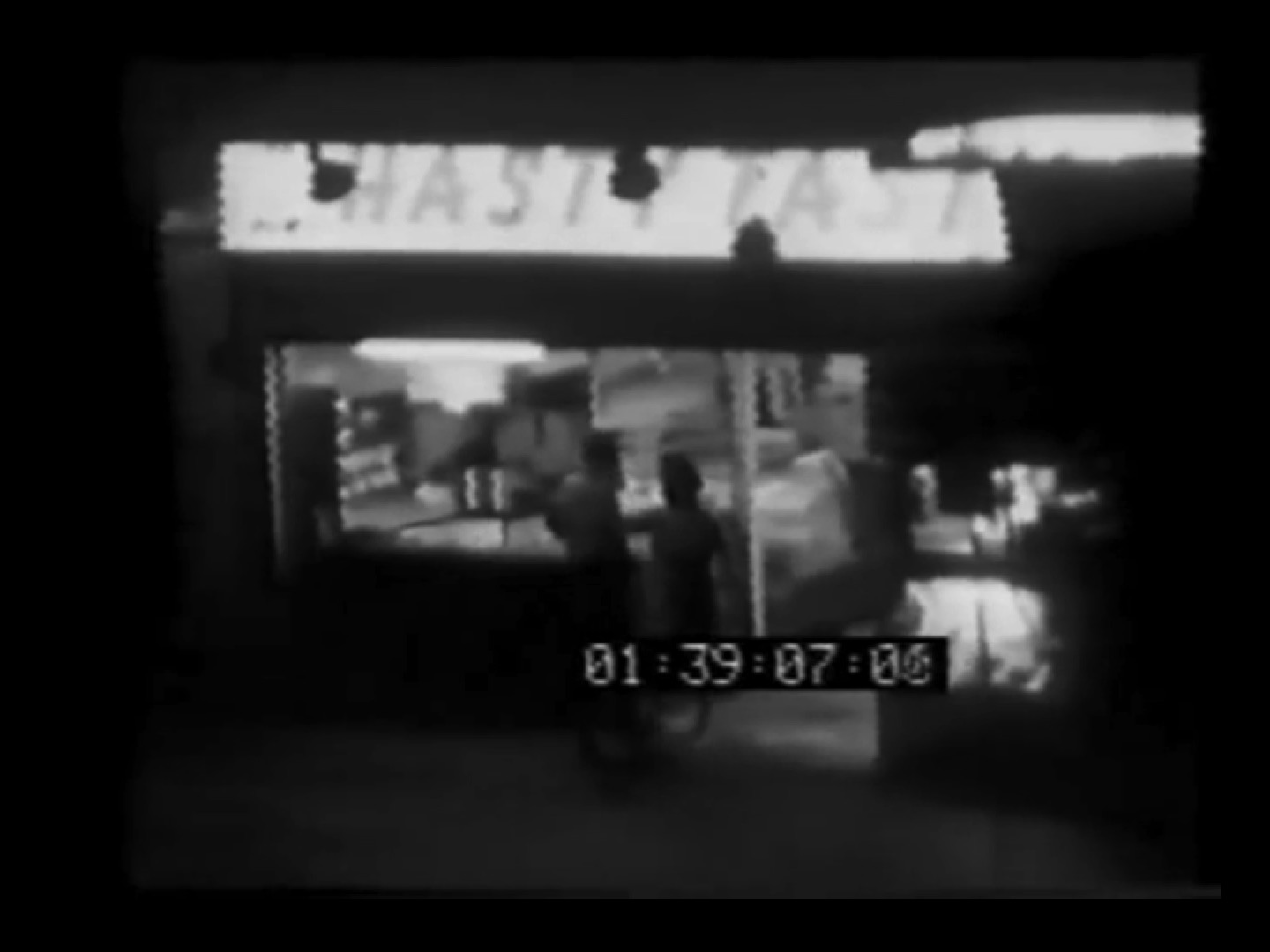


The Glittering Mile, Channel Nine, 1965
In 1965 the first book to be devoted entirely to the Cross was also published. Life at the Cross featured an anodyne text by Kenneth Slessor. Slessor had popularised ‘Bohemian Sydney’ in 1933 with his book of poems Darlinghurst Nights, and in the post war period had become the go-to laureate for poetical musings on Sydney. He was 64 by this time, and phoned in a text which is yawningly behaved. The book had an introduction by the Lord Mayor, so there is no imagery of prostitution, as there had been in The Glittering Mile, but nonetheless Robert Walker’s by now familiar imagery of ‘Parisian’ streets is spiced up with some tasteful strip club imagery, and even some drag act imagery. But all the stripper photographs are printed very small, and visually recuperated into images of suburbanites having a touristic fun night out, which are printed larger and dominate the pages.


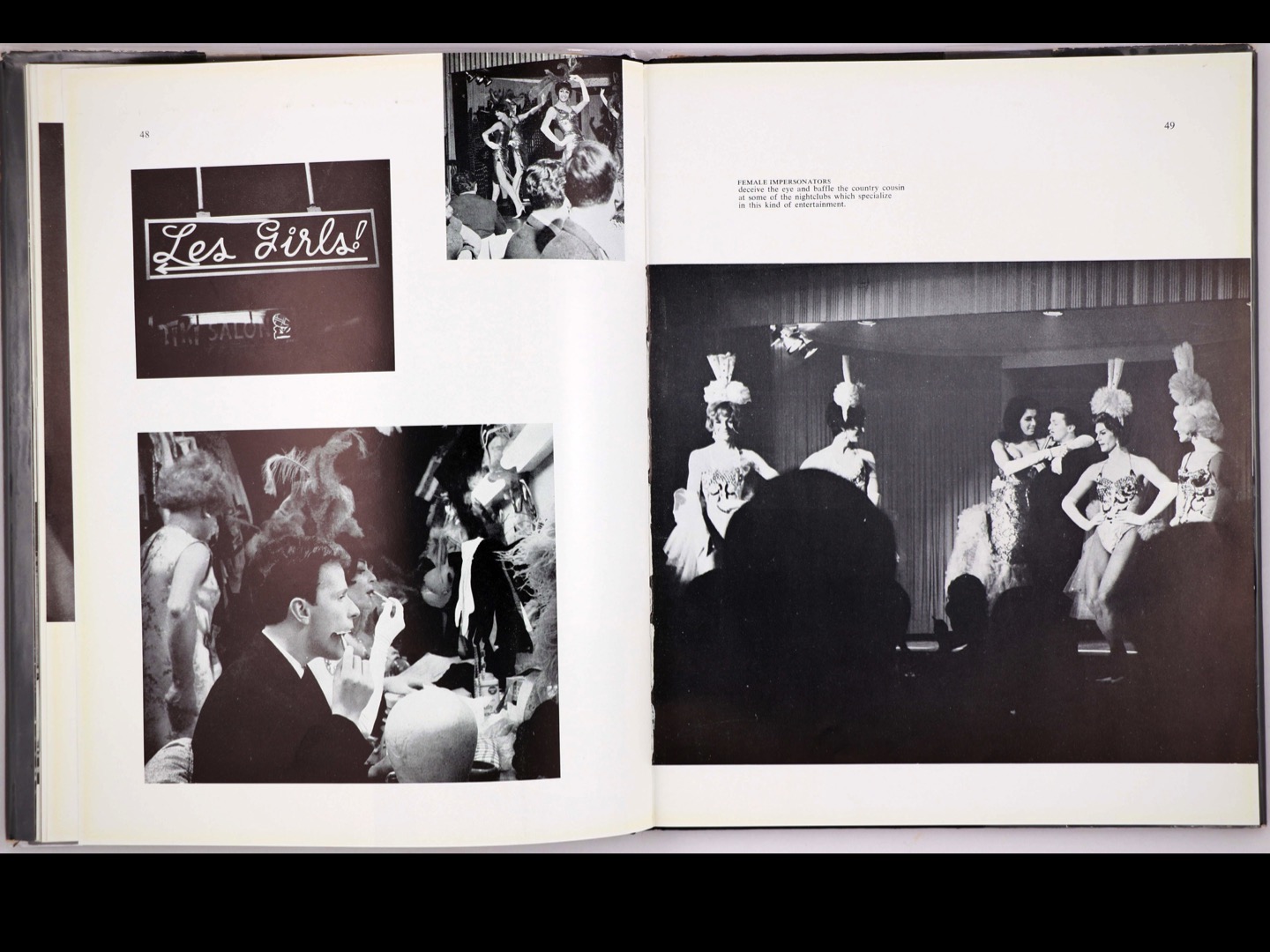
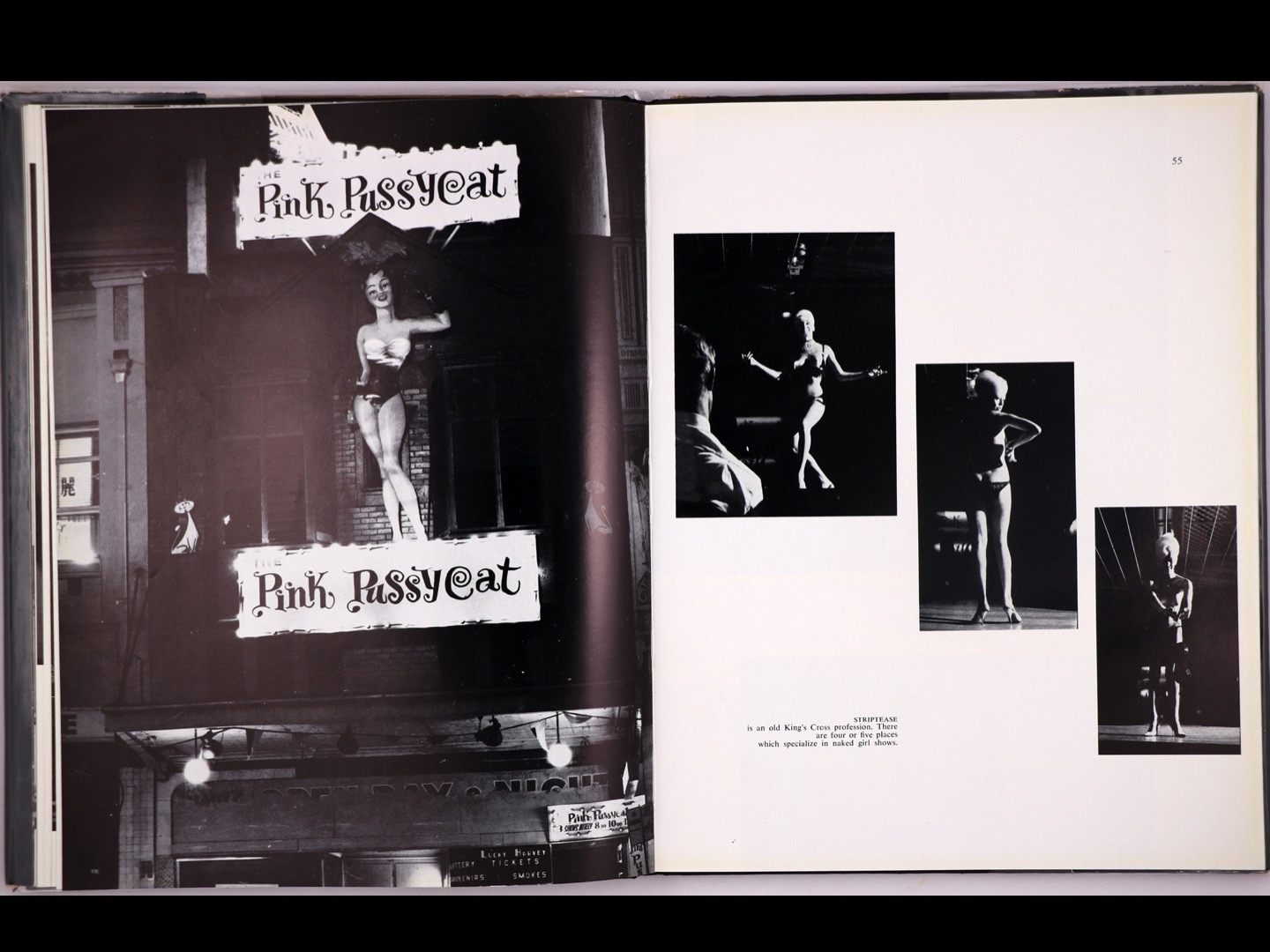
Life at the Cross, Kenneth Slessor and Robert Walker, 1965
There is an obligatory excursion to the Cross in my other pick for best-Australian-photobook-ever, an acerbic take down of Australian complacency called Southern Exposure published in 1967 by Donald Horne, author of the excoriating book The Lucky Country, and the photographer David Beal. Their book which, as we can see from the cover, is dedicated to inverting Australian complacencies, also breaks down the unspoken wall between day and night which all previous visual representations of the Cross had adhered to in order to sustain the aspirational anxiety it represented — to keep separated the Cross’s twin helixes of cosmopolitanism and sleaze. In previous Cross representations the daytime is for Parisian boulevardiering, the night-time for frenetic excess. However in the double page spread of Beal’s obligatory Cross photos a fashionable young coffee drinker suspiciously glowers at the camera through narrowed eyes, wordlessly telling us to f… off, and we get a portrait of the Pink Panther’s garbage bin primly sunning itself in the bright morning.


Southern Exposure
As the sixties progressed the idea of youth — young people as a distinctive cultural category — began to occupy inner city iconography. Some young people began to bring a kind of hallucinogenic approach to inner city Sydney. For instance in 1968 the thirty-five year old left-wing writer and social analyst Craig MacGregor had got the job of writing the text for the tourist souvenir book To Sydney With Love. McGregor attempted a very personal beat-poetry howl on Sydney. He opened his text, meant to be read by ordinary Australians, with a cosmic experience of Sydney he had late at night standing on the roof of a block of flats in Potts Point looking into Woolloomooloo:
I know this city, I comprehend it utterly, my guts and mind embrace it in its entirety, it’s mine. It was a moment of exhilaration, of exquisite and loving perception, my soul stretched tight like Elliot’s across this city which lay sleeping and partly sleeping around me and spread like some giant Rorschach inkblot to a wild disordered fringe of mountains, and gasping sandstone, and hallucinogenic gums.
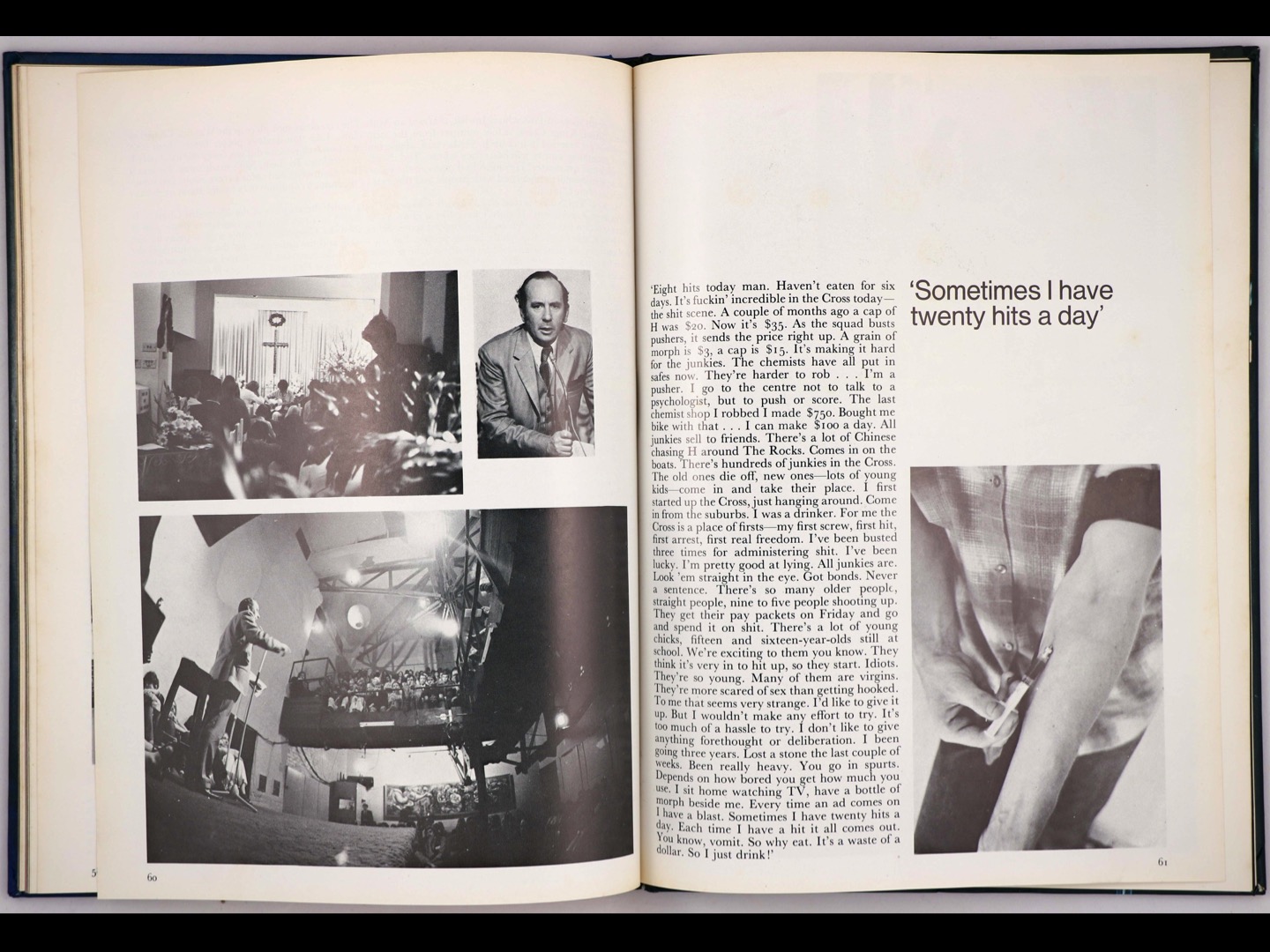
While the Cross sprouted these ecstatic visions, middle class Australia continued its fascination with it from a distance. For instance the tourist magazine Walkabout did a Cross story in 1969, adding yet another member to the cast of characters: Ted Noffs from the Wayside Chapel, which had been established in 1964 and had become a Cross institution. The following year Walkabout did yet another Cross story, this one by Wesley Stacey and Rennie Ellis and called ‘Wild Night in Big Bad Sydney’. Rennie Ellis and Wesley Stacey also contributed Kings Cross photographs to The Bulletin and The Sydney Telegraph.

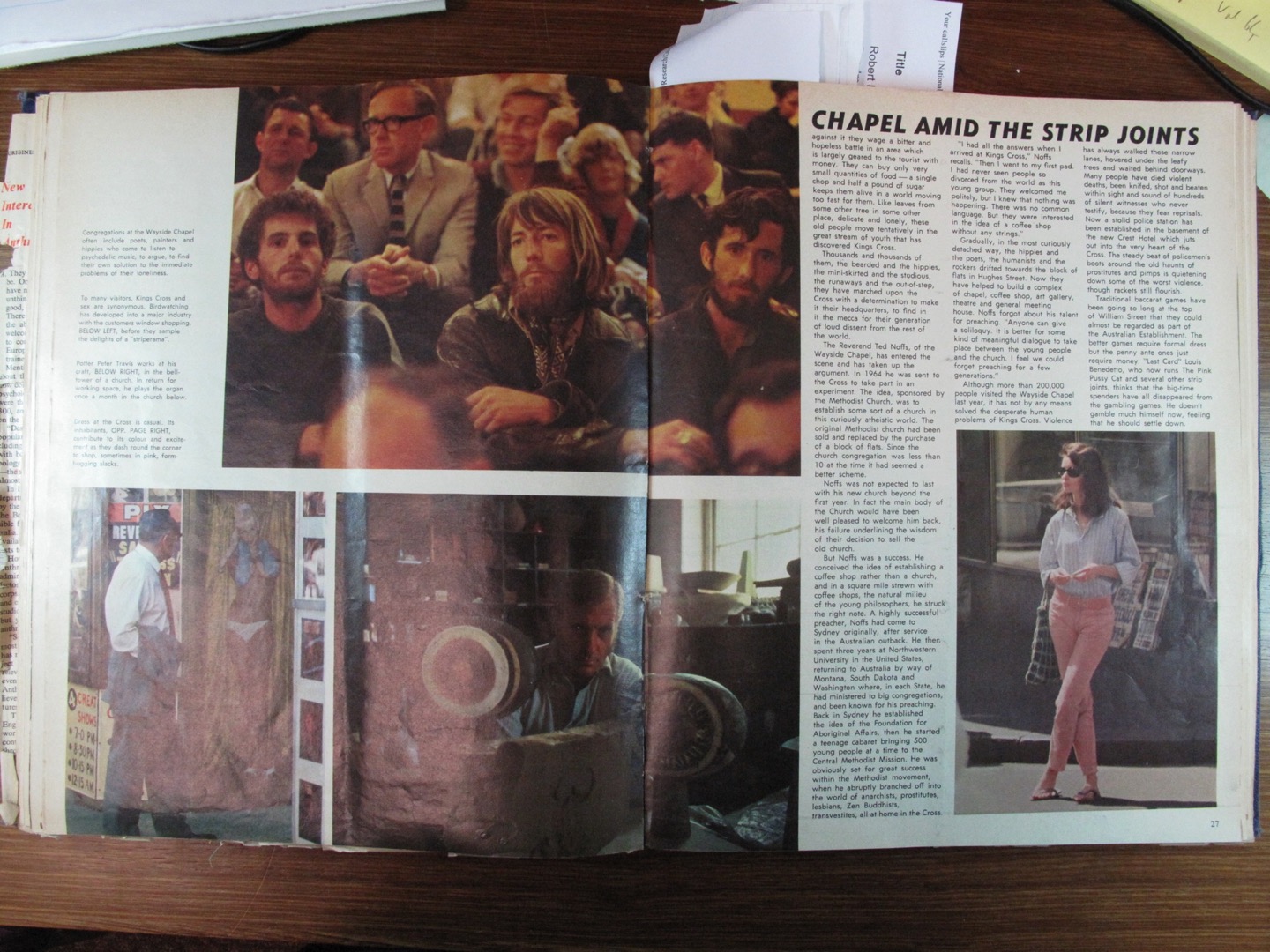
Walkabout, 1969
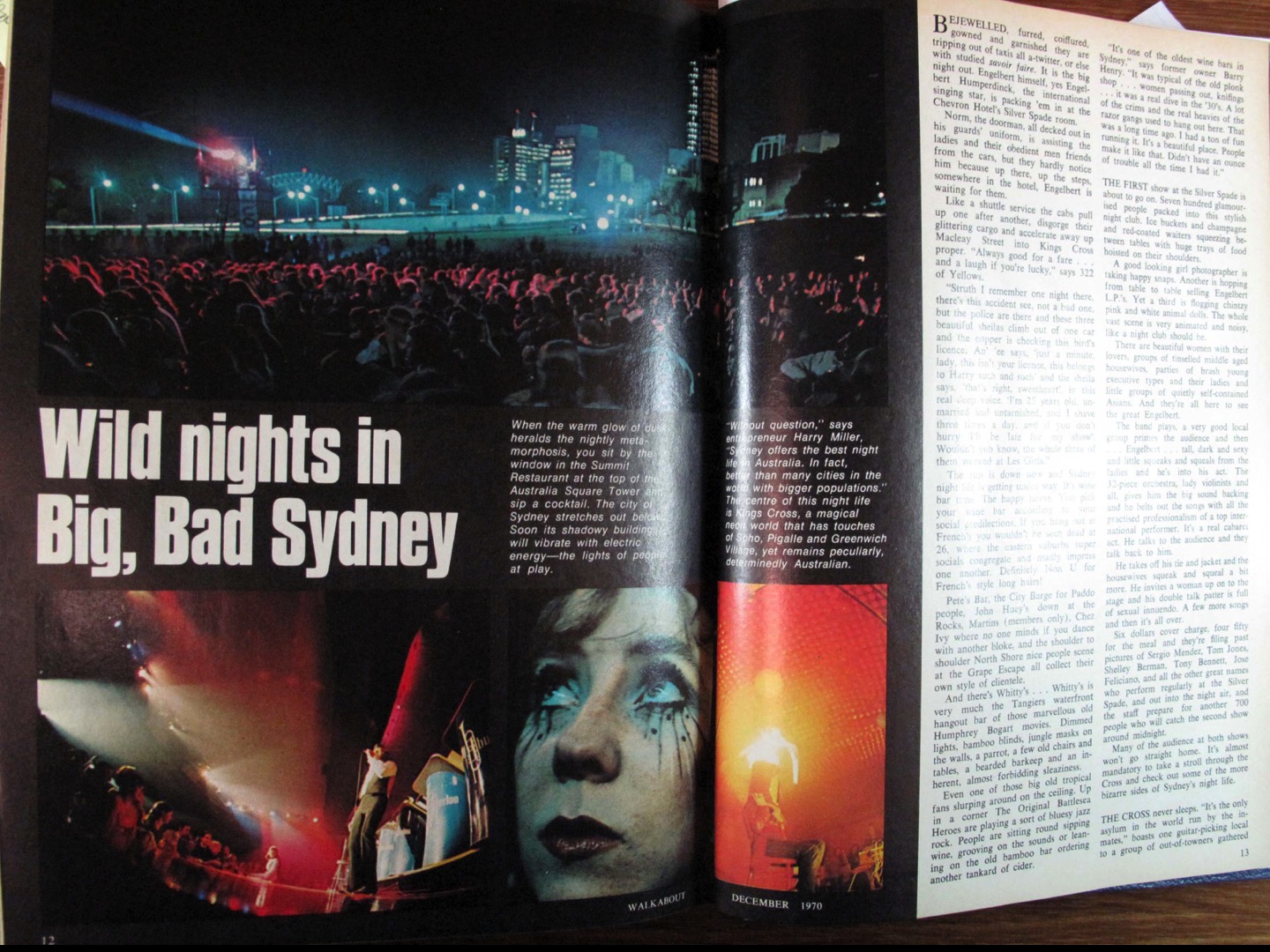

Walkabout, 1970
Their contributions to these magazines were to become part of a larger project, a whole book aimed at a new market made up of the traditional market for Australiana, R&R servicemen, and the emerging hipster class. When the book Ellis and Stacey had been shooting finally came out in 1971, published by Nelson, it was badged as Kings Cross Sydney: A Personal Look at the Cross. It was going to be their vision of the cross in photography. The blurb on the dust jacket capitalizes on the edginess of the project:
Over a period of six months the authors made frequent forays in the Cross armed with their cameras and a tape recorder. It was only by becoming known to the locals that they were able to record some of the remarkable scenes in this book. Nevertheless, there is much that they learned about the Cross which can only be hinted at. The laws of libel and the threats of bashing ensure a diplomatic silence. As one of the authors put it: ‘When a guy pulls a pistol on you and says that he’s going to shoot you, you know that it’s time to put away your camera and retire gracefully.
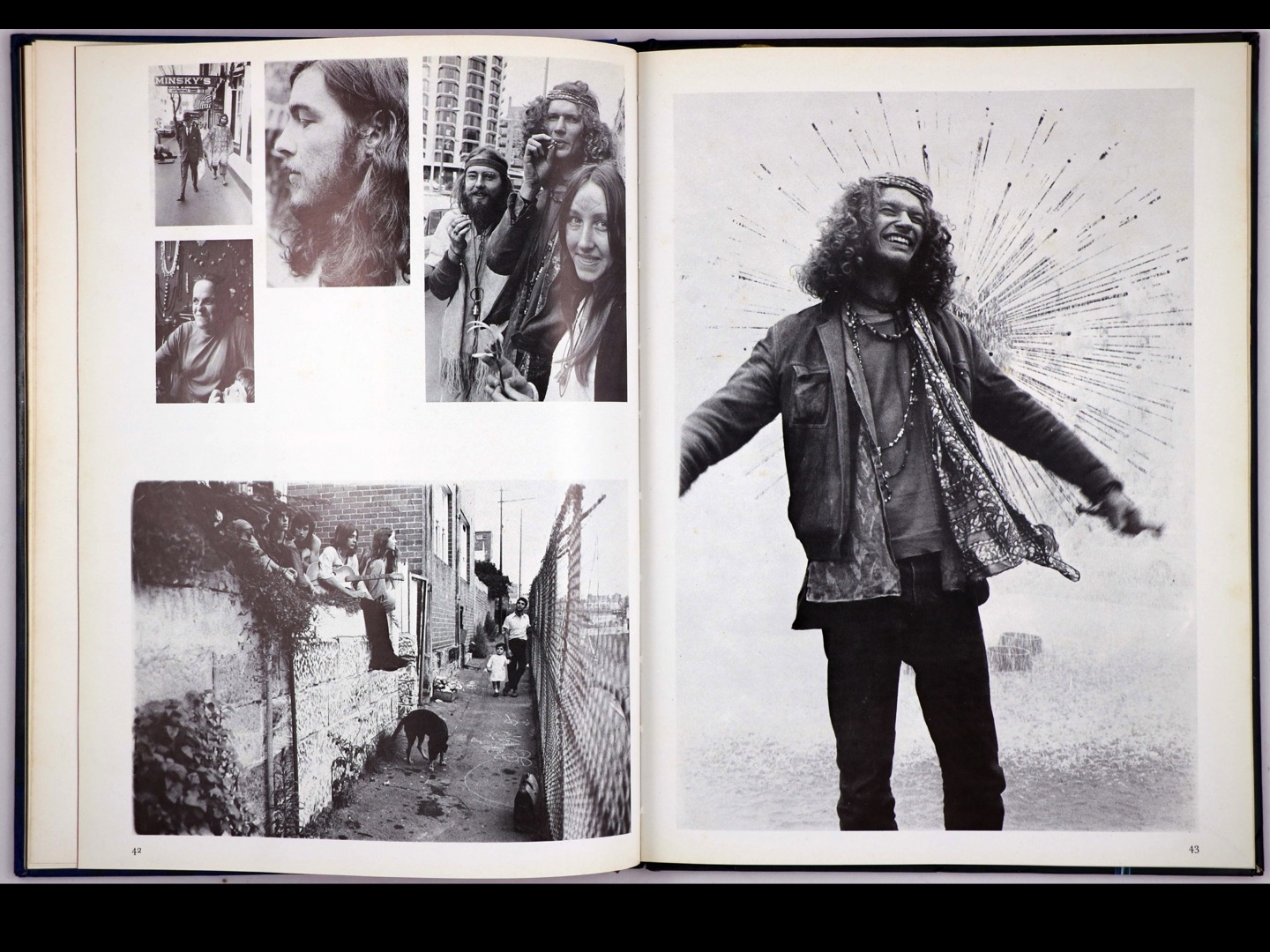
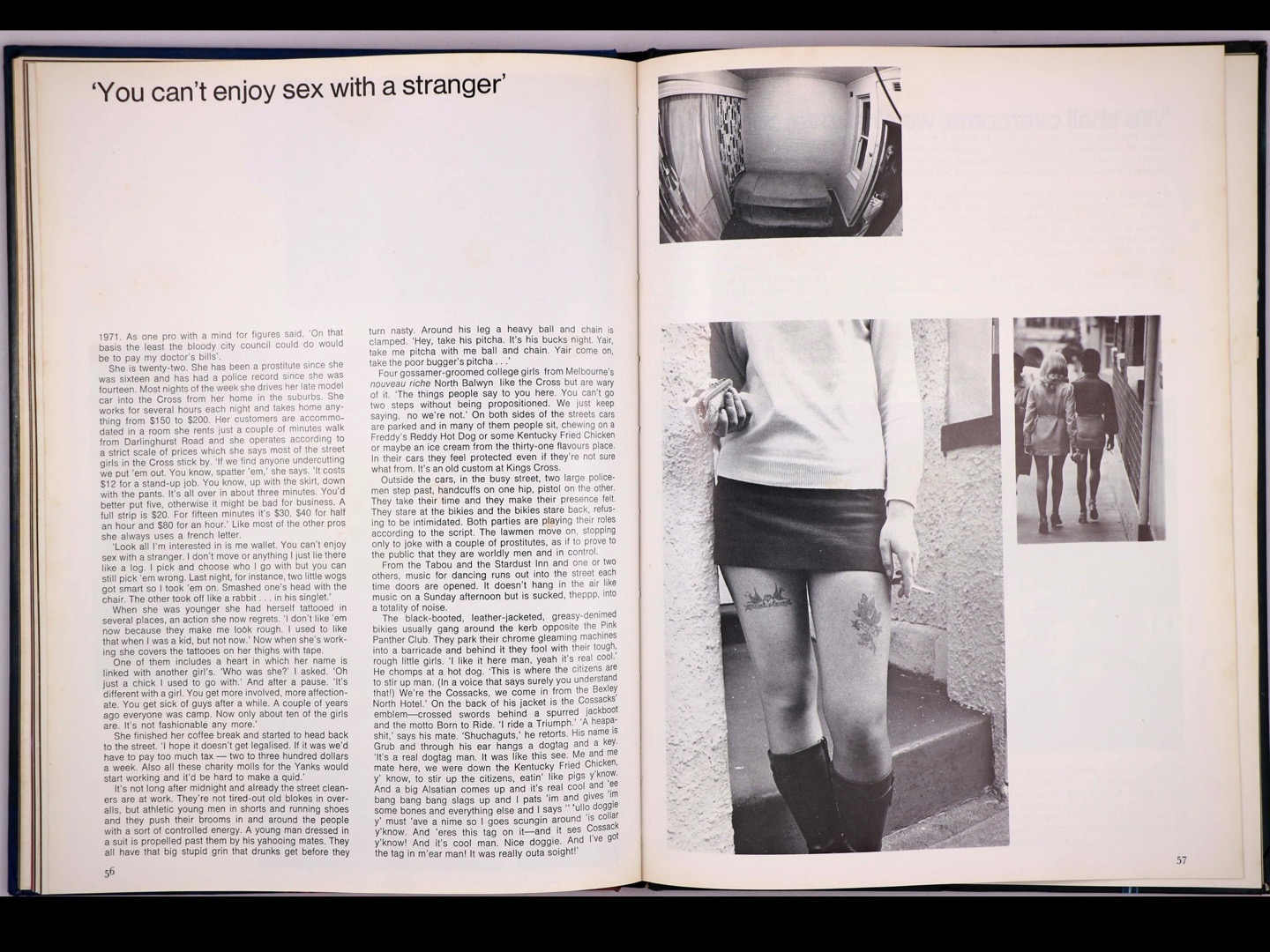
The young photographers, in their early thirties, took the reader right into the strip clubs and hippy pads of the area, using graphically dynamic and tight picture groupings and pungently personal text.[6] Their book had a decidedly hallucinogenic feel to it. Most significantly, the focal length of their lenses changed, while Robert Walker had been shooting with a something like a telephoto 135mm lens, Stacey and Ellis were shooting wide angle at 35mm. Walker’s strippers are seen from the back of the room, Stacey and Ellis take us into their dressing rooms

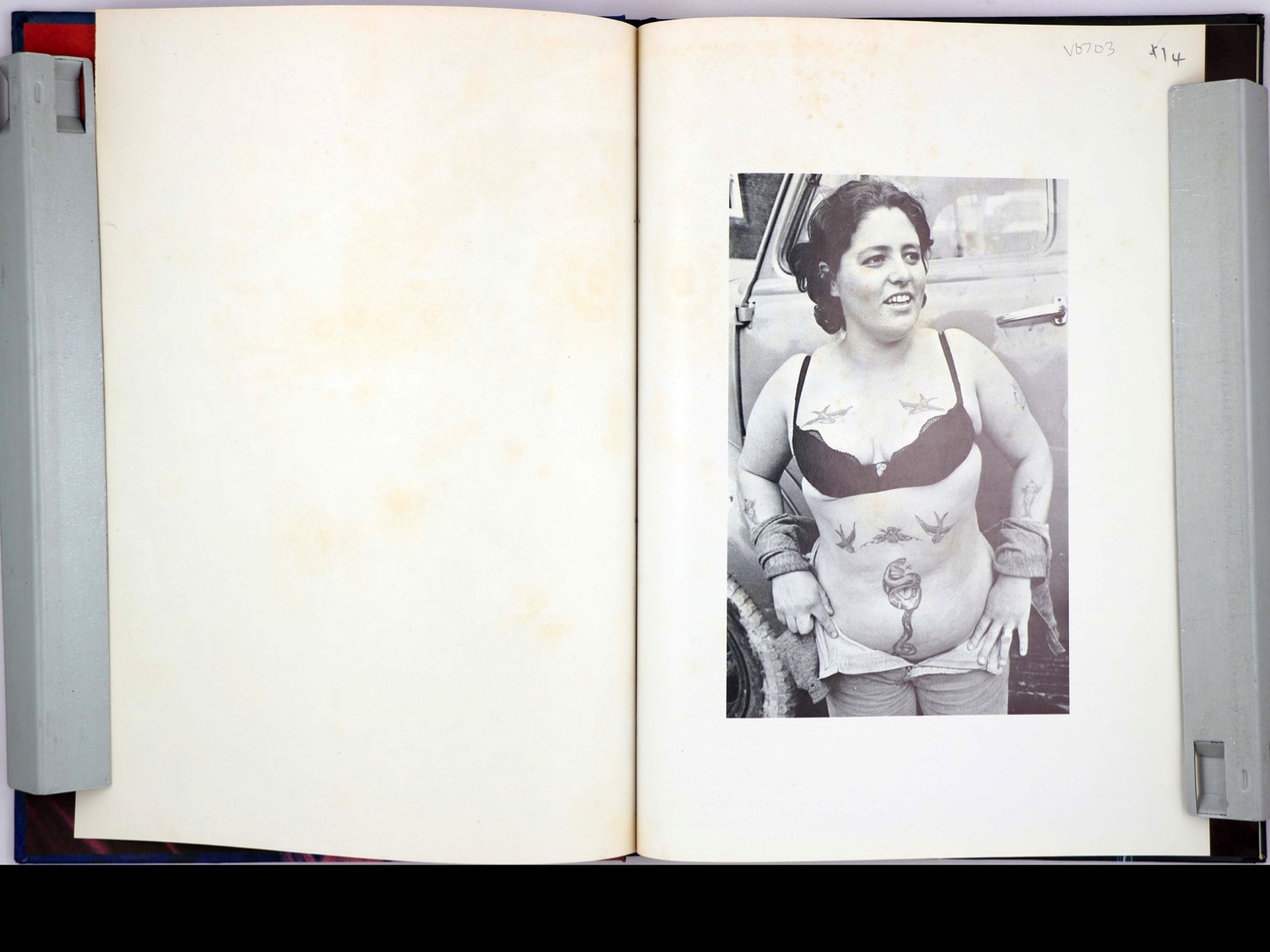


Kings Cross Sydney, Wesley Stacey and Rennie Ellis, 1971
Ellis’s text for the book begins with a picaresque personal memory from 1958, when he came to the Cross after leaving a Melbourne grammar school. There he and his mates meet Babs. She is ‘training to be a strip-tease artiste’ and gives the boys a show they will never forget. From this mnemonic deflowering Ellis takes us back to the obligatory history of colonial windmills and villas, before plunging us into the present day, 1970. Like a Beat poet he introduces us to the people themselves:
Hippies and heads and spades; dog-walkers and cat-feeders; witches, warlocks, painters; poets, philosophers, pensioners, painters, prostitutes, perves; soldiers and sailors; strippers; gamblers and gunmen; camps and conmen; craftsmen, chefs, shopkeepers, foreigners, bikies, jewellers, junkies, nuns, schoolkids, tourists; princes and paupers and chicks on the make, cops on the take and even an Irish Jew or two. p6
For me this exhilarating list has echoes of a similar list Carol Jerrems made three years later in her Book About Australian Women, where she said she had photographed:
“…….artists – painters, sculptors, writers, poets, filmmakers, photographers, designers, dancers, musicians, actresses and strippers. Others included women’s liberationists, Aboriginal spokeswomen, activists, revolutionaries, teachers, students, drop-outs, mothers, prostitutes, lesbians and friends.”.[7]
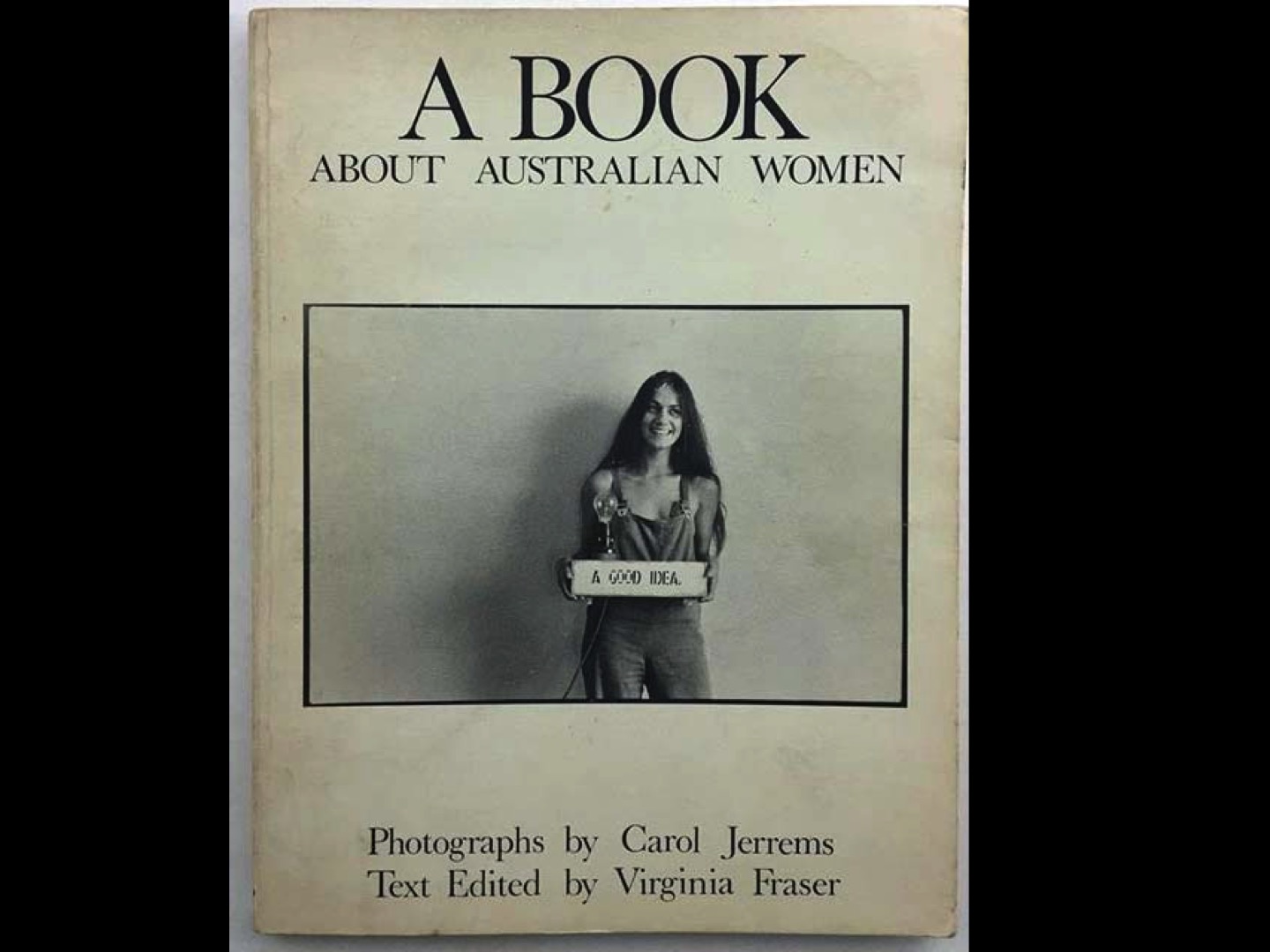
Carol Jerrems, Virginnia Fraser, A Book About Australian Women, 1974
Although we meet the same cast of characters introduced in previous Cross publications, including the aging flapper Dulcie Deamer, and the aging witch Rosalee Norton, Ellis’s text take us down onto the street where his own libidinal gaze is roused:
The streets are busy with shoppers, especially determined little old ladies with straw hats and gloves and, in summertime, perhaps a parasol, and itinerant kids brushing from one to another killing time or maybe stretching it out. The girls are extraordinary nymphets—cascades of hair, bare feet, and erect nipples denting T-Shirts over faded Levis or perhaps they wear long tie-died dresses or Indian gear. For most, the bra is passé. They amble along the street, breasts jiggling like delicious jellies, features open to the world. The boys are hairy and hip. They look like ancient warriors and act like troubadours. p8


Kings Cross Sydney, Wesley Stacey and Rennie Ellis, 1971
On pages like this we see the ambition of the book, but also its graphic naivety. Unlike all previous Australian photobooks, Ellis’s text is linked closely to his images of the same experiences, which are often printed on the same page as the text. The book’s design attempts to break out of the staid stolid design of the previous decades, so occasionally it creates centrifugal layouts of small images across double page spreads. These small images are also run along the top of the pages which carry his text, but they are a bit too small to be seen properly by the reader.
On other pages Ellis indulges in long Beat-style riffs that encapsulates not so much a visually captured scene, as a personally experienced moment:
Keep your eyes and your mind wide open and you’ll see it all— the passing parade, a perennial Mardi Gras with no threat of Lent to follow. Across the road—hare krishna hare krishna krishna krishna hare hare hare—there are eight of them, the men with shaven heads, except for a tuft on the crown, the girls pretty and gentle with long plaits over their shoulders, all in flowing robes, their foreheads symbolically marked in white. Together they sway from foot to foot, a devoted chorus line of the Hare Krishna movement chanting their mantra to a drum beat and a hand clap— hare krishna hare krishna—it’s an infectious rhythm and people stop to stare, and wait for something to happen, while others join in and chant. Some hurry past as if it wasn’t really happening at all. Several Japanese businessmen leave a restaurant and climb into a long chauffeur driven car. They glance momentarily at a curvy girl in a Superman T-shirt—rama hare rama rama—while another with a gold-lettered satin sash across her shoulder walks past, handing out Whisky a Go Go invitation cards: ‘$2 includes food and drink for the sock-it-to-me happy hour and quarter and admittance all night until 3 a.m.’. People accept them indifferently. The hairy ones in their Levis are floating past, stalking shadows and followed by chunky-nippled girls in two and threes and solo, oblivious, I think, to the heads they turn. One girl in a crocheted top actually has her brown nub poking through the open knit like it’s coming up for air. You try not to look too hard and glance at the Back to Godhead magazine which you have been given—hare krishna, hare krishna—and before you’ve recovered another nymphet comes into view, beautiful and blonde, her stomach bare, her friend a willowy black soul brother bebopping along just like he was on 125th Street. Then, revving big Trummpies, a couple of Very Heavy bikies glide past, their leathered and crash-hatted ladies hunched on the back, defying the world. There are tourists in bermuda shorts with sunglasses and Instamatics and snappy little hats and next to me this jet-set guy with film star good looks and tinted hair, and his girl chain-smoking her unbelievable mauve cigarettes, and back in the street the ubiquitous little old Cross ladies tottering along all dressed up under ritzy white summer hats. And there goes Caddy, that white haired leprechaun with the side levers who carries the strippers’ bags and knows all their little secrets. Girls for a private show? Go see Caddy—hare hare rama hare—Hey man! Leonie, Jill of all trades, master of the quick con and sweet, sweet lady, mouths greetings, her snakey tatoo showing an inch above the neckline of her black satin shirt. Kerry the dog girl is shopping, and the Black Prince, with lovely young Veronica, is off downtown to flog his silver roach clips. Pilly the Dill and Fearless Fred the Drug Squad stalwarts cruise past, eyes piercing the crowded streets; Michael and Roger—Mimi and Ruth— triss by on their way to their favourite camping spot, and a thousand other people go about their daily shopping. On Thursday afternoon the scene will be the same but different, if you know what I mean. p30

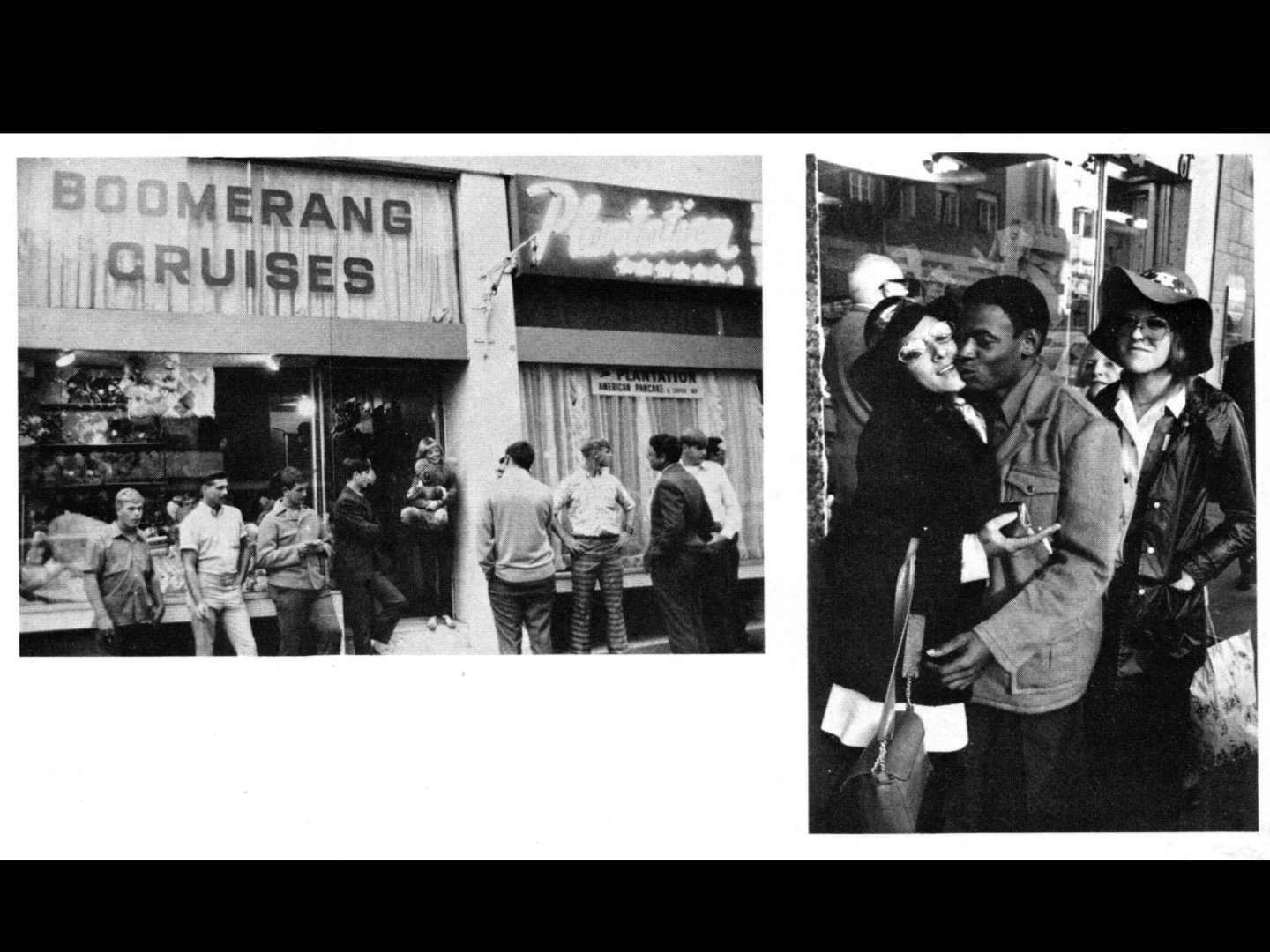

It is no wonder that the following year Ellis said:
Much of my pleasure in photography is not in looking at the photographs, which I find boring, but my involvement in the actual situation of taking the shots, of preventing the moment from escaping forever.[8]
On other pages Ellis gives us extraordinary intimate vignettes:
At her home in Victoria Street, Michele, one of the strippers, talks about her job. She is English, very likeable and in her own style intelligent and articulate. She sits in her bra and pants on the couch under an Uncle Sam Wants You for The US Army poster and plays with her kitten. ‘Well actually I arrived in Australia with only $6 so I caught a cab, told the driver I danced, he told me he knew where I could get a job and took me to the Paradise Club and I started the next day waitressing and stripping. I used to do tables, jump up, get my gear off, then back on the tables. It was quite hard work really. But I liked it in the Cross. Compared with places like Soho and the Reeper-bahn in Hamburg it’s much more friendlier, not so vicious. It’s closer knit. Everyone knows everyone. And the bosses, the big guys, are more approachable here, you know, more like people. ‘Quite a lot of women come in to the shows. Sometimes they’re in long dresses after some fancy ball and they giggle and hide their faces. It’s funny to go up and shake your fanny around and embarrass them. And we have lots of middle-aged married couples up from Melbourne. Then there’s these downright perves who just sit there having wanks. It’s awful. They come in and sit in the front row, they’ve got glassy eyes, and they just pull it out and away they go. It’s so embarrassing. I look at them as I dance past and say “put it away you filthy bastard” and they just look at you blankly. They’re miles away in a sexual fantasy of their own. Mostly they’re young guys. Then there are the old regulars of course, great characters who think it’s great if the girls talk to them.’
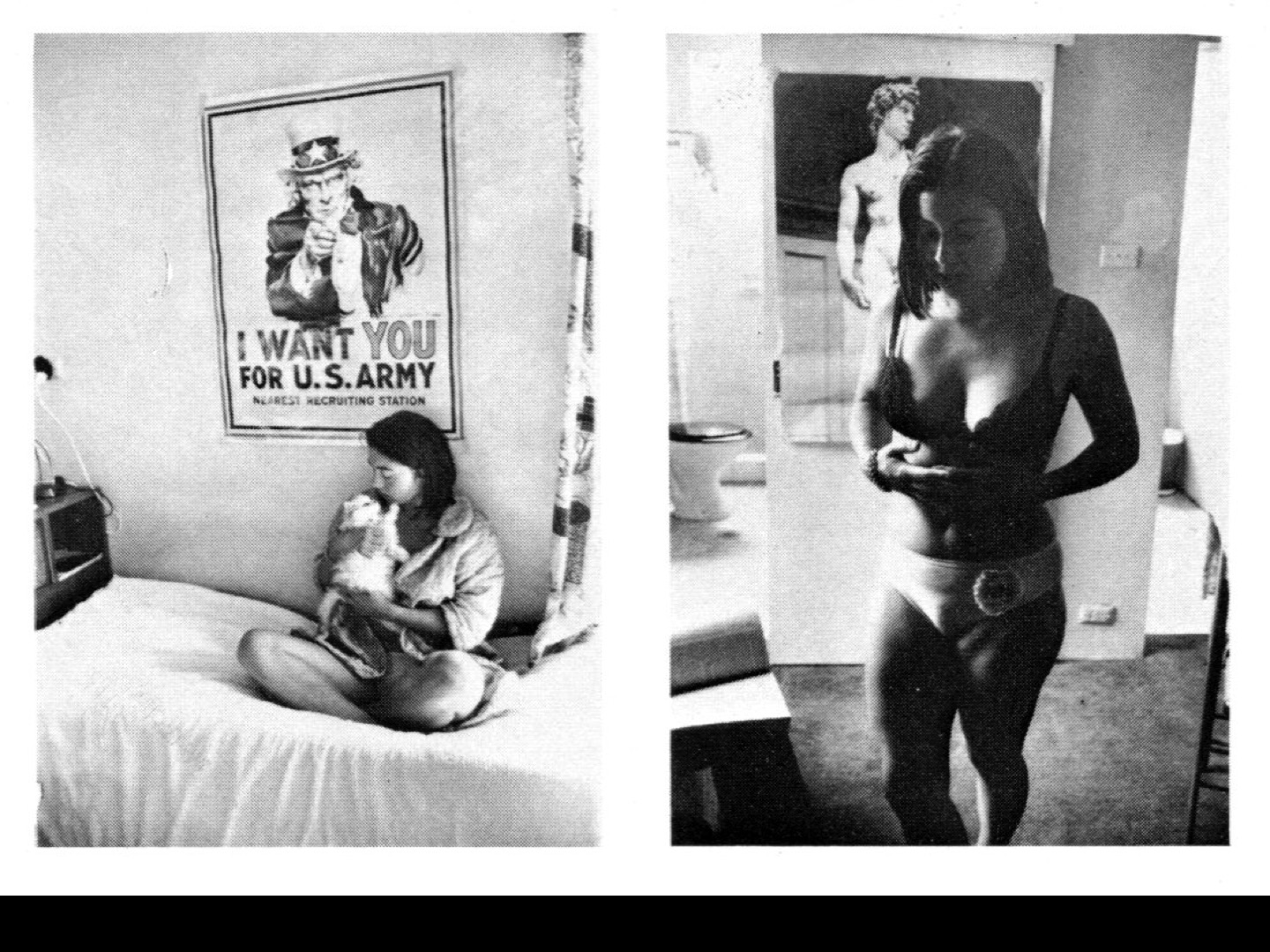
Kings Cross Sydney, Wesley Stacey and Rennie Ellis, 1971
At other times Ellis reports from within his own experience, like a gonzo school boy.
The Whisky a Go Go claims to be the Biggest Night Spot in the Southern Hemisphere. … You walk in under an explosion of neon in William Street, past a couple of tuxedoed and handsome dandies who scrutinise each and everybody. The last thing the Whisky wants is trouble, buddy. You pay your $2 and then, like jumping through the looking glass, you’re plunged into a maelstrom—a total environment that impinges on the senses like an electrical storm. Partly it’s manufactured by the management—light balls whirling in the dark, incredibly sexy go-go girls performing in chained and mirrored cages, forty near-nude waitresses, and the thundering amplified sounds of a rock group— and partly by the people themselves, shaking and shimmying on the dance floor as if they’re caught up in the electronic vibrations that burst out in waves from the huge speakers. The Whisky has been a big favorite with R & R boys, especially the Negroes. And black girls too. And they form their own turned-on little clique, dancing like mad with their big lit up spade smiles, flowing limbs and a knowing sensuality that stirs the loins. In contrast the rest of the Whisky oozes with a sort of contrived, but nonetheless effective, sexuality. The waitresses in a kind of bikini-sarong outfit, bend over your table and their boobs just about fall out all over you. The go-go dancers in their cages, reflected all angles several times over, are curvy ladies too, and they know how to make the curves work. In g-strings and bras they writhe away for ten minutes then take a twenty minute break. Six nights a week, six hours a night they work like convulsed marionettes.

Kings Cross Sydney, Wesley Stacey and Rennie Ellis, 1971
Race is one issue that the book is completely uninhibited about displaying. The other issue is the changing role of women in Australia. Although Ellis’s libidinal gaze is never far away from the book, and although we see him developing this pervey gaze in the 1980s in the extraordinarily popular books Life’s a Beach and Life’s a Parade, in fact the experience of women becomes a focus for the Kings Cross book in a way which is totally unprecedented in other published Australian photobooks of the time. It is there in Ellis’s text. But also there in some of the striper shots, where they are pictured a adrift in a lonely void.


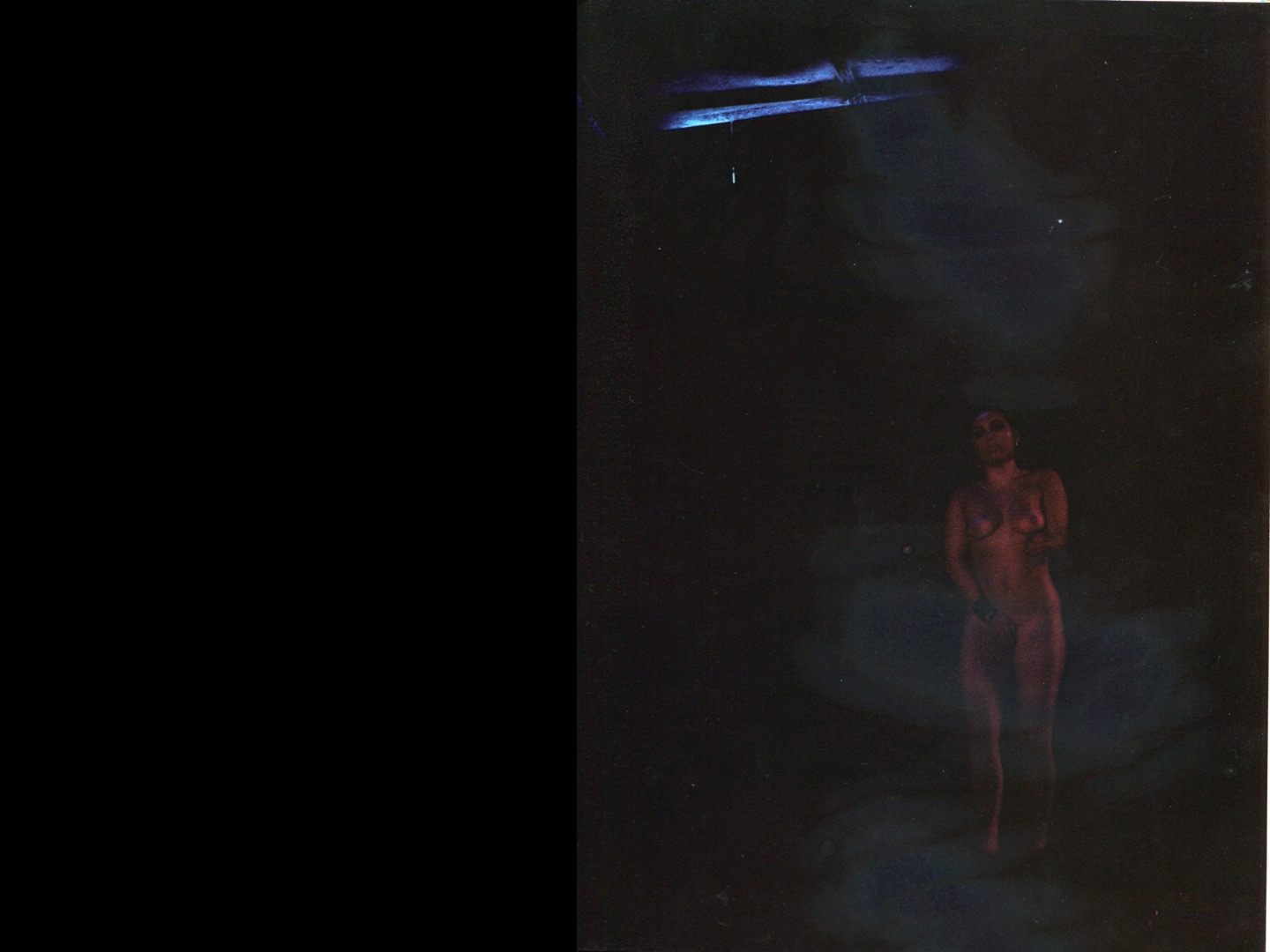

Kings Cross Sydney, Wesley Stacey and Rennie Ellis, 1971
A stripper hurries across the road from one club to another. Her red panties are three inches lower than her mini skirt and as she walks they seem to flicker like a danger signal. Under her arm she carries the inevitable record that will set her in motion once she hits the stage. As she enters the door, Freddy the midget wrestler comes out and they exchange a nodded hullo. Freddy pushes his way through a knot of people who are staring across the road at a young woman and her baby. She is barefoot and in short shorts and carries her little boy on her hip. He is naked, save for a singlet that just covers his navel. Suddenly she places a square of newspaper on the ground and sits him on it while she stares into a shop window, resting her forehead on the glass. Then she’s off again. She stops and starts, stares at windows and a weighing machine, places her baby on the ground and picks him up again. Those who know drugs know she is tripping. Her shorts are very short and you can see the cheeks of her bottom grind together as her impatient steps take her from one manhole cover to the next. Each time she reaches her goal she stands stock still, staring and seemingly unaware of the impression she’s making on the crowd. Some are watching her because of the naked curve of her bottom. Others show genuine concern for her condition and for her baby, especially when she walks out into the traffic. But no one tries to help.

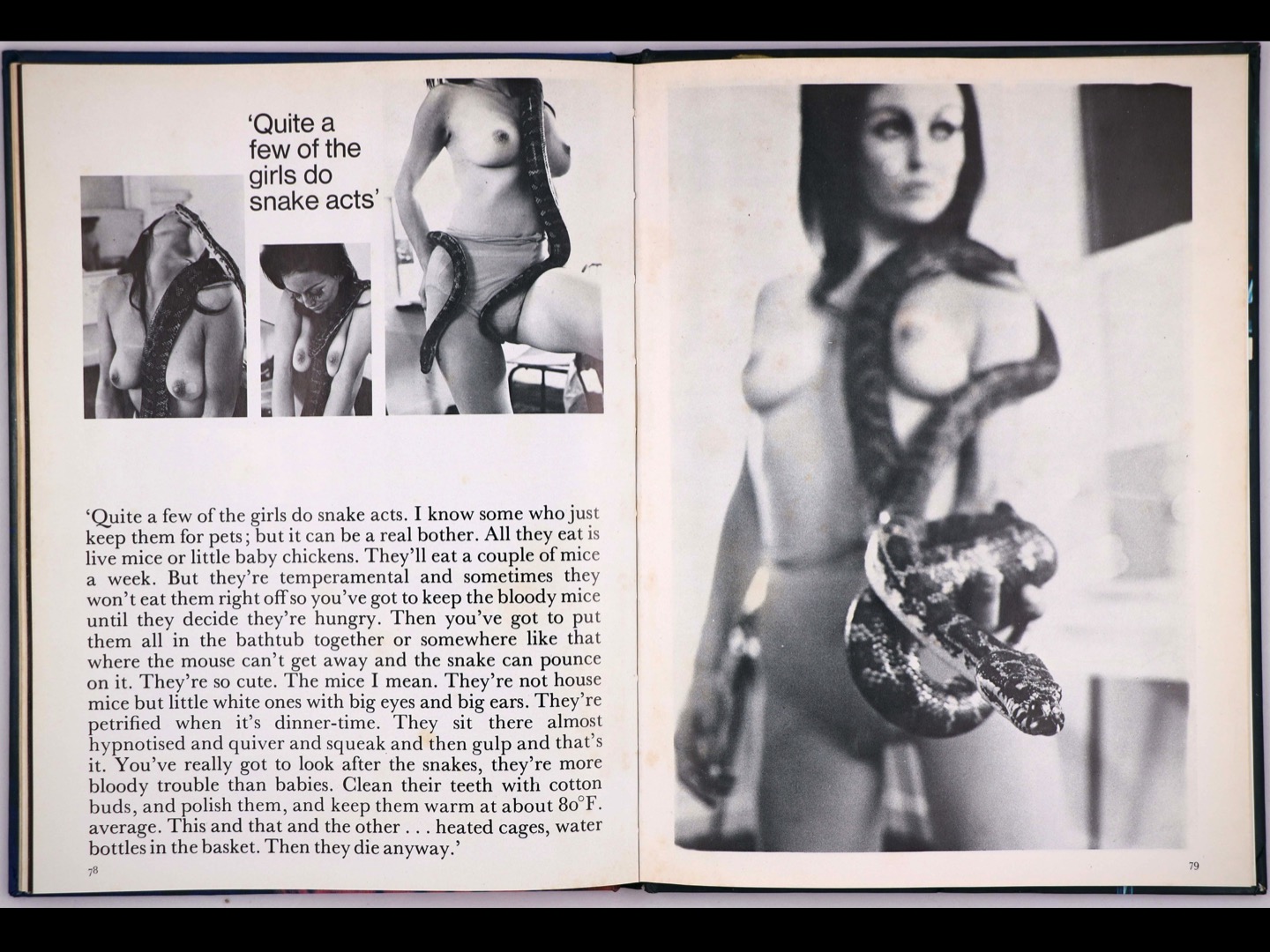

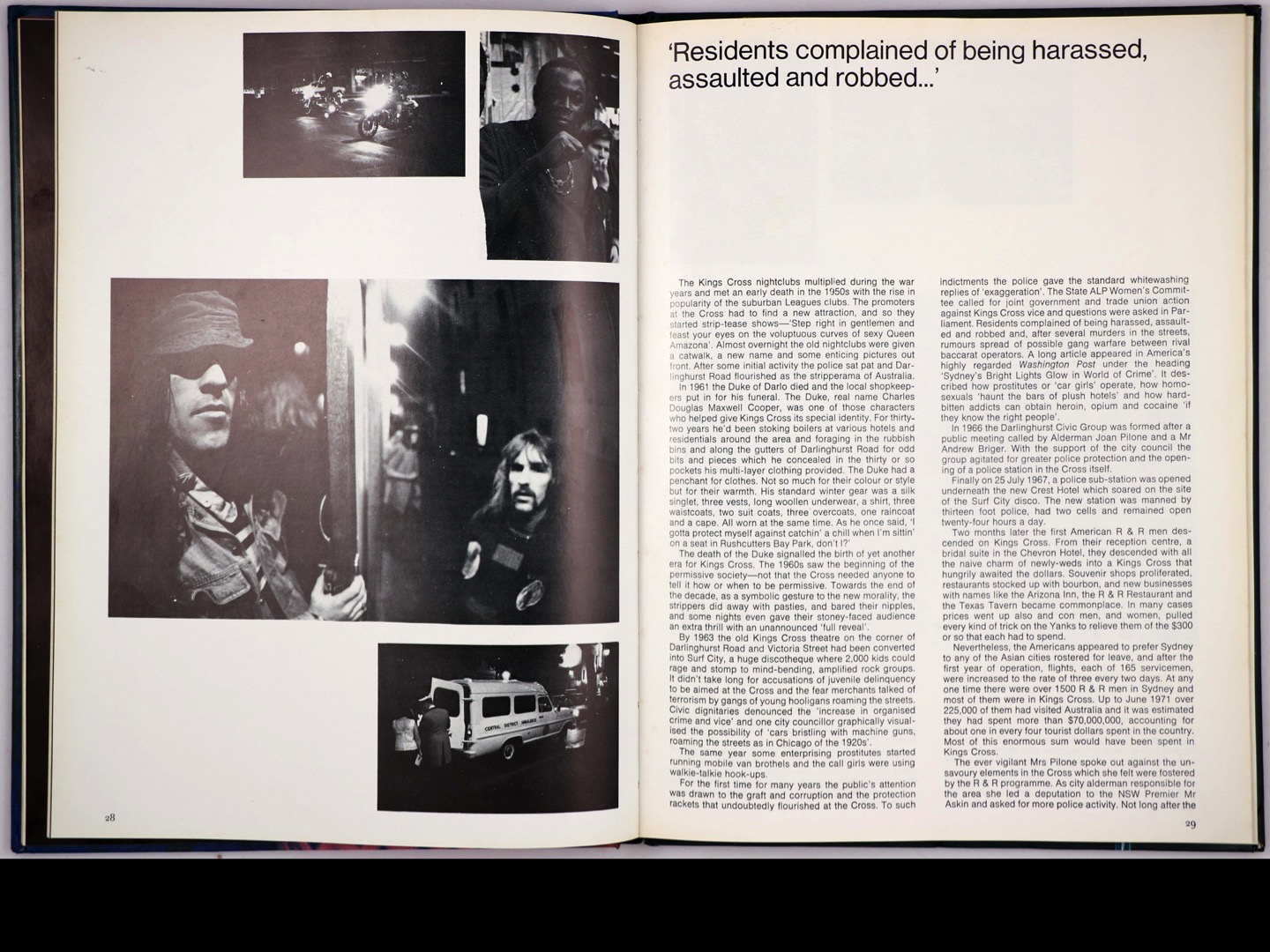

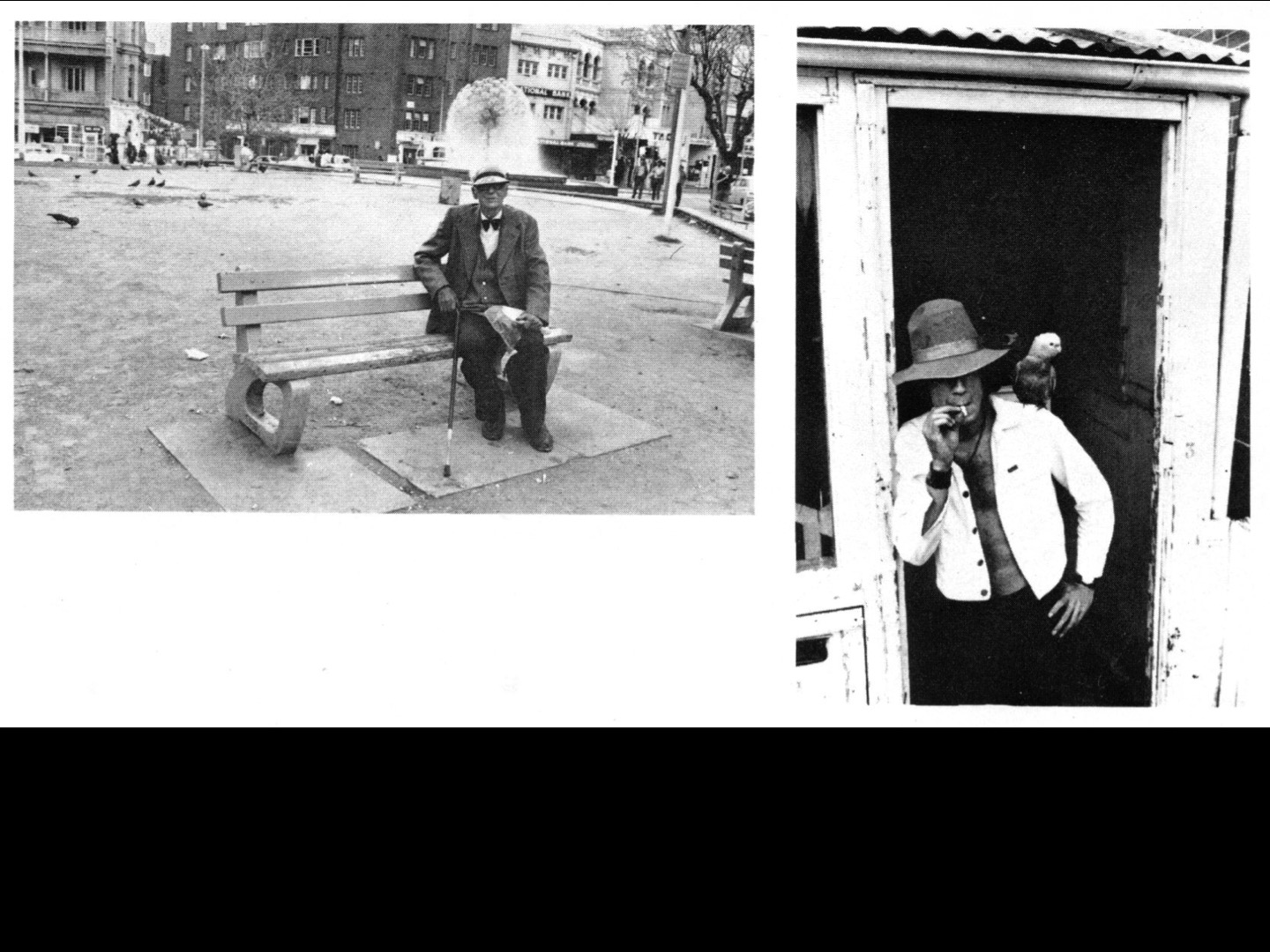
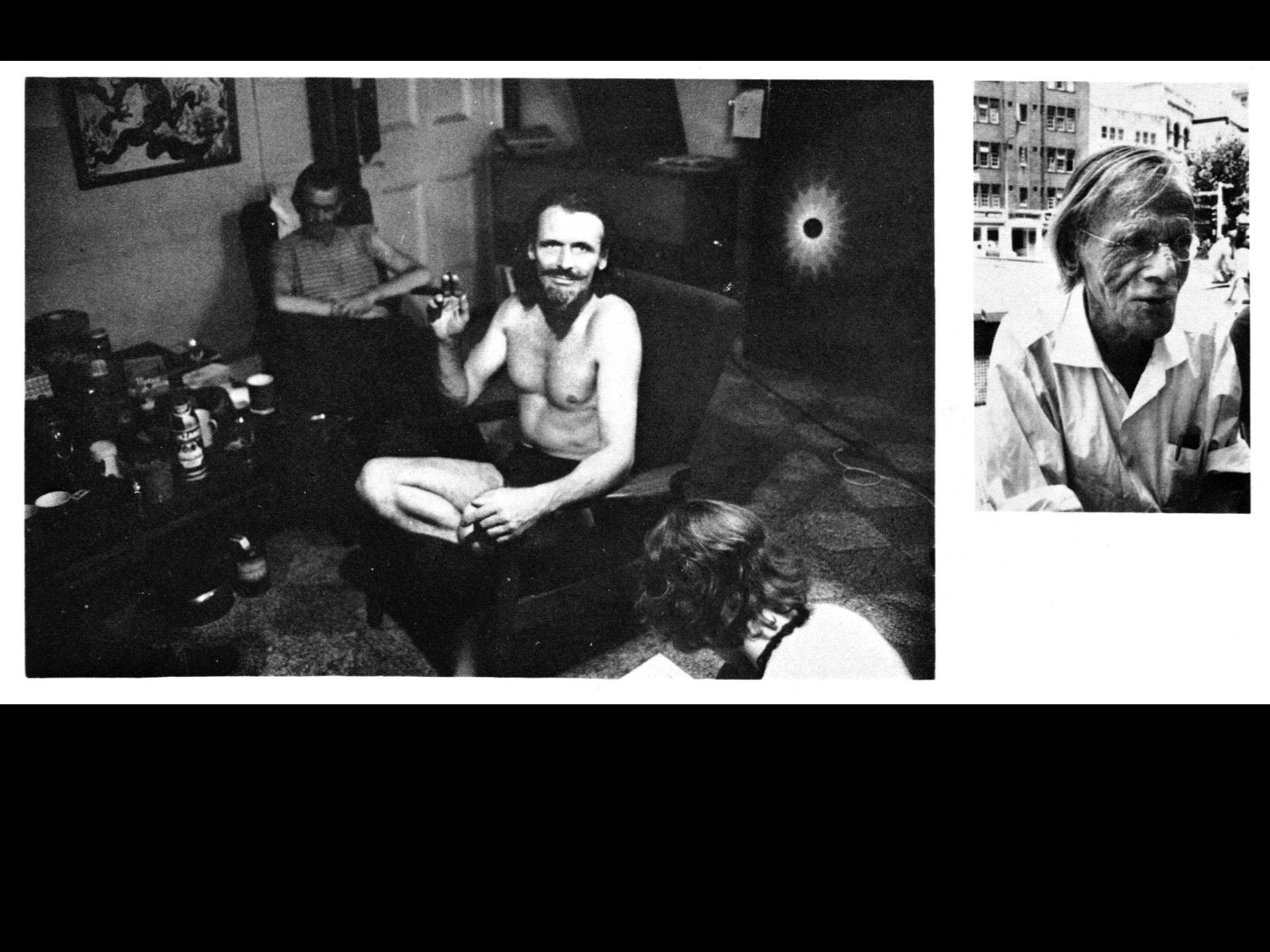
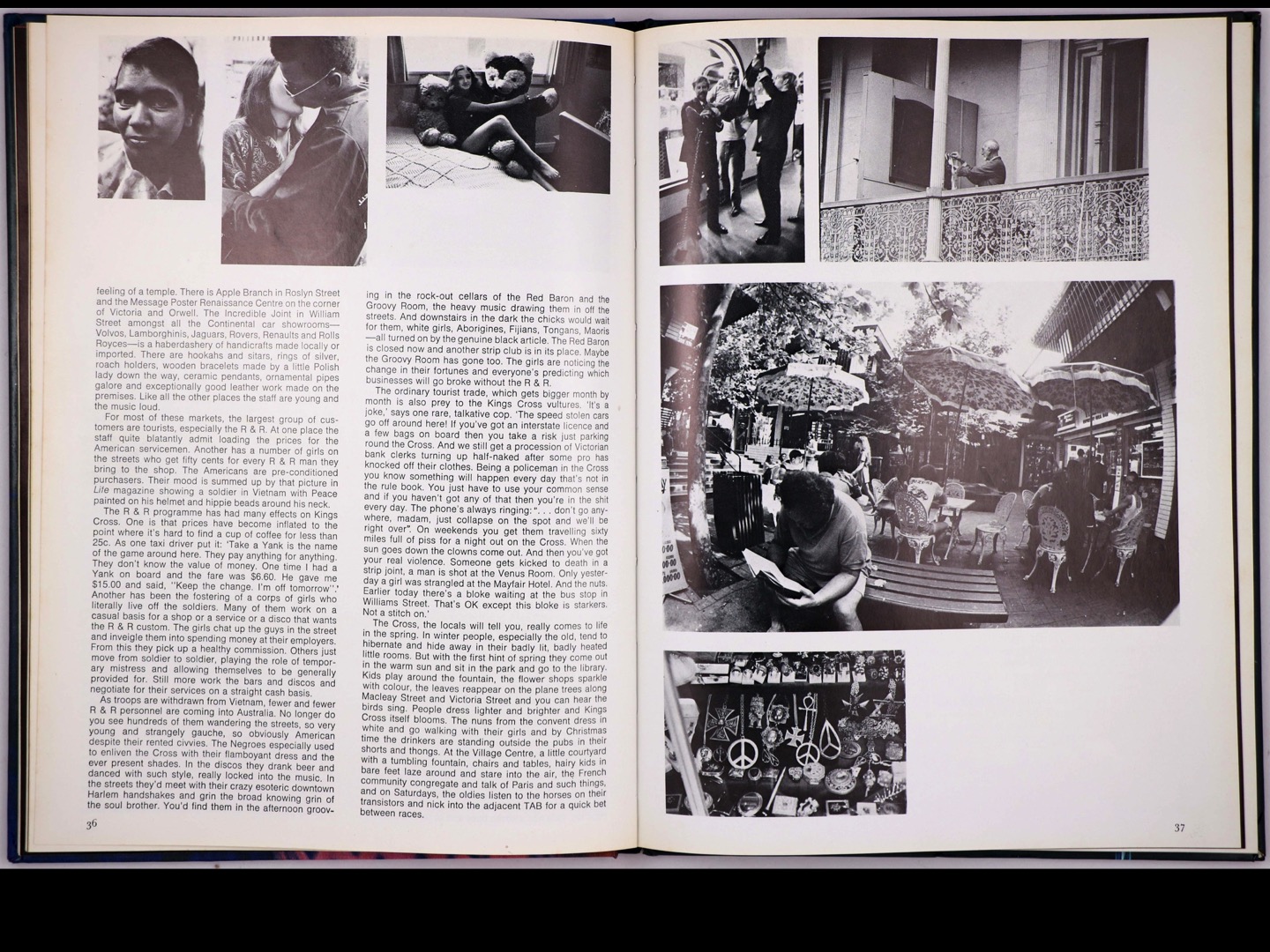
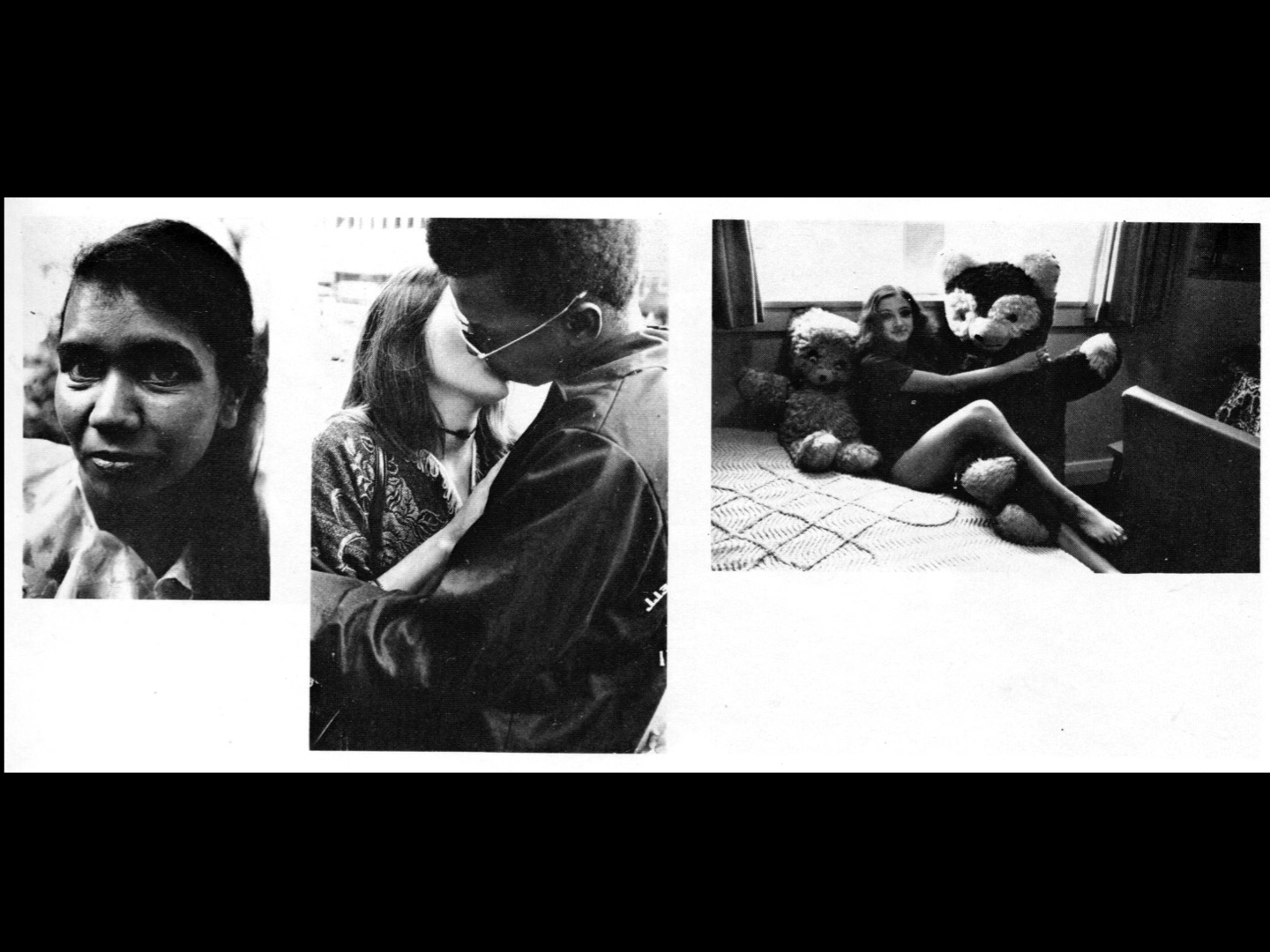



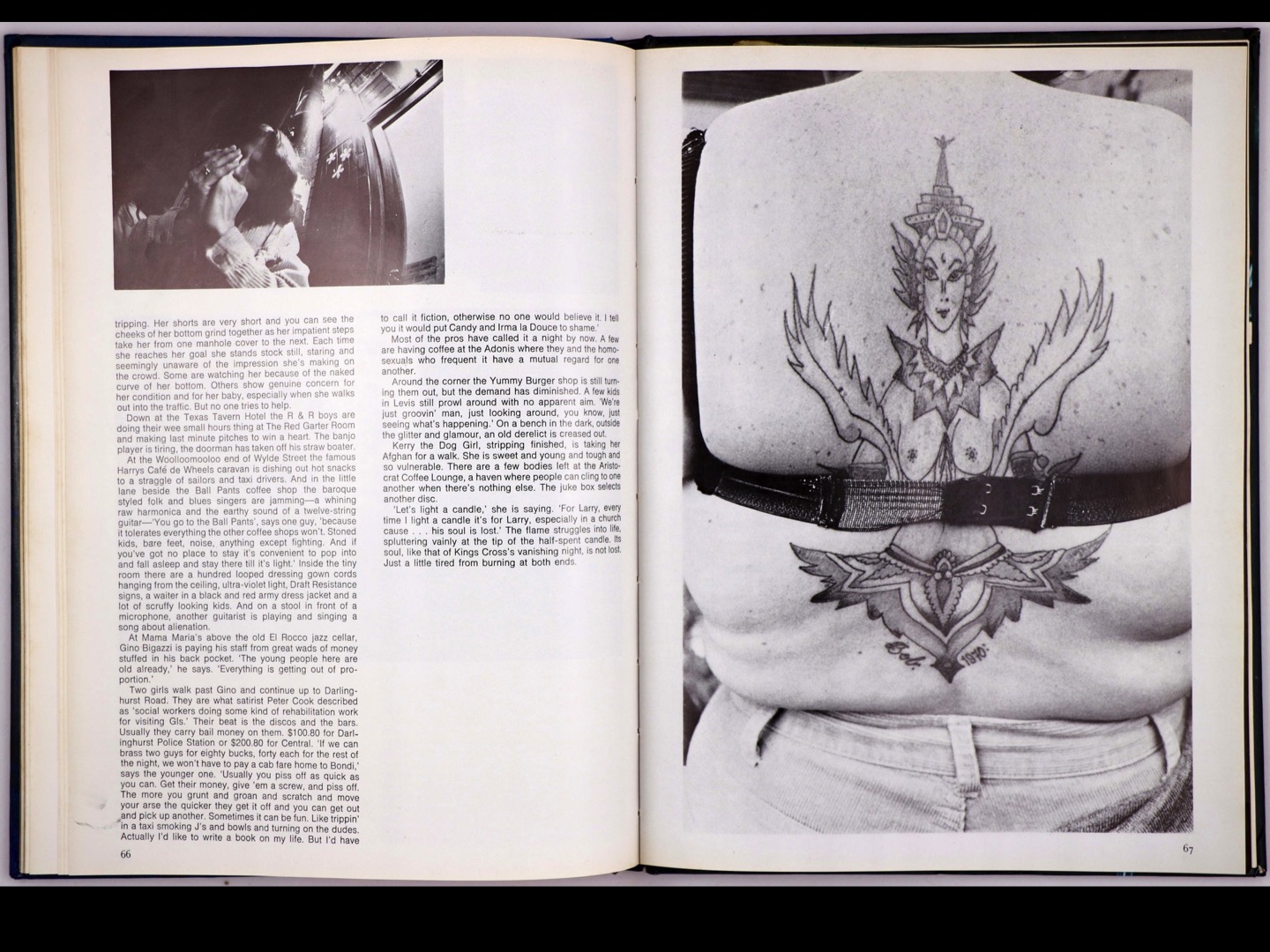
Kings Cross Sydney, Wesley Stacey and Rennie Ellis, 1971
Like every account of the Cross, ever, Stacey and Ellis’s book ends on a Requiem for a lost Cross of the past, a Cross they experienced, but we can’t, we were too late.
Requiem: And so it goes on. Everywhere there are signs — Summit, Westfield, Mainline, Bank of NSW, Palisades, Home Units — proudly announcing the new projects. Many others are on the planning boards and in a few years time the Cross we know today will be unrecognizable. In place of the village will be a new satellite city. And much of the atmosphere that suggested this book will have vanished with the brick dust.
Kings Cross Sydney didn’t sell. It was an experiment that failed. In many ways it is a transitional publication, halfway between the tourist photography of the 1950s and 60s and the personally inflected photography of the 1970s. In 1974, just three years later, Morry Schwartz’s Outback Press published Carol Jerrem’s A Book About Australian Women with text by Virginnia Fraser, and Robert Ashton’s Into the Hollow Mountain, about Melbourne’s Fitzroy which combined text and poetry. The next Australian photobook to feature Kings Cross was thoroughly embedded in radical politics, it was Marion Marrison and Peter Manning’s Green Bans, which covered the fight to save Victoria Street, and was published by the Australian Conservation Foundation in 1975. Ellis submitted some more junkie pictures to an Ilford Photographic competition called Concern, and then opened up a photography gallery in Melbourne, and further honed his libidinal gaze to produce the extraordinarily popular books Life’s a Beach and Life’s a Parade in the 1980s.
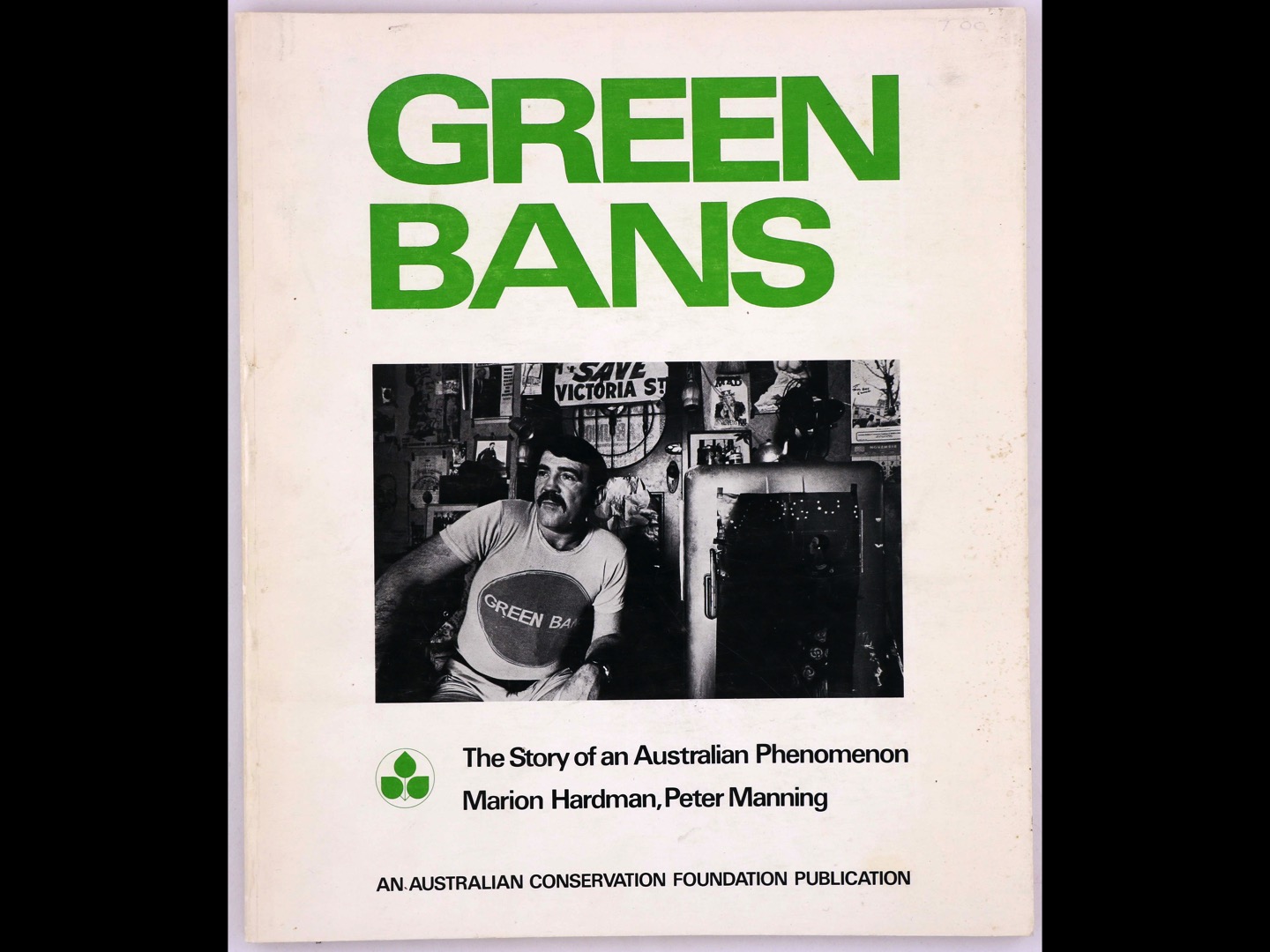
Marion Marison and Peter Manning, Green Bans, 1975

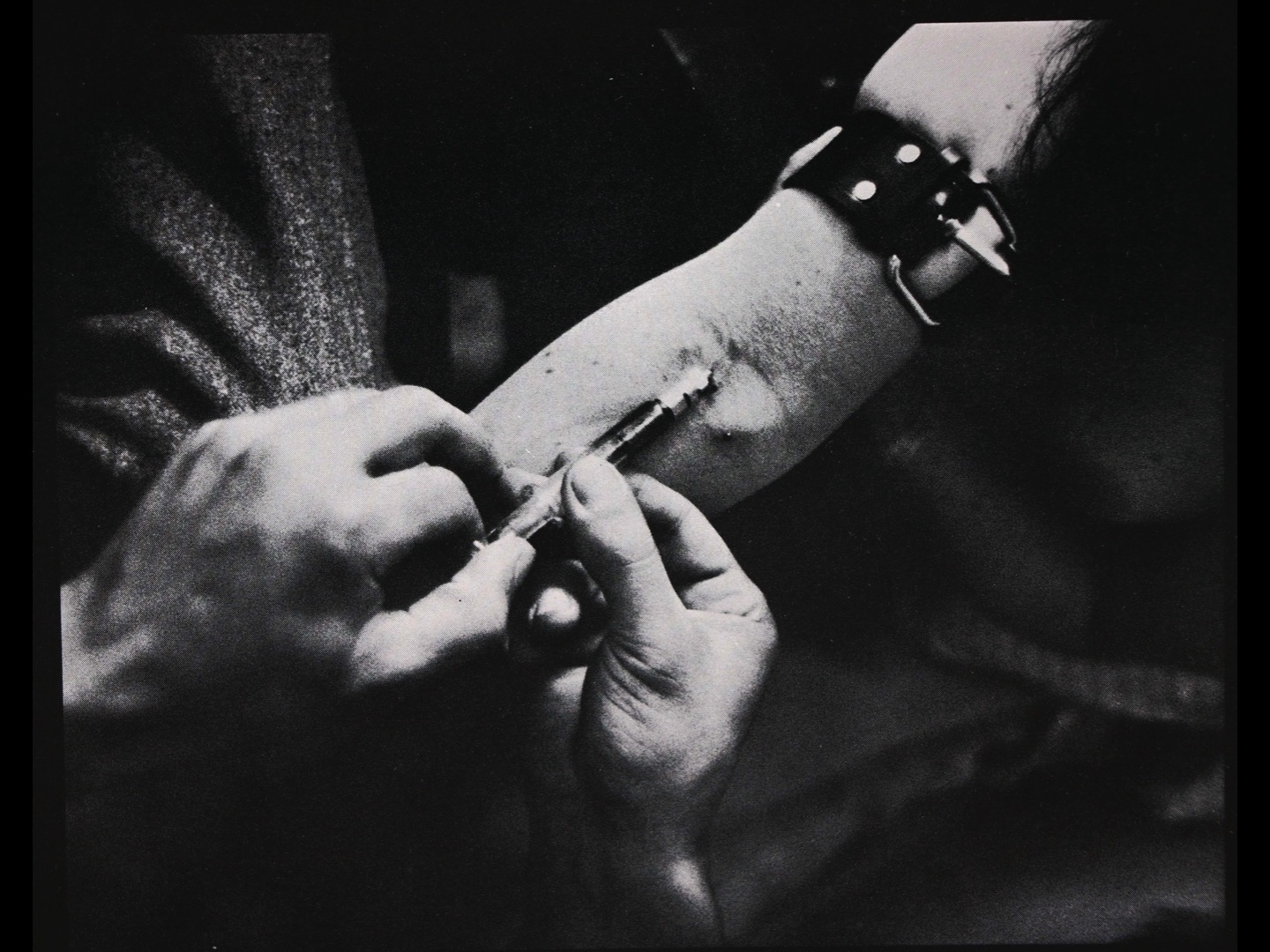

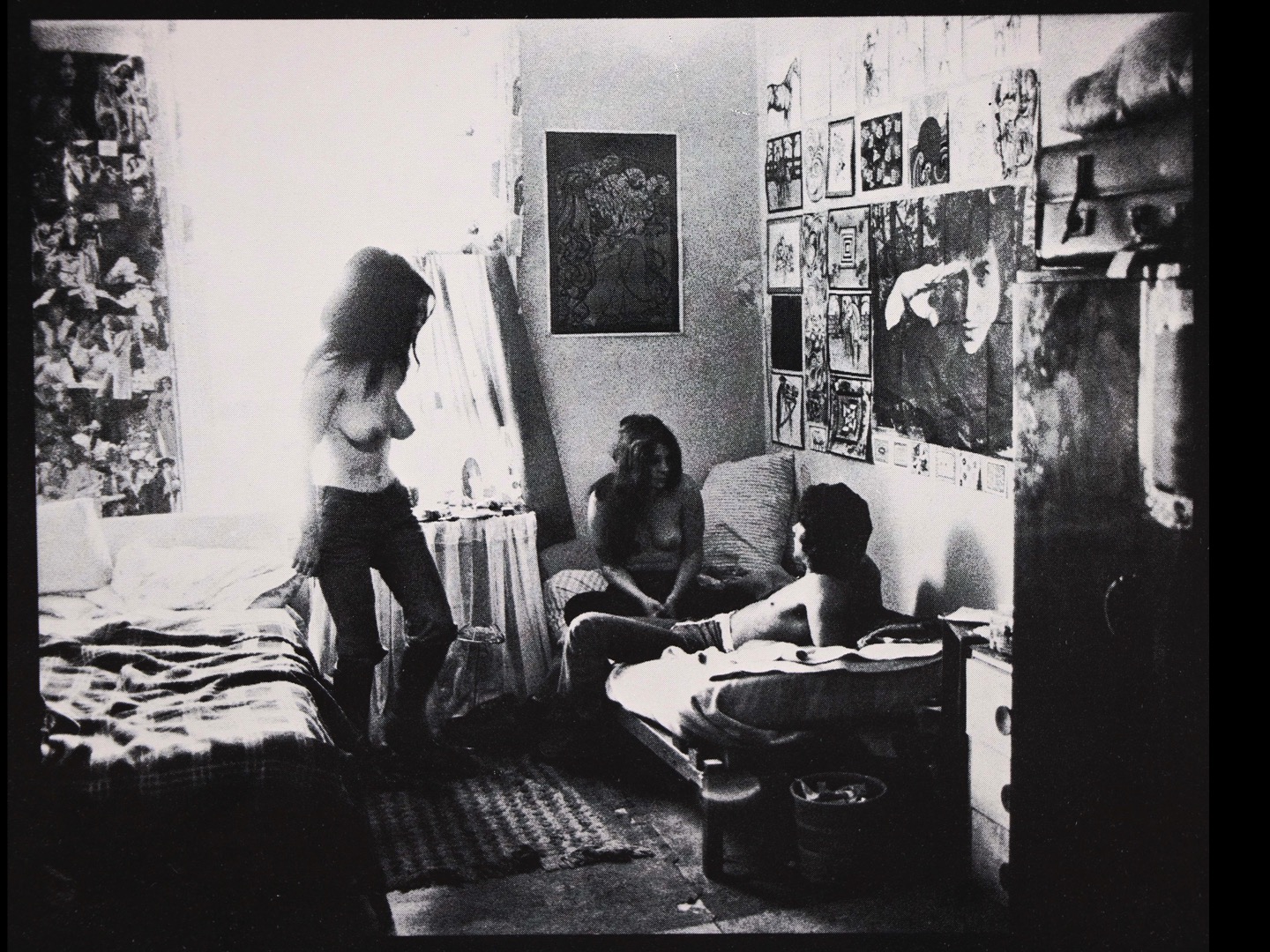
Concern, 1972
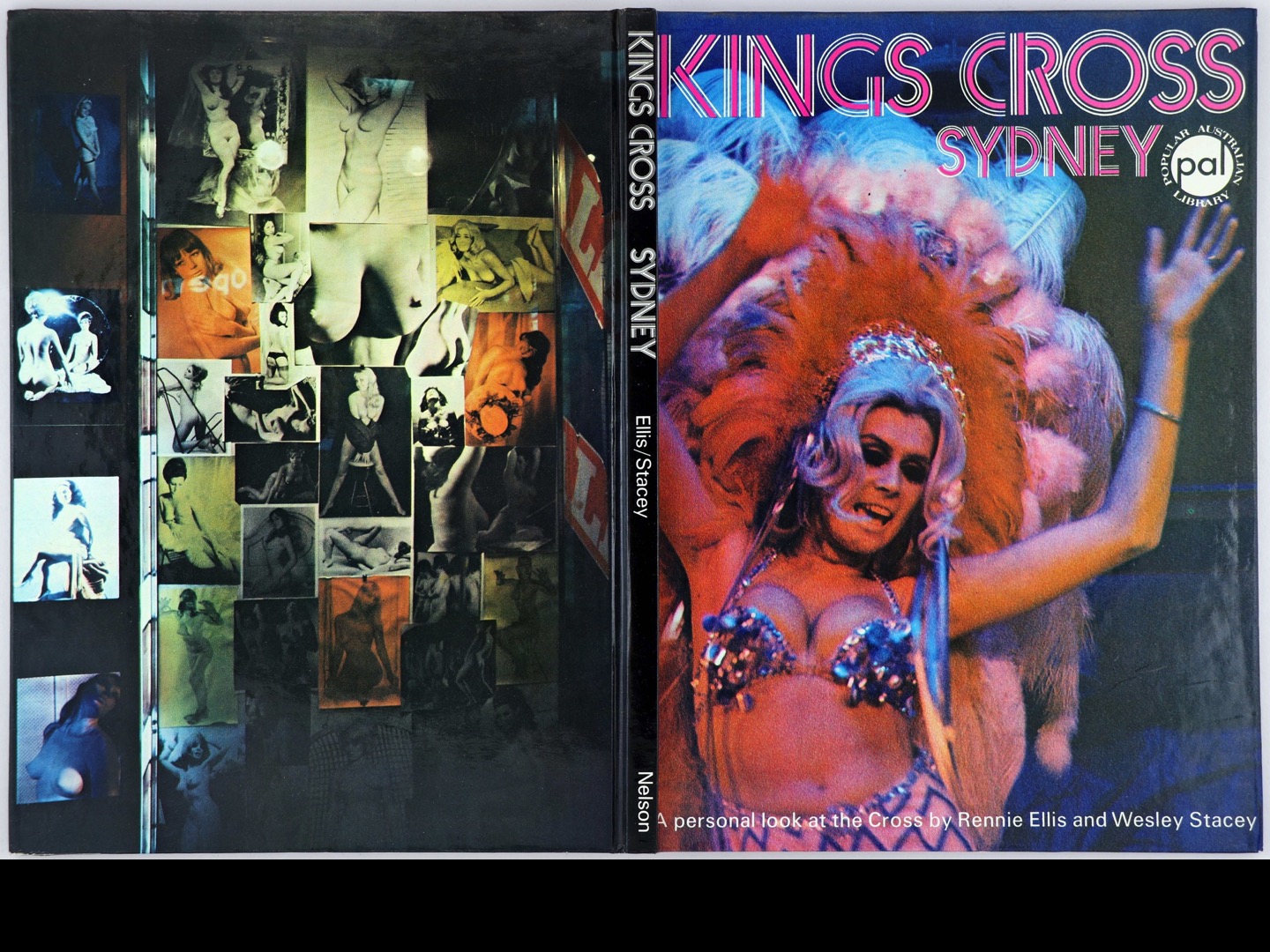 Kings Cross Sydney is certainly is a flawed book. The layout seems extraordinarily amateurish to us now, but at least we can begin to see the photographers wrestling with the problem of deploying images across a page, although they can never seem to make up their minds what to do design-wise from page to page. We also see Ellis himself trying to work his photographs and his writing together. The book has disappeared to history almost completely, and though it is great that Ellis’s individual photographs are coming back to us through the work of the Rennie Ellis Archive, I think that Stacey and Ellis’s book project also is very important for the history of Australian photography. This is becasue, in the book Stacey and Ellis:
identified a market that might straddle both existing mainstream genres as well as newly emerging beat/hippy/gonzo modes;
shot the project in an unprecedented embedded process over a defined period of six months;
tried (and failed) to produce a designed book package integrating text and image;
all at the crucial historical juncture of 1970 as the R&R days of the late sixties were rolling over into the counterculture of the 1970s.
So I think it’s good.
[1] Gael Newton, Shades of Light : Photography and Australia 1839-1988. Canberra: Australian National Gallery: Collins Australia, 1988. Helen Ennis, Photography and Australia, London: Reaktion Books, 2007. Anne-Marie Willis, Picturing Australia: A History of Photography, North Ryde, N.S.W.: Angus & Robertson, 1988.
[2] Examples include: Summer of the Seventeenth Doll, Leslie Norman, 1959; They’re a Weird Mob, Michael Powell, 1966; Age of Consent, Michael Powell, 1969; Walkabout, Nicolas Roeg, 1971; Wake in Fright, Ted Kotcheff, 1971
[3] Frank Thompson, ‘Sixties Larrikins’, Paper Empires: A History of the Book in Australia 1946-2005. Ed. Craig Munro, and Robyn Sheahan-Bright. St Lucia, Qld: University of Queensland Press, 2001.
[4] Dominic Bowes, Exposing Indecency, BA (Hons) thesis, University of Sydney, 2012
[5] Louis Nowra, Kings Cross: A Biography, 2013)
[6] Rennie Ellis and Wes Stacey, Kings Cross Sydney; a Personal Look at the Cross, Melbourne: Thomas Nelson, 1971
[7] Virginnia Fraser and Carol Jerrems, A Book About Australian Women. Outback Press. 1974 Outback Press was founded by Morry Schwartz, amongst others. Morry Schwartz is currently owner of the Black Imprint.
[8] Concern, edited by Harry Marks, Nelson, p48
Portraits of Survival at the Sydney Jewish Museum
My catalogue essay Portraits of Survival about Katherine Griffiths for the Sydney Jewish Museum’s exhibition ‘Closer’
Touch and vision are closely intertwined in photographs. The super-sensitive surface at the tip of each finger is intimately linked, perceptually if not physically, to the sensitive retina at the back of each eye. Just look at Katherine Griffiths’ photographs, as you look your fingertips will begin to almost tingle at the touch of the objects the survivors are holding. Recently this interest in ‘haptic vision’ has burgeoned amongst artists. In his widely influential book The Eyes of the Skin, Juhani Pallasmaa argues for the primacy of touch over all the other senses. ‘Touch’, he says, ‘is the sensory mode that integrates our experience of the world with that of ourselves.’ But not only does touch filter the outside world into our bodies, it also connects us directly to other humans, and to history:
The skin reads the texture, weight, density and temperature of matter. The surface of an old object, polished to perfection by the tool of the craftsman and the assiduous hands of its users, seduces the stroking of the hand. … The tactile sense connects us with time and tradition: through impressions of touch we shake the hands of countless generations.
Touch and the act of holding have long been integral to the history of photography. In early photographic studio portraits sitters were given leather-bound books or other items of social or religious significance to hold. These objects held symbolic power, but they also enabled the sitter to ‘perform’ their hands, their firm grip expressed the solidity of their place in the world. If touch connects us to identity, it also directly connects us to memory. In the nineteenth century bereaved mothers were frequently photographed holding photographs of their deceased children. Part of the emotional impact of these strange images is the paradoxical multiplication of time. The time of the child and the mother were split apart by death, but they are brought together again in the frozen instant of the photograph, which we, as viewers from the future, look mournfully back into. But their power also comes from the tragedy of touch. Instead of cradling the soft warm flesh of her child the bereaved mother can only grip a cold hard frame propped on her knee. In our contemporary mass media it is commonplace to see all types of victims gripping photographs of the dead, the missing, or the imprisoned in public acts of commemoration, mourning, or defiance. Some clutch their photographs protectively to their chests, others hold them up high and proud. Even in these press images it is the act of touching which again becomes the fulcrum of the image, pivoting between inner personal experience and outer public declaration.
It is therefore a rich tradition Katherine Griffiths has entered. But her photographs are not mournful, not defiant, and not ‘heavy’. Instead they are warm and even friendly. The survivors are photographed against an ordinary portrait studio backdrop, with ordinary portrait studio lighting. These are not stark mug shots of monumentalized faces, nor are they gritty evidence of the pathos of elderly people. Instead we see a rapport and collaboration between photographer and subject, all of whom look comfortable, neatly dressed, and … well … nice. They have been through a famously unrepresentable period in history, and hold objects freighted with an unbearable weight of pain, yet they look … well … ordinary. But it is a marvelous, rich, wonderful ordinariness.
Eddie Jaku delicately uncurls a thin, crumbling leather belt — the belt he wore through four prison camps — as though it was a timorous animal curled up in his hands. The viewer’s sense of the texture of the belt’s splitting tongue against his fingers, and the weight of its buckle on his palm, powerfully reconstitute the experiences he endured and the now absent trousers the belt once held up. Egon Sonnenschein looks directly into our eyes as he holds out to us a postcard whose surface is covered with the coloured marks and inscriptions of its ricocheting around Europe. The wings of this ephemeral butterfly appear to have been delicately caught in mid-flight by the tips of his fingers.
When they are held in the birdlike hands of survivors, the yellowing passports, certificates, and identity papers from the past — the slips of paper that enabled the wheels of historical fate to turn — take on a higher charge. This is especially so when a photograph is found amidst the bureaucratic hieroglyphs. Helena Goldstein, aged 97, looks straight down the camera at us as she presents her identity card. Amongst the inky stamps and smudged signatures we find her ID photograph where, aged 24, she once again looks straight at us with a clear-eyed smile. The same looks travel to us in close parallel, though separated by oceans of time. In a reversal of the normal roles of mother and daughter Ilse Charny cradles a tiny image of her mother in the form of an identity photograph within a Shanghai Jewish refugee document. She holds more than just banal data but a direct, even fleshy, connection to history as we recognize family resemblances in both faces.
George Gronjowski holds up his concentration camp tunic for us to see, but his red-rimmed eyes are looking off into the past. This faraway look is also in the eyes of John Gruschka as he fans out, between the parchment-like skin of his fingers, the desiccated pages of the letters his mother wrote to him from Prague, as he sheltered in England, before her murder in Auschwitz. Joe Symon stares frankly ahead as he confidently flips up for us a photograph of his fifteen year old self, while Lotte Weiss, wearing her hair done elegantly in a salon, freshly applied lipstick, golden earrings, pearls, and a warm, open expression, holds her shaven-headed mug shots from Auschwitz across her chest while matter-of-factly displaying the identification number tattooed on her arm.
Peter Rossler gazes into our eyes as he shows us his Aunt’s Jewish star, clasped by its topmost point. It’s a badge, now a tentative emblem of pride, which perfectly plays off the school-crests stitched across his neatly tied neck-tie. In a similar way, Jaqueline Dale holds a model of a wooden ship, an incongruously bulky internment camp souvenir, against her pink top and pearls.
Although they are all humble, not all these precious objects come from the dark days of the Holocaust. Some contribute to other narratives, such as the broader history of migration to Australia. For instance Yvonne Engel ‘brings a plate’ to the exhibition, it was brought from Woolworths in 1949 as a humble wedding gift for the first marriage of child survivors on Australian soil. The weight of the decoratively cut glass Yvonne’s holds out to us makes us think of all the savouries and sweets this plate has carried to social functions over the subsequent decades as the couple put down their roots in Australian society.
The touch and feel of the domestic is a powerful thread throughout these survivors’ lives. Paul Drexler cradles the blanket which comforted him during the war over his knees as he looks off to one side in quiet, inner contemplation. Olga Horak also holds a blanket, this one made of human hair. Here we once again experience the transforming power of touch. Typically, human hair is beautiful on the head, but abjectly disgusting when detached from the head. But under the transformative power of Olga’s soft touch and equally soft eyes the blanket is no longer just a curious museum object, or historical evidence of cruelty and suffering, it becomes a beautiful warm, comforting, familiar thing.
In these portraits a photographer has collaborated with her subjects in the safe, respectful space of the studio. The photographs, although dealing with memories of historical cataclysm, approach the subject through touch — the most ordinary, the most intimate, and the most marvellous of all the senses.
Martyn Jolly
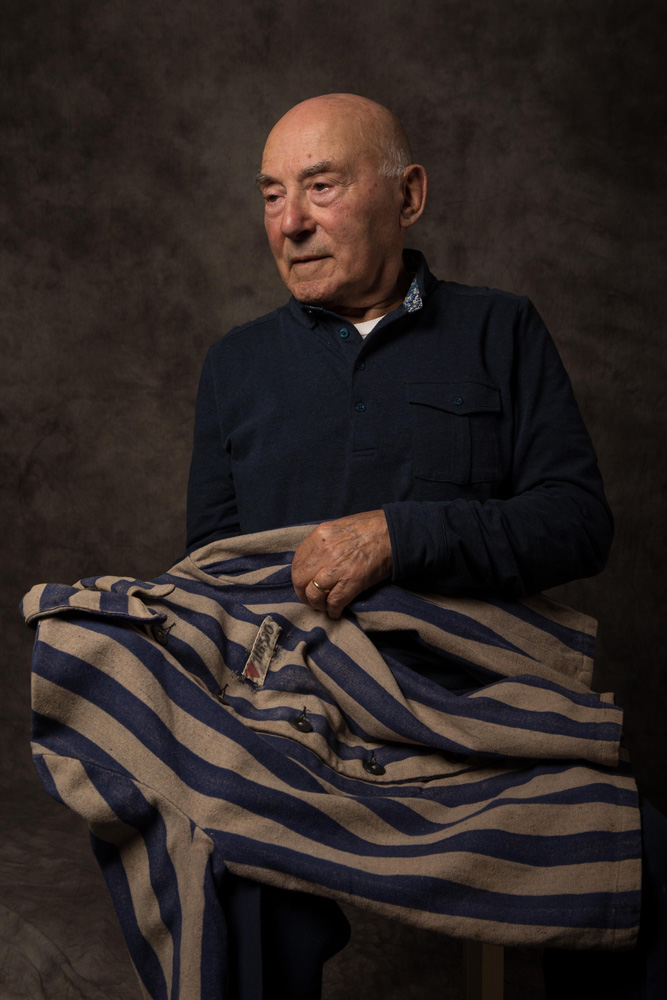
Katherine Griffiths, George Gronjowski, from the Sydney Jewish Museum exhibition ‘Closer’
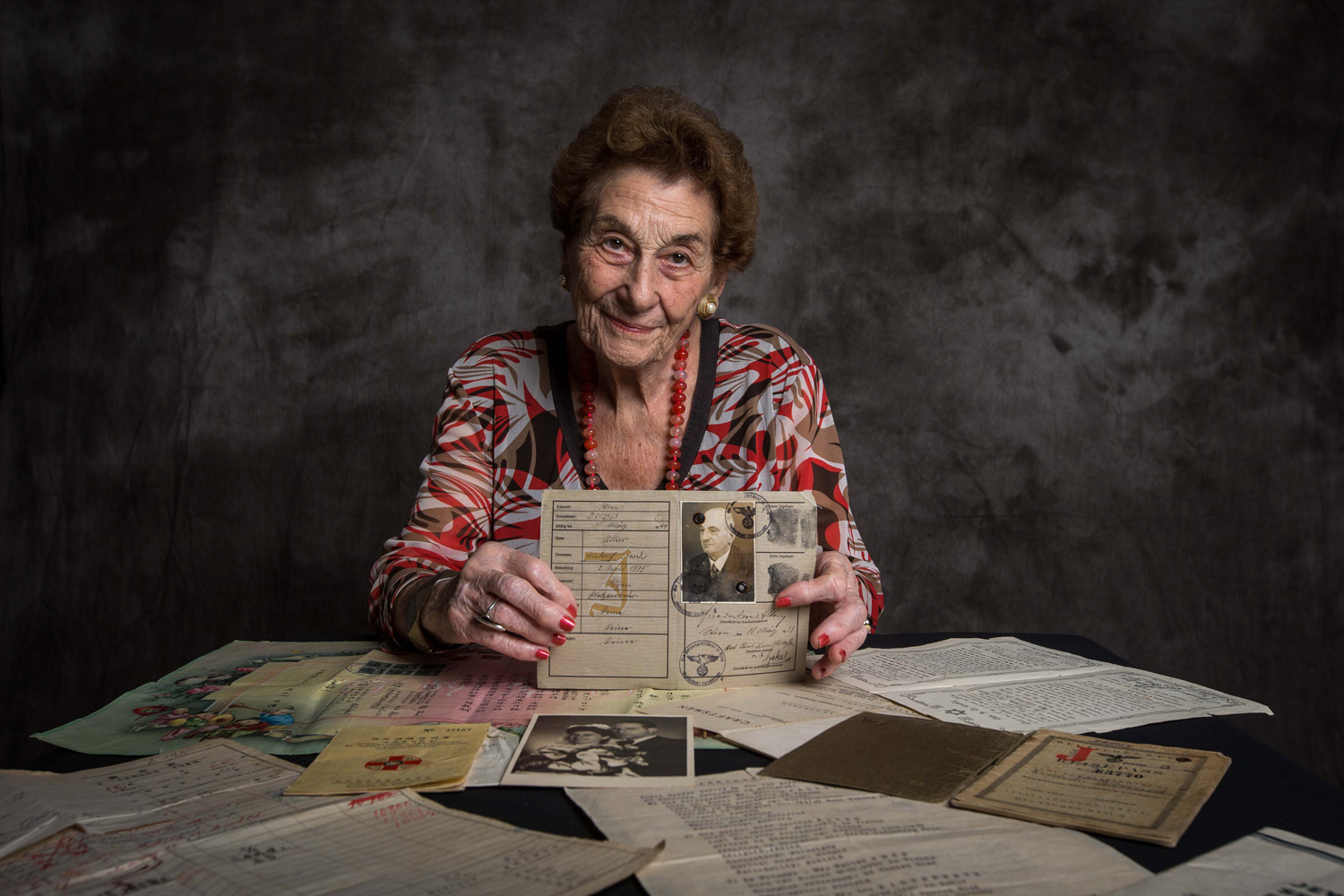
Katherine Griffiths, Gerty Jellinek, from the Sydney Jewish Museum exhibition ‘Closer’

Katherine Griffiths, Ilse Charny, from the Sydney Jewish Museum exhibition ‘Closer’

Katherine Griffiths, Jack Meister, from the Sydney Jewish Museum exhibition ‘Closer’
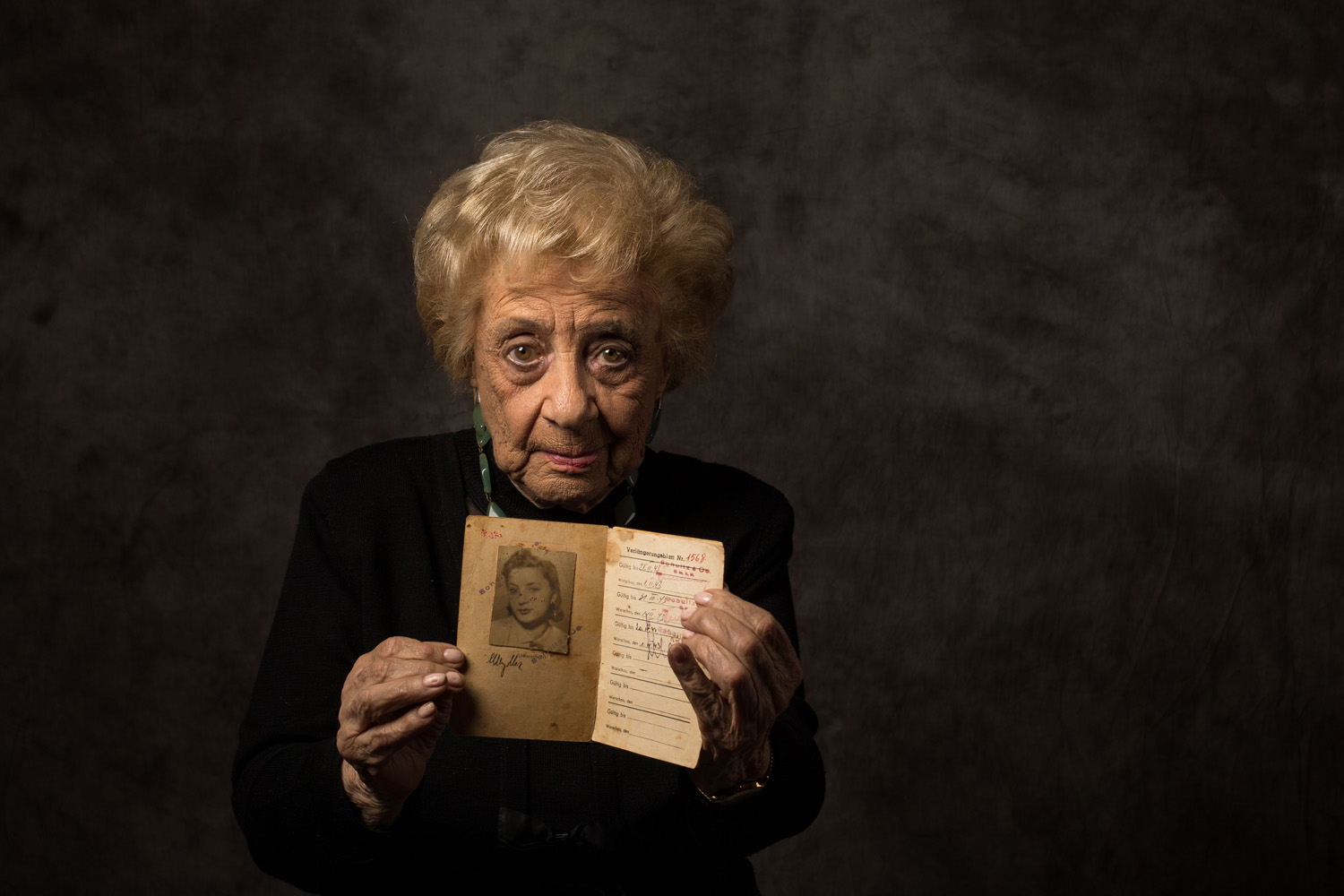
Katherine Griffiths, Lena Goldstein, from the Sydney Jewish Museum exhibition ‘Closer’
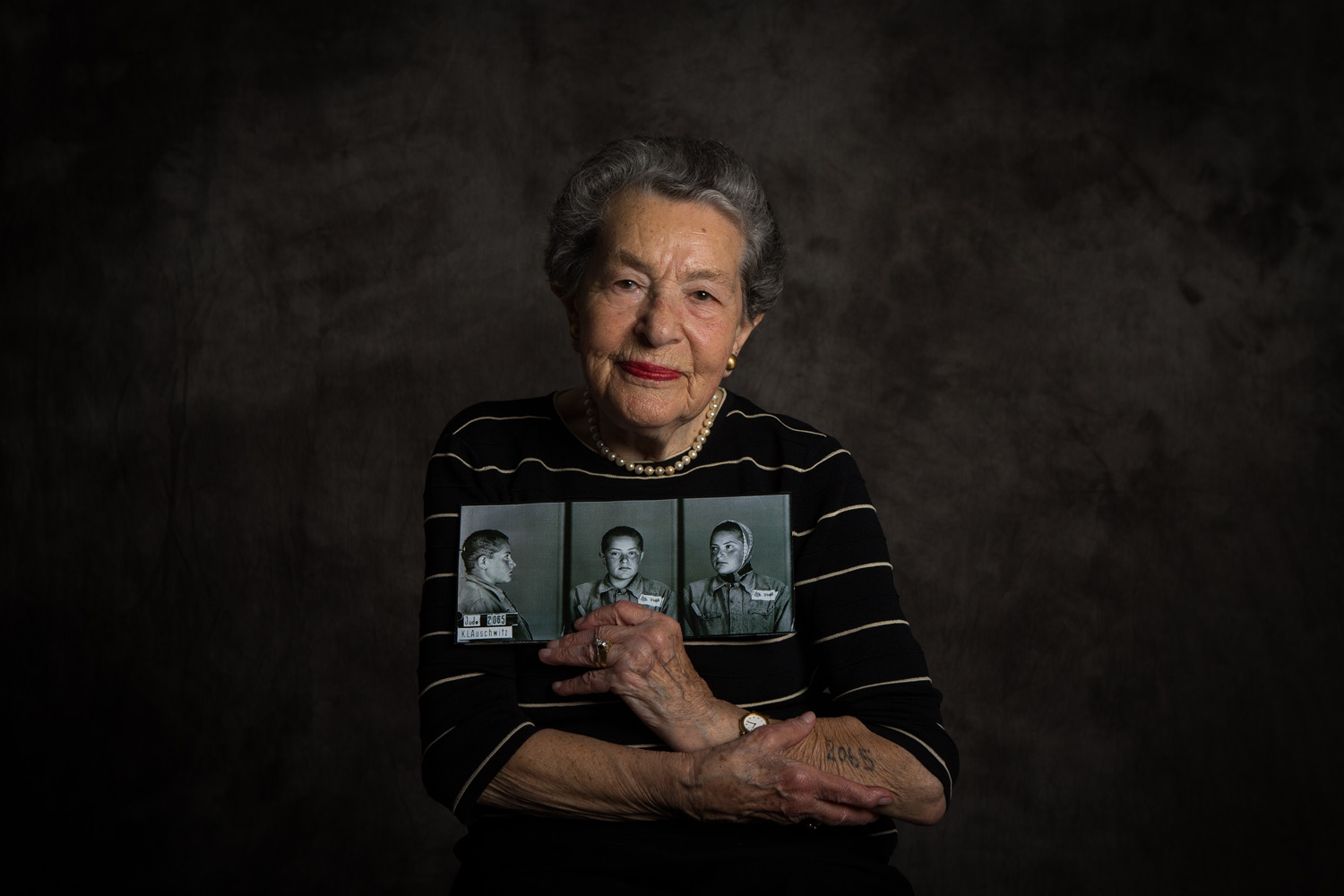
Katherine Griffiths, Lotte Weiss, from the Sydney Jewish Museum exhibition ‘Closer’
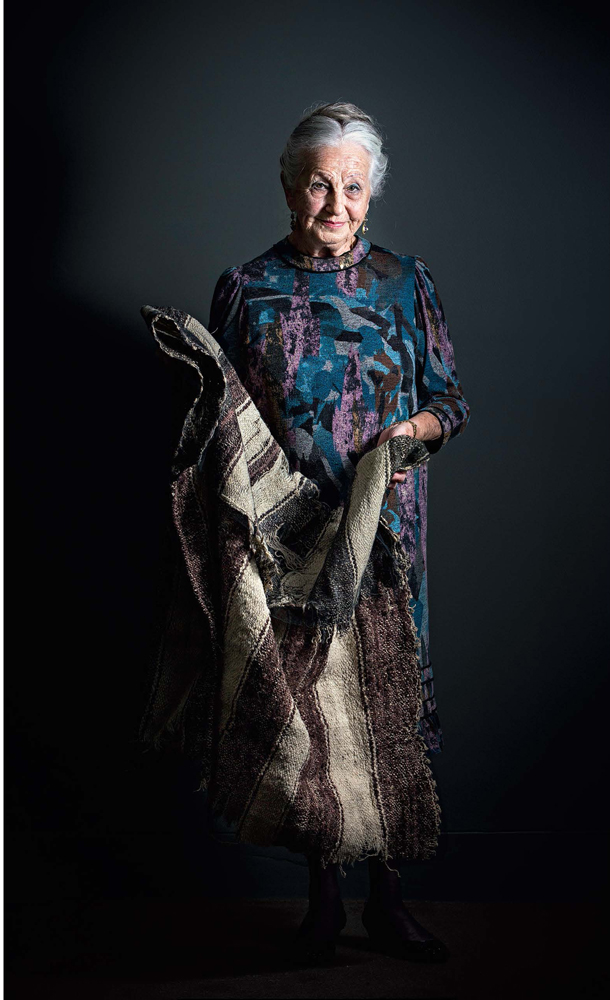
Katherine Griffiths, Olga Horak, from the Sydney Jewish Museum exhibition ‘Closer’
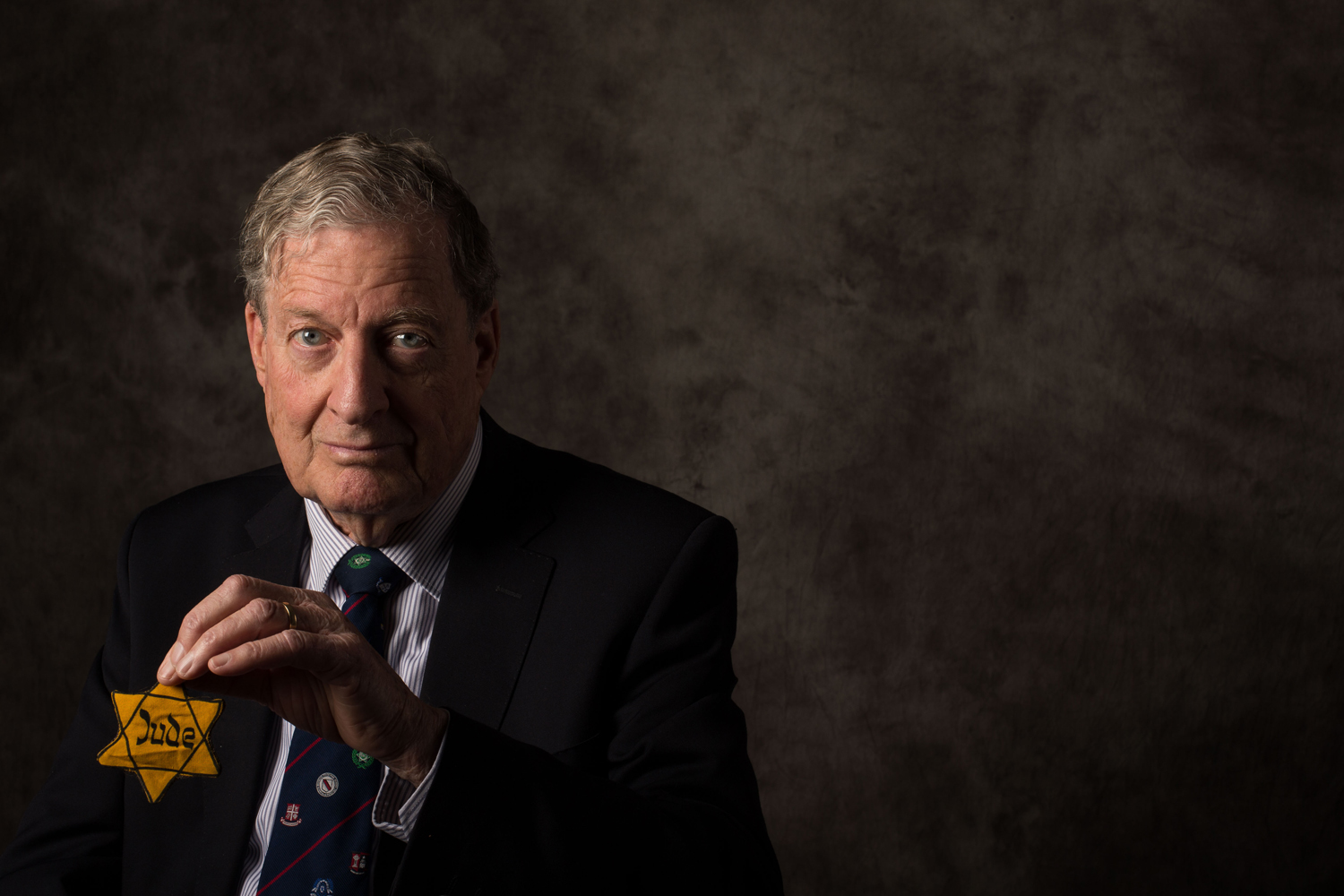
Katherine Griffiths, Peter Rossler, from the Sydney Jewish Museum exhibition ‘Closer’
“O.K. So it’s banal, but ‘The Family of Man’ set me off and I’ve been trying ever since.”
“O.K. So it’s banal, but ‘The Family of Man’ set me off and I’ve been trying ever since. Trying to become a photographer and not just someone who takes photographs. I became a diarist with a camera. I tried to simply record the things which interested me from day to day. I taught myself enough rough technique and practice continually. Even now I sit in front of the tele and watch junk through an 85mm, move dials, press buttons and go through all the motions. I honestly believe this helps. I became less conscious of the camera and it more a part of me. My prints are rough hard and grainy, which just what Sydney is like. The light is fierce, the summer hot and humid, the bush inhuman and the population complacently cruel enough to accept two decades of flabby self-congratulatory ignorance, cushioned and smothered by the soft folds of the Menzies arse. This is a harsh society with few shades of grey, where paradise is still a Monaro with four on the floor and up you Jack I’m alright.” — John Williams 1974
As John used to say: “Just because you’re paranoid, doesn’t mean they’re not after you”
 Martyn Jolly