A 1967 government film re-edit

Made for the LocalJinni City night walk – a collective projection journey ANU campus 4, 11, 18 October 2025 in association with the exhibition Light Source, ANU Drill Hall Gallery, a re-edit of the government film:

The Australian National University.

Originally made by Tom Cowan and John Morris in 1967 with music composed by Moneta Eagles.

Thank you Fiona Hooton. Thank you ANU Archives.

Tragic Drowning Fatality

andrew-ryan-benjamin-harb

‘Tragic Drowning Fatality’, Siteworks 2016, Bundanon, Martyn Jolly and Alexander Hunter

performance-at-siteworks

‘Tragic Drowning Fatality’, Siteworks 2016, Bundanon, Martyn Jolly and Alexander Hunter

perfromance-at-bundanon-2

‘Tragic Drowning Fatality’, Siteworks 2016, Bundanon, Martyn Jolly and Alexander Hunter

Tragic Drowning Fatality, Siteworks 2016, Bundanon, Martyn Jolly and Alexander Hunter

Tragic Drowning Fatality, Siteworks 2016, Bundanon, Martyn Jolly and Alexander Hunter

jack-livingston-chloe-hobbs

‘Tragic Drowning Fatality’, Siteworks 2016, Bundanon, Martyn Jolly and Alexander Hunter

Some images taken by Alex Hobba of the magic lantern performance ‘Tragic Drowning Fatality’ performed by Martyn Jolly and Alexander Hunter at Siteworks 2016, Bundanon, with: thirty original magic lantern slides from the 1880s to the 1920s; two JW Steward magic lanterns from the 1880s dissolving one slide projection into another; members of the ANU Experimental Music Ensemble (Ben Harb, Andrew Ryan, Jack Livingston and Chloe Hobbs) on double bass, guitar and percussion; and actors from the region (Kez and Libby Thompson, Peter Lavelle and Clare Jolly) reading verbatim coronial testimony of an actual double drowning that happened in the Shoalhaven River in 1922.

@heritageinthelimelight

https://www.facebook.com/HeritageintheLimelight/


Photos of my magic lantern show at Canberra Obscura

The estimable Andrew Sikorski has posted some shots of my magic lantern performance (along with Andromeda is Coming) amongst his documentation of the Canberra Obscura Art Party on his site Life in Canberra.

You can see me using my own latest technological innovation in projection which I call ‘a bit of cardboard with a hole in it’. Derived from the ‘burning in tool’ of the traditional darkroom printer, the ‘bit of cardboard with a hole in it’ held over the lantern lens spotlights details and narrativises the slides like Ken Burns did with his (now infamous) ‘Ken Burns effect’ in such landmark ‘archivally based’ documentary series  as  his The Civil War of 1990. I was also inspired to use the ‘bit of cardboard with a hole in it’ by the author of Sherlock Holmes, Sir Arthur Conan Doyle. He came to Australia in 1920 on a magic lantern tour to show people photographic evidence that the dead returned from beyond the veil. In Adelaide, according to Doyle’s account on page 76 of his book Wanderings of a Spiritualist, ghosts literally inhabited the machine and took over the magic lantern to demonstrate the proof of their survival:

I had shown a slide the effect of which depended upon a single spirit face appearing amid a crowd of others. This slide was damp, and as photos under these circumstances always clear from the edges when placed in the lantern, the whole centre was so thickly fogged that I was compelled to admit that I could not myself see the spirit face. Suddenly, as I turned away, rather abashed by my failure, I heard cries of “There it is”, and looking up again I saw this single face shining out from the general darkness with so bright and vivid an effect that I never doubted for a moment that the operator was throwing  a spotlight upon it. … [N]ext morning Mr Thomas, the operator, who is not a Spiritualist, came in in great excitement to say that a palpable miracle had been wrought, and that in his great experience of thirty years he had never known a photo dry from the centre, nor, as I understood him, become illuminated in such a fashion.


Andrew Sikorski, Canberra Obscura, Martyn Jolly with 'Andromeda is Coming'

Andrew Sikorski, Canberra Obscura, Martyn Jolly with ‘Andromeda is Coming’
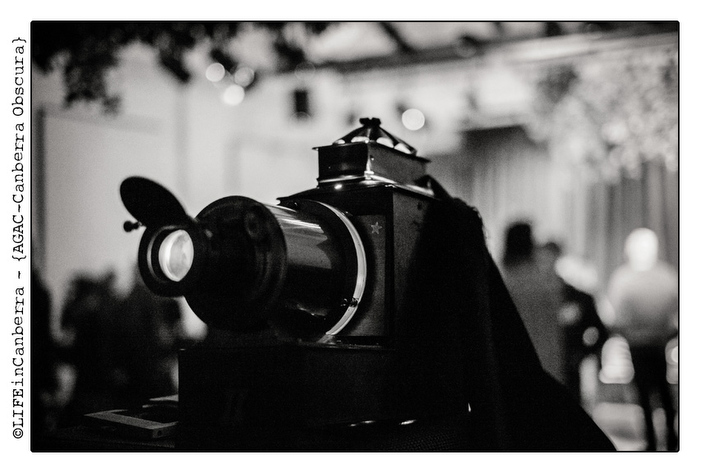
LIFEinCanberra_050

Andrew Sikorski, Canberra Obscura, Martyn Jolly with ‘Andromeda is Coming’
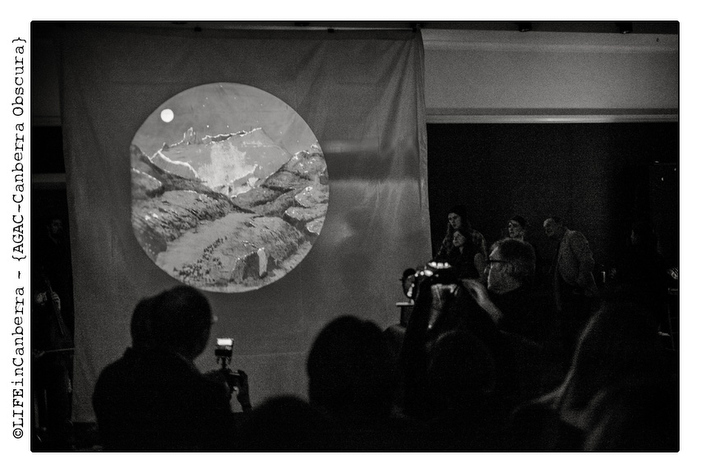


LIFEinCanberra_055

Andrew Sikorski, Canberra Obscura, Martyn Jolly with ‘Andromeda is Coming’

LIFEinCanberra_056

Andrew Sikorski, Canberra Obscura, Martyn Jolly with ‘Andromeda is Coming’

LIFEinCanberra_058

Andrew Sikorski, Canberra Obscura, Martyn Jolly with ‘Andromeda is Coming’

LIFEinCanberra_059

Andrew Sikorski, Canberra Obscura, Martyn Jolly with ‘Andromeda is Coming’

LIFEinCanberra_060

Andrew Sikorski, Canberra Obscura, Martyn Jolly with ‘Andromeda is Coming’

LIFEinCanberra_062

Andrew Sikorski, Canberra Obscura, Martyn Jolly with ‘Andromeda is Coming’

LIFEinCanberra_063

Andrew Sikorski, Canberra Obscura, Martyn Jolly with ‘Andromeda is Coming’
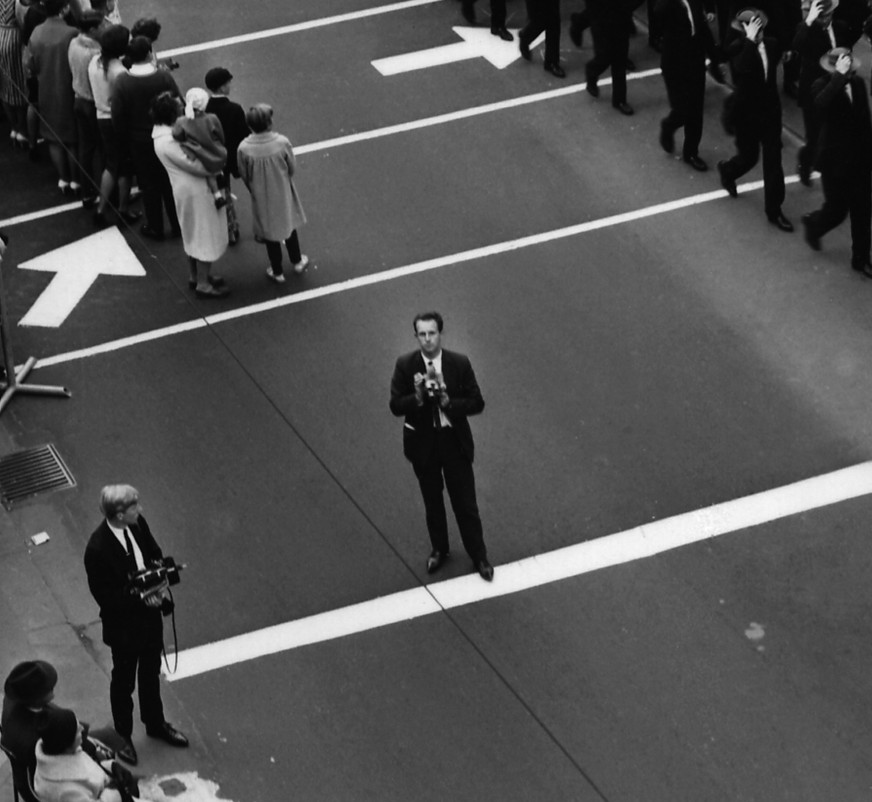
#standupstripdown

The hashtag #standupstripdown has been invented to be used by people like Heather Whitten who want to post family photographs with naked children. In the latest of a string of such incidents her image of her naked husband cradling her sick and naked son in a shower has been taken down several times by Facebook following complaints by people disgusted by the potentially paedophilic readings the photograph could carry. The disgusted complainers who are having such a lamentable chilling effect on our visual culture misunderstand both semiotics and paedophilia. Even if it unpleasant to imagine  the occasional paedo using such images for sexual gratification, the psychological effect on our whole society of NOT seeing images of such rich aspects of life, love and bodies is far worse. Others complain that the children in such photographs cannot give their consent and may be shamed or embarrassed when they grow up. But image making and image sharing in our culture cannot be reduced to a infinite series of micro-contracts over ‘self image’ between two quasi-legal parties. Such a legalistic conception of self image as an owned ‘property’ also reduces the complexity and richness of our collective visual culture. I’ve previously written about this so I don’t know why people aren’t taking any notice of me. Perhaps I didn’t think of inventing a hashtag.

Heather Whitten

Heather Whitten

Man to Eat Rats once more

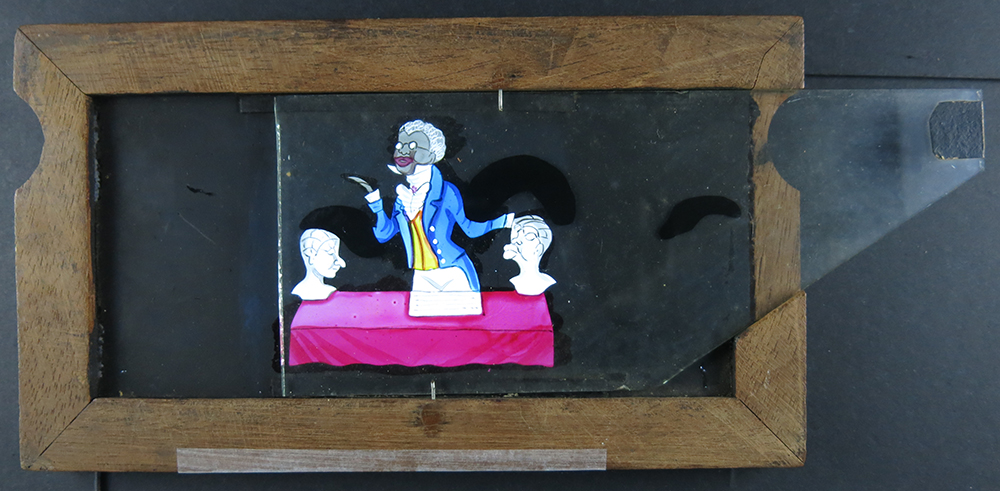
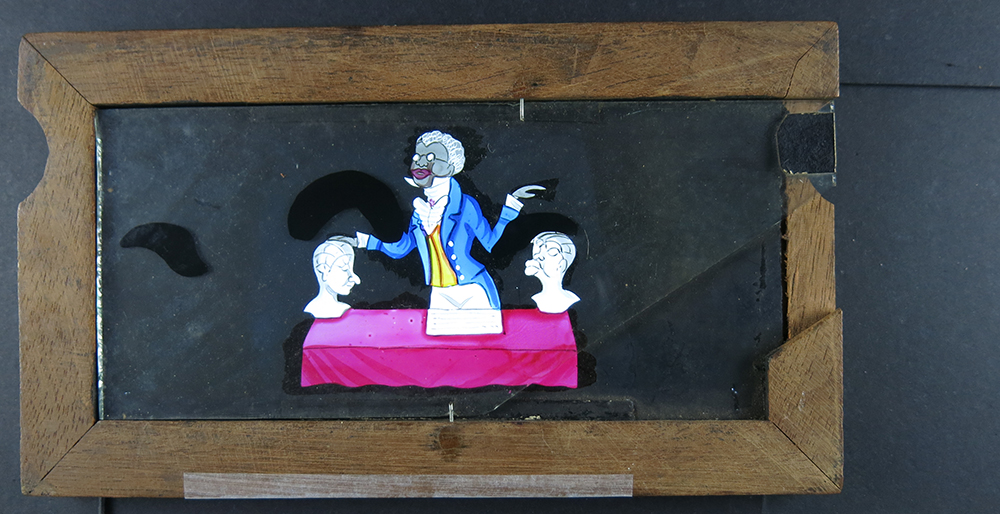
By far the most popular magic lantern slide of the nineteenth century was ‘Man Eating Rats’. Lanternists would even specifically promise it in their newspaper advertisements, so audiences knew they could go along and enjoy themselves making the requisite snoring and chomping and lip-smacking noises. I’ve had a copy of the slide for a while. But while the circulating rackwork rats worked perfectly, the sleeping man’s gluttonously bearded jaw was missing. Fortunately the ANU School of Art has a wealth of skill and knowledge and Waratah Lahy was able to paint me a  beautiful new jaw and beard (on a replacement piece of polycarbonate) which works perfectly. I’ll be showing it this Friday evening at the National Portrait Gallery in Canberra. I’ve also just brought a slipping slide of a phrenologist alternately examining a head of a ‘low’ type and a head of a ‘high’ type. Once again Australian National University historical expertise, through my colleague Alexandra Roginski, was able to provide me with actual phrenological readings from the period. So we’ll be performing this slide as well. There’ll be heaps of other slides, including The Gin Fiend.

'Man Eating Rats', hand painted and copperplate printed rackwork and slipping slide, c1890s.

‘Man Eating Rats’, hand painted and copperplate printed rackwork and slipping slide, c1890s.

'Phrenologist', hand painted and copperplate printed slipping slide, c1890s

‘Phrenologist’, hand painted and copperplate printed slipping slide, c1890s

'Phrenologist', hand painted and copperplate printed slipping slide, c1890s

‘Phrenologist’, hand painted and copperplate printed slipping slide, c1890s

History of Photography, The

The estimable Belinda Hungerford is doing a fabulous job researching and organising the archives of the Australian Centre for Photography. Her research led me to find, in the back of a cupboard, copies of a small booklet I produced with my students in 1990 (!). It was to accompany a show we put on at the ACP. Some students from back then are still doing important work in the field, I’m gratified to note. Reading through the anecdotes we collected back then it’s interesting that in that pre-digital period the minilab, now a lost site of visual profligacy and collective concatenation, served a not-dissimilar lubricious function to the ‘on-line’ environment now. If you want a copy of our booklet I’ll be glad to send you one, the price hasn’t changed in 25 years.

Australian Research Council funding for Heritage in the limelight: the magic lantern in Australia and the world

The ARC has funded a three year Discovery Project I will lead. The project aims to discover and analyse the large number of glass magic lantern slides that remain under-used in our public collections. International scholarship has recently begun to show that lantern slide shows were a ubiquitous, globalised and formative cultural experience. The project aims to explore the international reach and diversity of this globalised modernist apparatus from the Australian perspective. It plans to understand how diverse audiences affectively experienced these powerful forms of early media, and to develop ways for today’s Australians to re-experience their magic, invigorating and expanding our cultural heritage.

The team is Dr Martyn Jolly and Associate Professor Martin Thomas Australian National University; Professor Jane Lydon, University of Western Australia; Professor Nicolas Peterson and Professor Paul Pickering, Australian National University; Associate Professor Joe Kember, University of Exeter, UK.

With scholars like that we are guaranteed to find amazing material around Australia, and do wonderful things with it, in terms of identification, critical analysis and re-presentation. It’s also great that we will be working  with the European project A Million Pictures: Magic Lantern Slide Heritage as Artefacts in the Common European History of Learning. And I’m also looking forward to working even more with my friends from the lantern slide fraternity around Australia and the world. I can’t wait. I’m also really looking forward to picking up steam in my other ARC Discovery Project led by Dr Daniel Palmer, Monash University,’ Photography Curating in the Age of Photosharing’.

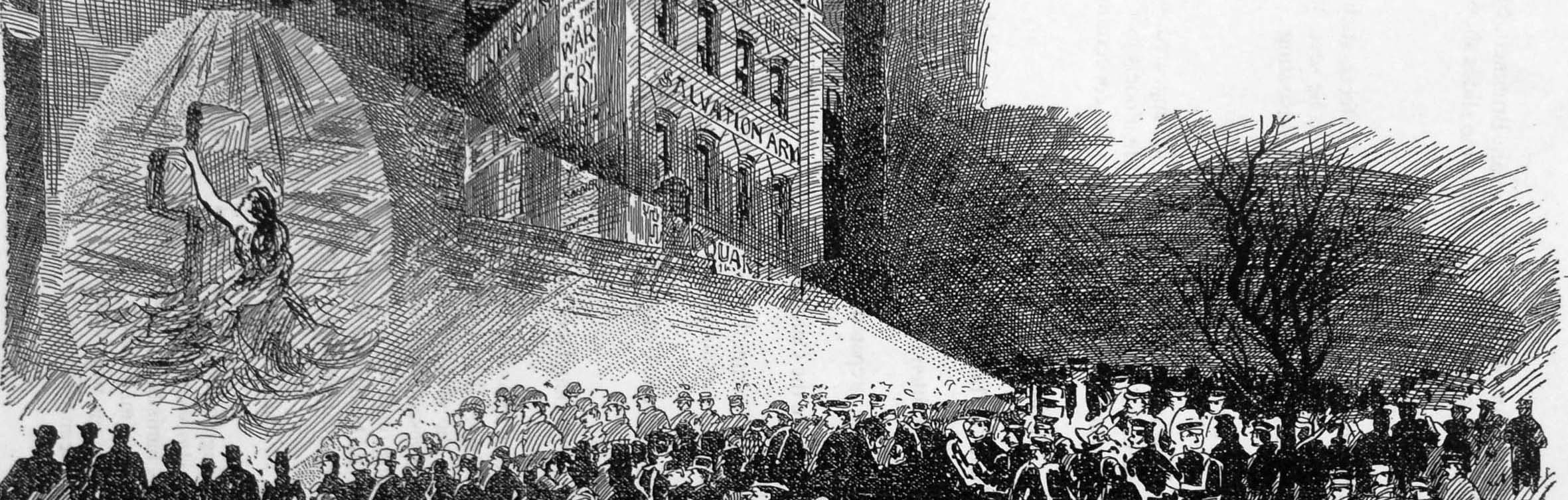
'In the Hurly Burly', detail from Salvation Army Melbourne War Cry, 1894

‘In the Hurly Burly’, detail from Salvation Army Melbourne War Cry, 1894

.