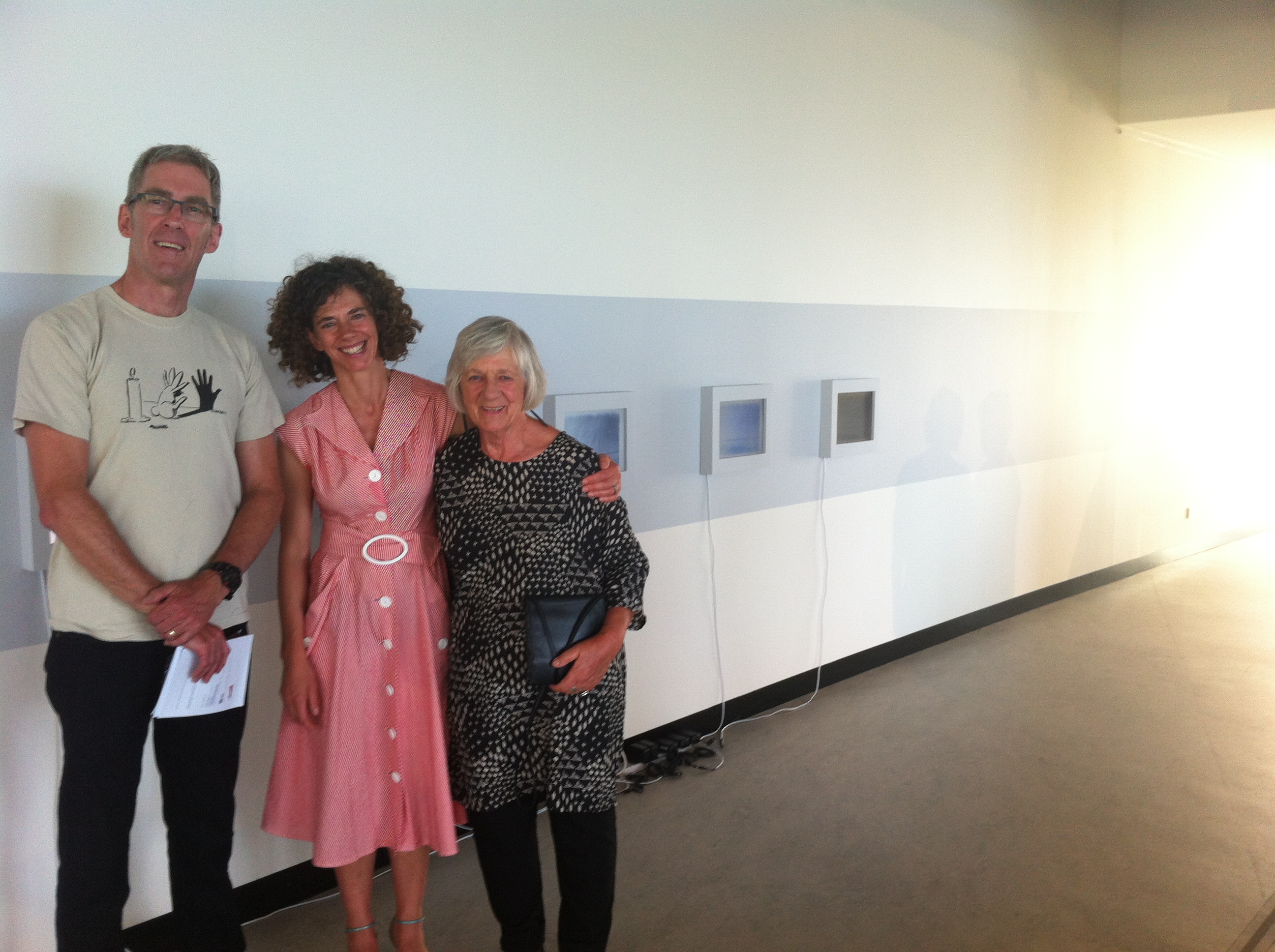
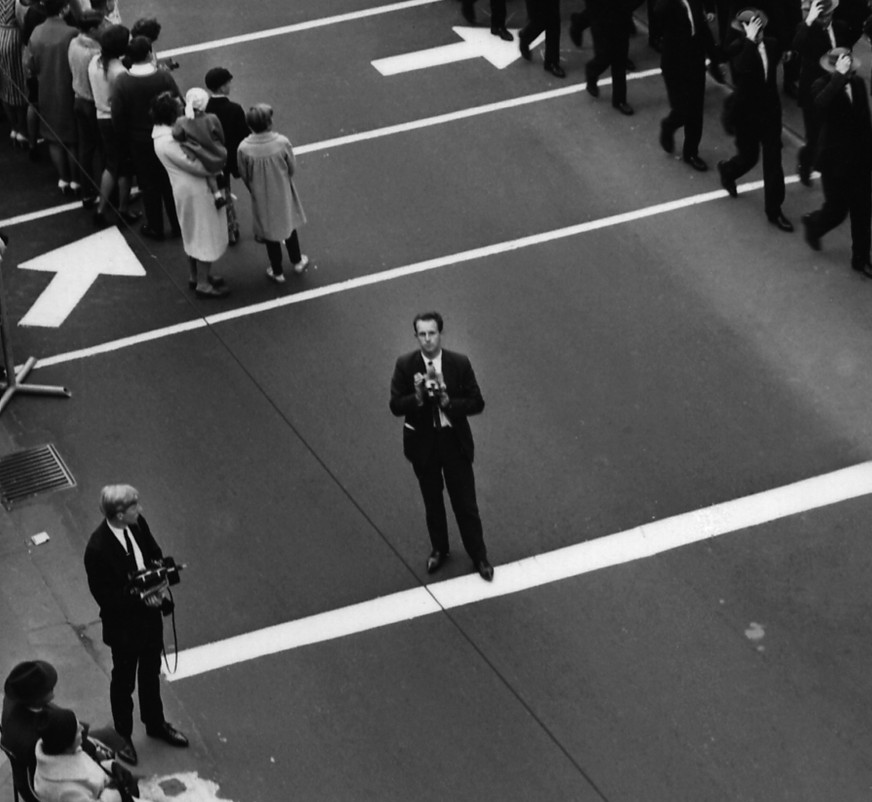
It was fun being able to auspice a Bearcage shoot with Canberra photographer Lee Grant and Chinese photographer Yu Haibo at the ANU School of Art. They are making a Canberra/Beijing documentary on ….. documentary photographers.
Author Archives: martynjolly
Is Rob Moody Australia’s greatest archive artist, greater even than the great Patrick Pound?
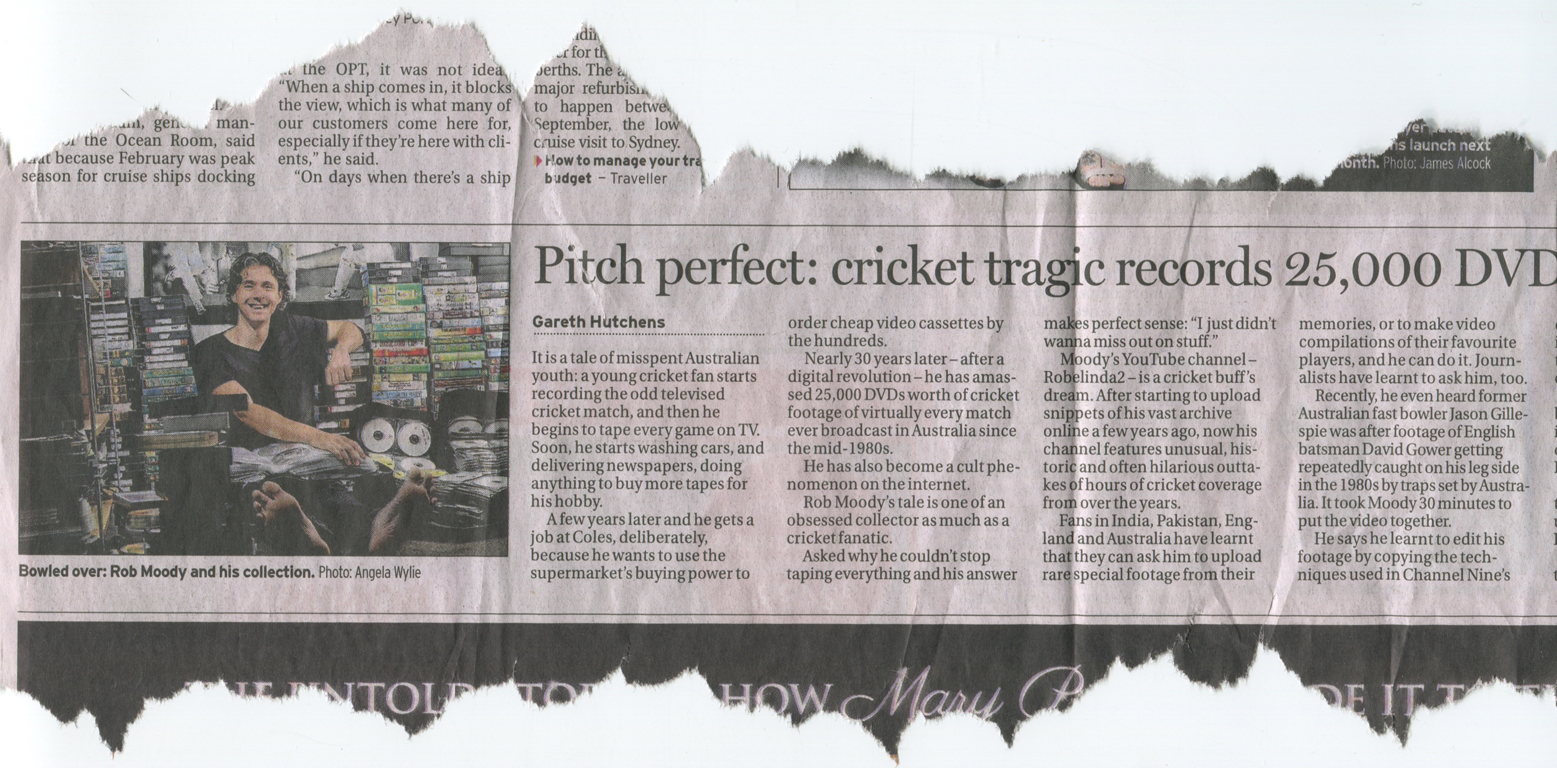
Pitch perfect: cricket tragic records 25,000 DVDs worth of game time
Author: Gareth Hutchens
Date: Sydney Morning Herald 18/01/2014 p10.
It is a tale of misspent Australian youth: a young cricket fan starts recording the odd televised cricket match, and then he begins to tape every game on TV. Soon, he starts washing cars, and delivering newspapers, doing anything to buy more tapes for his hobby.
A few years later and he gets a job at Coles, deliberately, because he wants to use the supermarket’s buying power to order cheap video cassettes by the hundreds.
Nearly 30 years later – after a digital revolution – he has amassed 25,000 DVDs worth of cricket footage of virtually every match ever broadcast in Australia since the mid-1980s.
He has also become a cult phenomenon on the internet.
Rob Moody’s tale is one of an obsessed collector as much as a cricket fanatic.
Asked why he couldn’t stop taping everything and his answer makes perfect sense: “I just didn’t wanna miss out on stuff.”
Moody’s YouTube channel – Robelinda2 – is a cricket buff’s dream. After starting to upload snippets of his vast archive online a few years ago, now his channel features unusual, historic and often hilarious outtakes of hours of cricket coverage from over the years.
Fans in India, Pakistan, England and Australia have learnt that they can ask him to upload rare special footage from their memories, or to make video compilations of their favourite players, and he can do it. Journalists have learnt to ask him, too.
Recently, he even heard former Australian fast bowler Jason Gillespie was after footage of English batsman David Gower getting repeatedly caught on his leg side in the 1980s by traps set by Australia. It took Moody 30 minutes to put the video together.
He says he learnt to edit his footage by copying the techniques used in Channel Nine’s cricket coverage. And his favourite thing to do with the footage is to make compilations of different players or incidents.
He has exposed Australian batsman Shane Watson’s defective technique in a video that compiles every one of his painful LBW test dismissals.
Another video features every test match run-out of the ungainly Pakistani batsman Inzamam-ul-Haq.
Over the years Moody has had to transfer his valuable footage from VHS to DVD to hard-drive, to save it from deteriorating.
He says he still loves the sport, though he can’t watch too many games while his two children, aged 6 and 4, are awake.
What does his wife think of his collection?
“She’s fine,” he says. “It looked physically a lot worse when we first got together because it was all on video tapes, thousands of video tapes.
“It’s not all over the house like it used to be.”
Opening of Still Fragments Landscapes at Belconnen Arts Centre
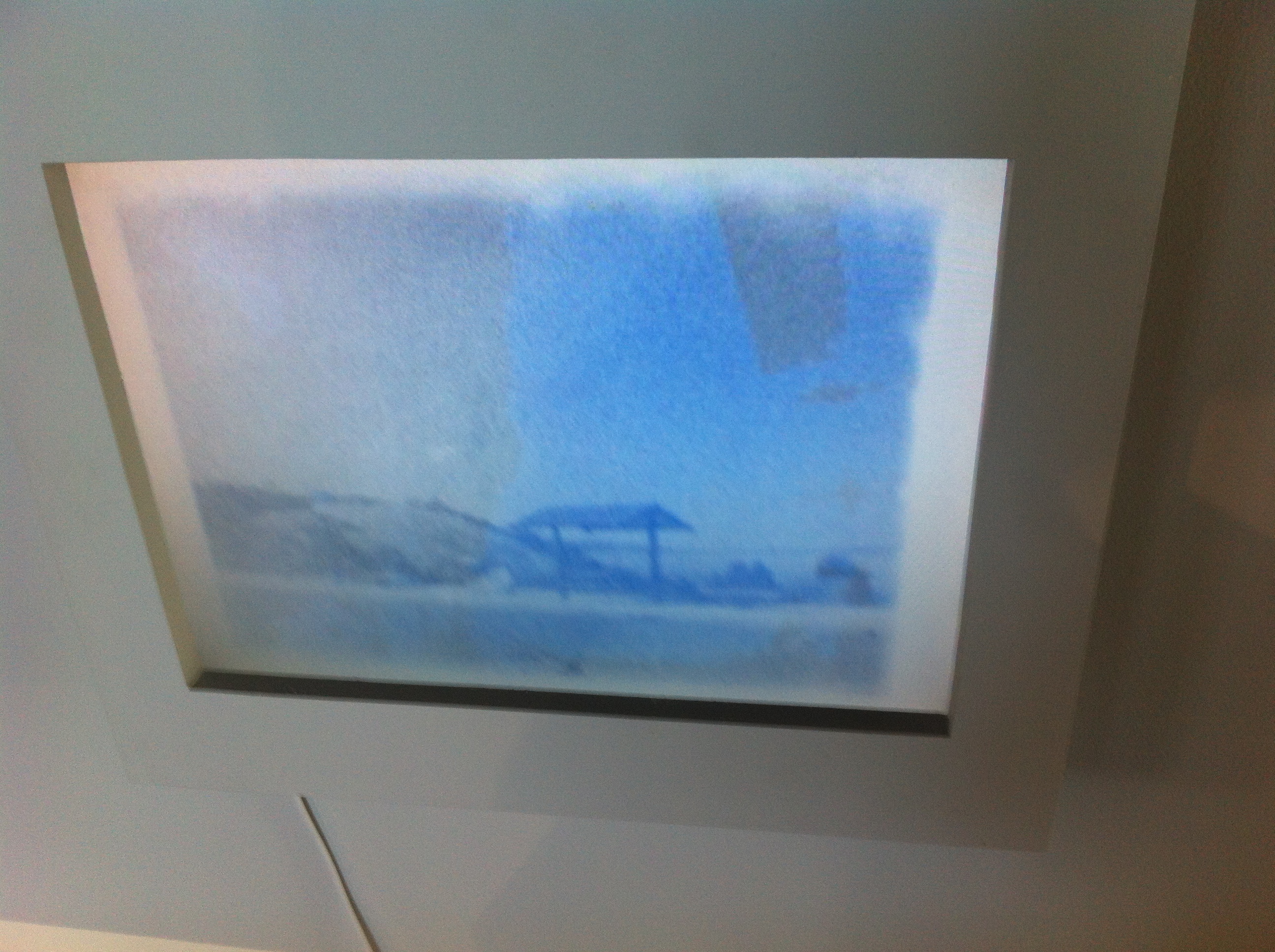
It was fun opening Louise Curham and Jo Law’s exhibition Still Fragments Landscapes at Belconnen Arts Centre: hand processed Super 8 film, at three frames a second, digitally composited with rotoscoped, hand-drawn and stop-frame stitched elements, all presented on small framed LED screens as video art you could live with. Nice.
My magic lantern slide collection
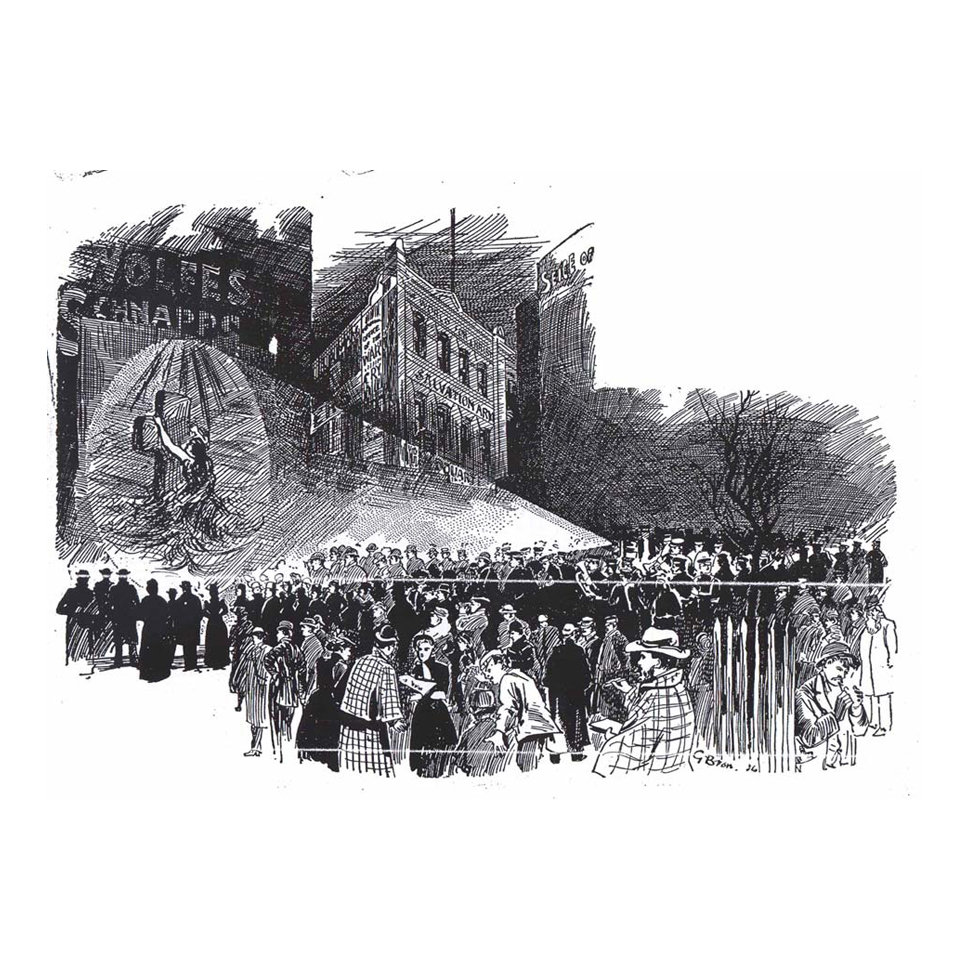
Now I have got my two lanterns working with LED lights, I spent the weekend beginning to catalogue the slides I have recently acquired. It turns out I have hand-painted slides of the Hymn Rock of Ages, very similar to the set which the Salvation Army used in one of Australia’s first outdoor projection in Melbourne in1894; as well as many complete sets of Life Model and Song Slides, such as were frequently used in Australian missions and churches. I’m now thinking of where to go next with my research, I’m currently looking at the reaction of nineteenth century Australian audiences to the lantern through newspaper searches, but there are so many other exciting things to do:
- Commission contemporary artists to make contemporary lantern slides — paintings on glass or anything that can be sandwiched between 82 x 82mm glass!
- Recreate shows using the Song Slide sets and the mp3 transcriptions of the Edison wax cylinders and Columbia records which the Library of Congress have made available on-line
- Recreate shows using the Song Slide sets and Life Model sets with sheet music available from Trove and the recitations available online with performers interested in the genre of melodrama and sentiment
- Build a rig that will allow me to ‘wear’ the smaller lantern as part of a performance (which was a technique developed by the London Polytechnic)
- Collaborate with contemporary performers and musicians
Any ideas?
I Heart TV Launch at M16
The first opening of 2014 (first of many), but it was a pleasure to be able to give the opening talk at Sam Townsende and crew’s I Heart TV at M16. An intelligent show that got coverage in the Canberra Times. Great to catch up with old student friends who are still smart. Also looking forward to launching Louise Curnham’s and Jo Law’s Stills Fragments Landscapes at Belco Art Centre next week.
Researching the construction of nineteenth century audiences by the magic lantern
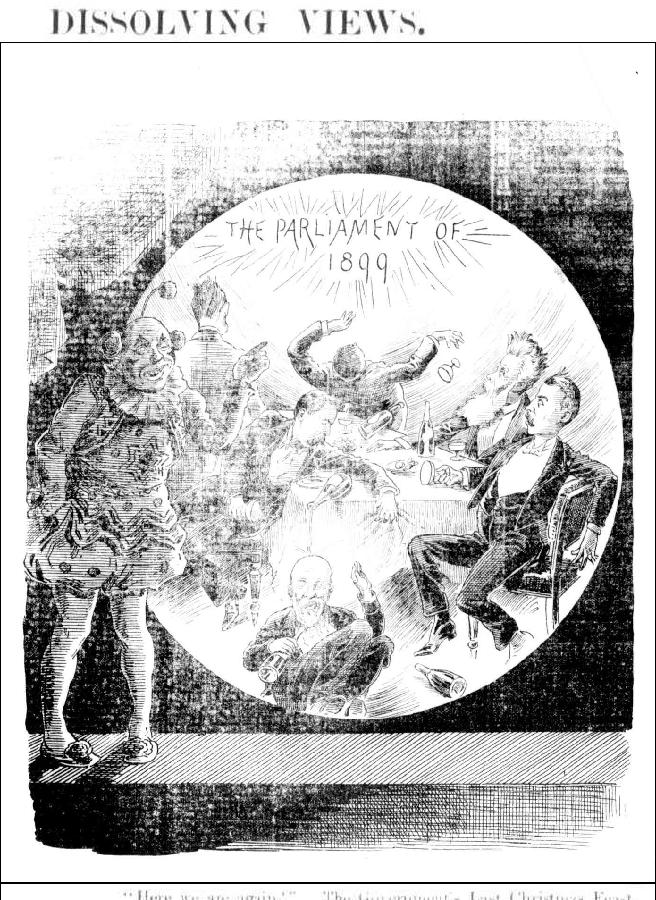
I’m researching the construction of nineteenth century audiences by the magic lantern, mainly through Trove newspaper searches, and finding fun stuff, such as this from the Queensland Worker, ‘Dissolving views’ was another phrase for Magic Lantern Show. I don’t know enough about fin de siecle Queensland politics to get the joke though.
Professor Ian Edwards’ presentation to the Magic Lantern Convention, Birmingham
I ambled down to my letterbox to find the latest issue of the Magic Lantern Society Newsletter waiting for me. Delighted that there was a report on Professor Ian Edwards and his wife Margery’s presentation to the 9th Magic Lantern Society Convention in Birmingham. (See below). Professor Edwards presented a lantern show at my symposium of last year the Projected Image Heritage of Australia and New Zealand, and he also presented a show at the Australasian Magic Lantern Society Convention. We are working on another event next year, so like our facebook page please.
Cover design of new literary sub-genre — child abuse victim testimony books
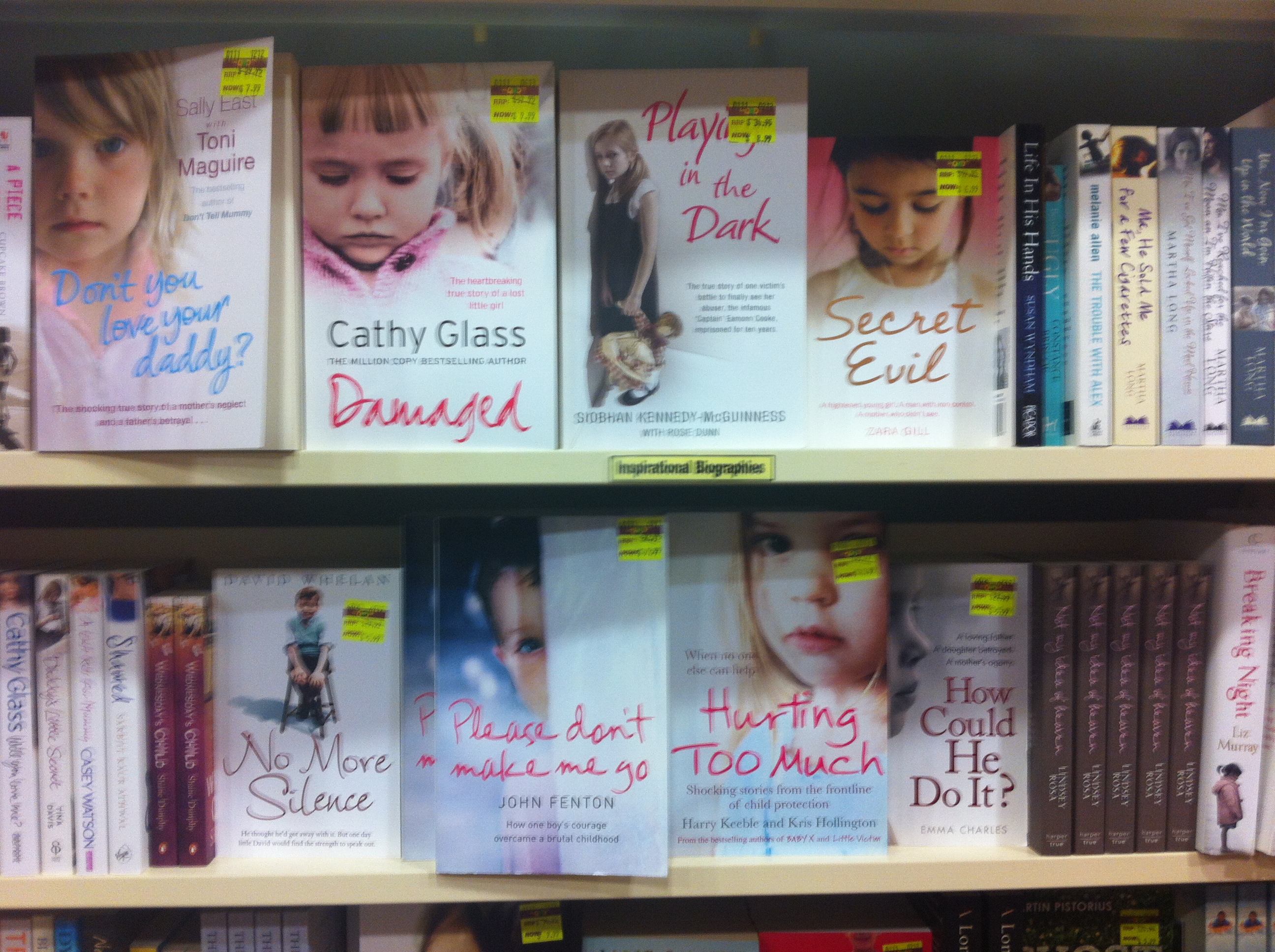
Looking for Christmas presents I discovered a new literary sub-genre of which I was previously unaware: the testimony of children who had been the victims of various kinds of child abuse, delivered through the dubious amanuenses of one or two authors who seem to have cornered the market. Each book-cover, like the covers of a sister sub-genre romance fiction, looked remarkably similar: pinks, blues and white (girls/boys/innocence); cursive script (first person testimony); and the downcast, pouty faces of blonde poppets of both sexes shot from a high camera angle. It made me think of the street urchin narratives of the nineteenth century, found in the journalism of W. T. Stead, or the life model lantern slides of Bamworth and Co, or the photography of Charles Dodgson for instance.

Shot in a Canberra book shop, a new sub genre: child abuse victim testimony packaged for the sentimental consumption of sympathetic readers

Shot in a Canberra book shop, a new sub genre: child abuse victim testimony packaged for the sentimental consumption of sympathetic readers
Celebrity culture defines the high school formal
In my naiveté I was astounded by the way high school formals have become defined by celebrity culture. After dropping my daughter off to her friends before her end of year formal I found out that we were expected to follow her and her friends in their posh car all the way to the venue. Hundreds of parents and relations thronged the steps. The hired and borrowed cars queued up. As each one disgorged its sixteen-year old occupants a barrage of flashes went off and mums squealed at the kids who posed for the cameras.
The Citizens of Canberra, 2013
An installation of Canberra travel brochures for the 1920s to the 1980s, each covered by a sheet of A4 paper in which had been cut a small window strategically revealing a hapless Canberra citizen, unwittingly conscripted to take part in the civic vista of the photograph, which remained obscured.