Australian Photography Commissions

Talk at Australian Parliament House 20 June 2014 for Anne Zahalka Parliament House commission forum

Australian Photography, Corporate Commissions and Australia’s Parliament House

When Parliament House was being built the scene for art photography was very different to the scene now. Now photography has become just another imaging-option within art, and it really only gets public profile as a medium in its own right through a set of annual photography competitions, in which anyone — amateur, professional or student — can take their chances. But, twenty-five years ago, photography was still relatively ‘hot’ as an art medium and, as well as being seen to be publicly accessible, it was also associated with the young and innovative. Rather than today’s large photographic competitions, which are largely funded by the entry fees of photographers themselves, in the eighties corporate sponsorship was very important in offering new photographers their first break, and offering established photographers further opportunities. Companies such as Polaroid and Kodak sponsored photographers, but the biggest sponsor of the period was the cigarette company Philip Morris, who aligned itself with the National Gallery of Australia and, through its director James Mollison, purchased 700 photographs by over 100 photographers between 1976 and 1980.

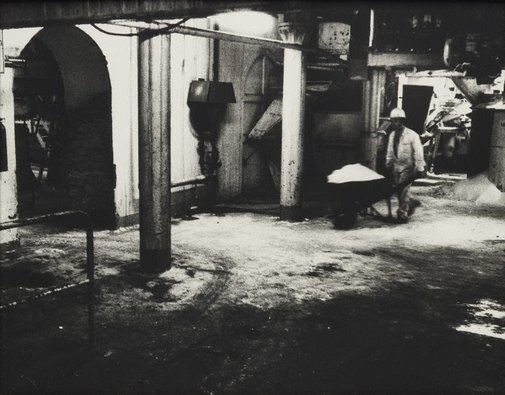
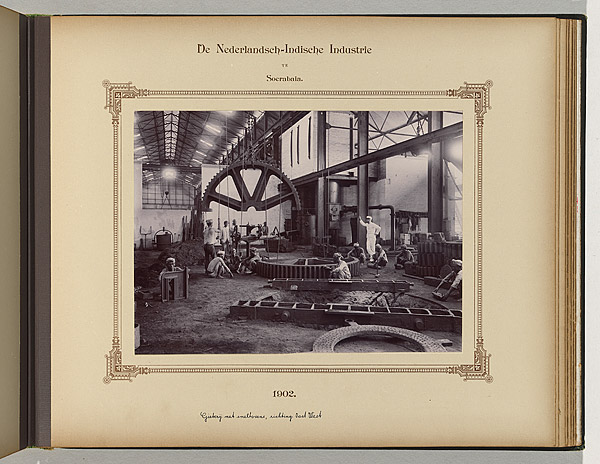
Other industries also saw the advantage of using photographers to not only document their activities, but also to gain a corporate shine from being seen to be with-it philanthropists to a young and exciting art medium. Of course photography has always been completely bound up in industry. From the early twentieth century onwards photographers and factories were close acquaintances. Photographers such as George Lewis, who features in the current NGA exhibition of Indonesian photography, was exemplary in importing the visual logic of the portrait studio onto the factory floor. Even before the industrial photographer unpacked his camera gear the machinery had to ‘photograph itself’ by momentarily pausing in its ceaseless whirring so that it would register solidly on the film rather than become a liquid blur. Workers, machinery and lighting were then choreographed, as in a portrait studio, to give just the right impression for the client.

George Lewis 1902

George Lewis 1902

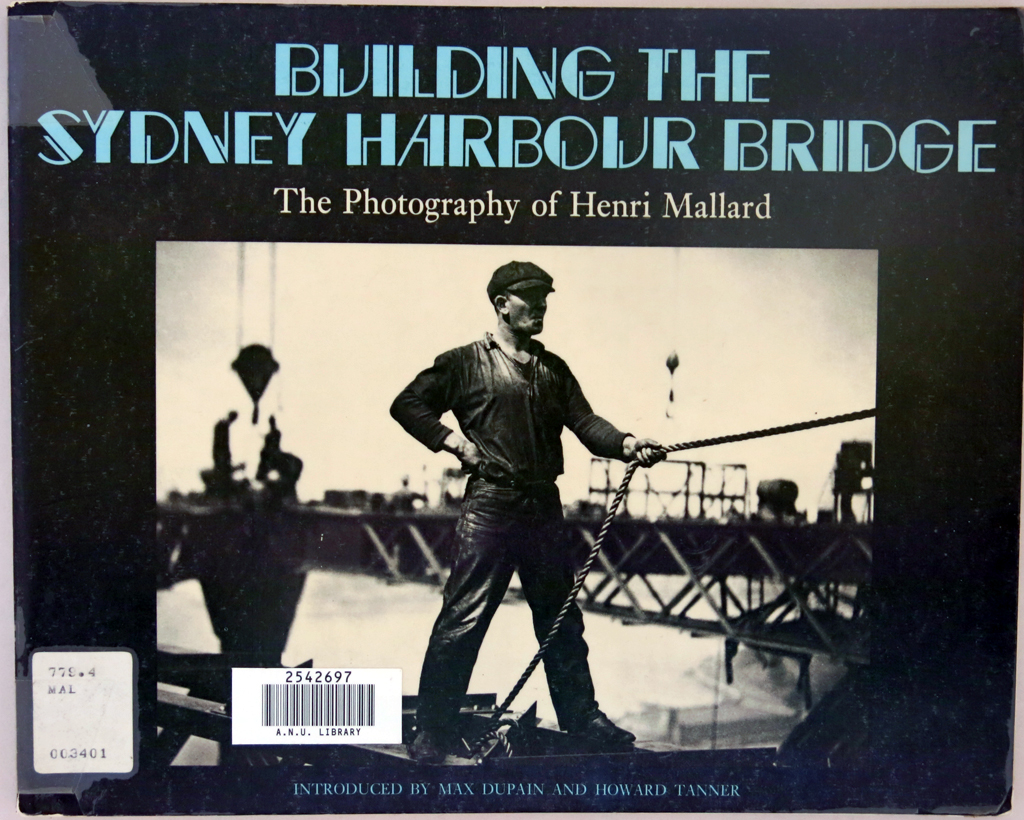
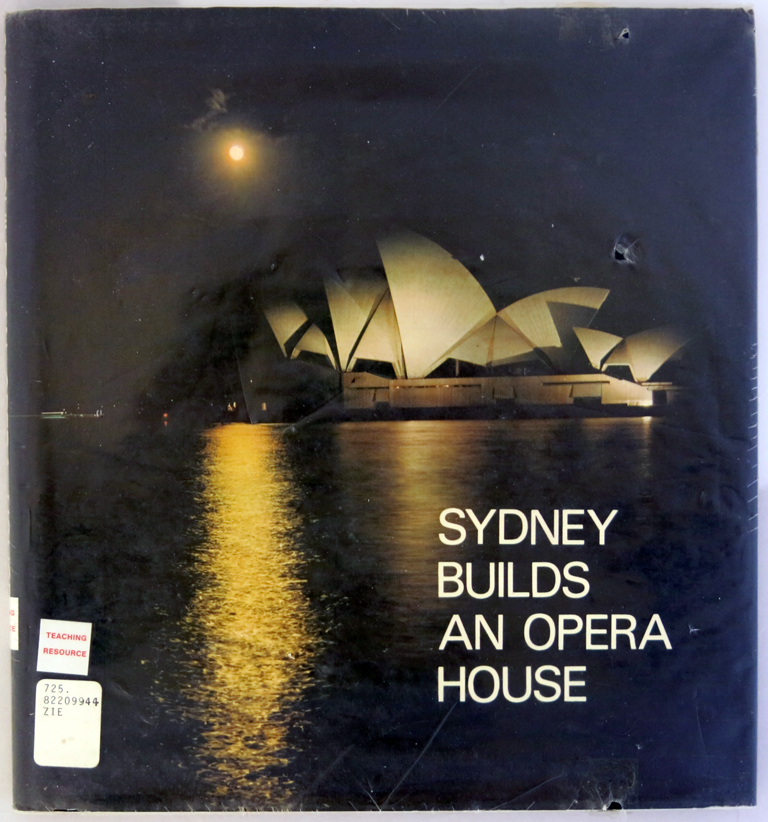
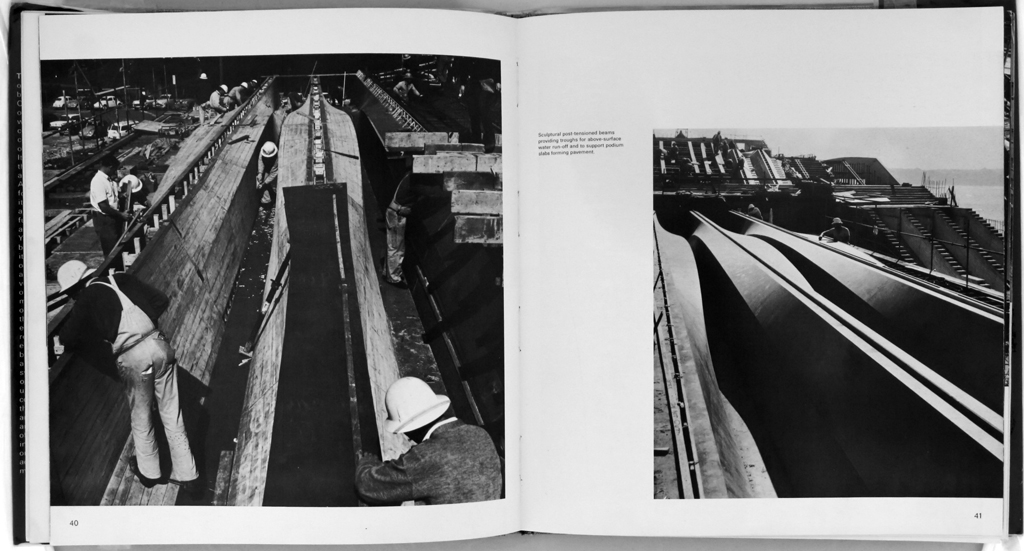
As was the case globally, Australian photographers have also always been associated with industry and architecture. Harold Cazneaux undertook a commission for BHP in 1935; and in 1973 the publisher Oswald Ziegler used Max Dupain’s photographs for one of his celebratory and commemorative volumes, Sydney Builds and Opera House. This exemplifies what could be called a modernist-heroic genre of architectural photography, celebrating industry and architecture primarily, and including workers as a function of the industrial process. Workers are certainly present and even celebrated, but they are a figured within the machinery of construction, a human accent to the formal architecture of the image. In this heroic mode it is the historical force of modernity itself which is the generative power, producing the ‘sculptural forms’ of the architecture which define the photograph, which in turn are ministered to by the supplicant workers who provide a fleshy torque to the composition’s hard architectonics. This heroic genre was getting a fair bit of profile twenty-five years ago. For instance in 1976 David Moore reprinted some photographs taken by Henri Mallard of the building of the Sydney Harbour Bridge for an Australian Centre for Photography travelling exhibition. Perhaps the last example of this heroic mode is David Moore’s own documentation of the building of the Glebe Island Bridge, published in 1996.

1976

1976

1973

1973

Sydney Builds an Opera House

Sydney Builds an Opera House

Sydney Builds an Opera House

Sydney Builds an Opera House

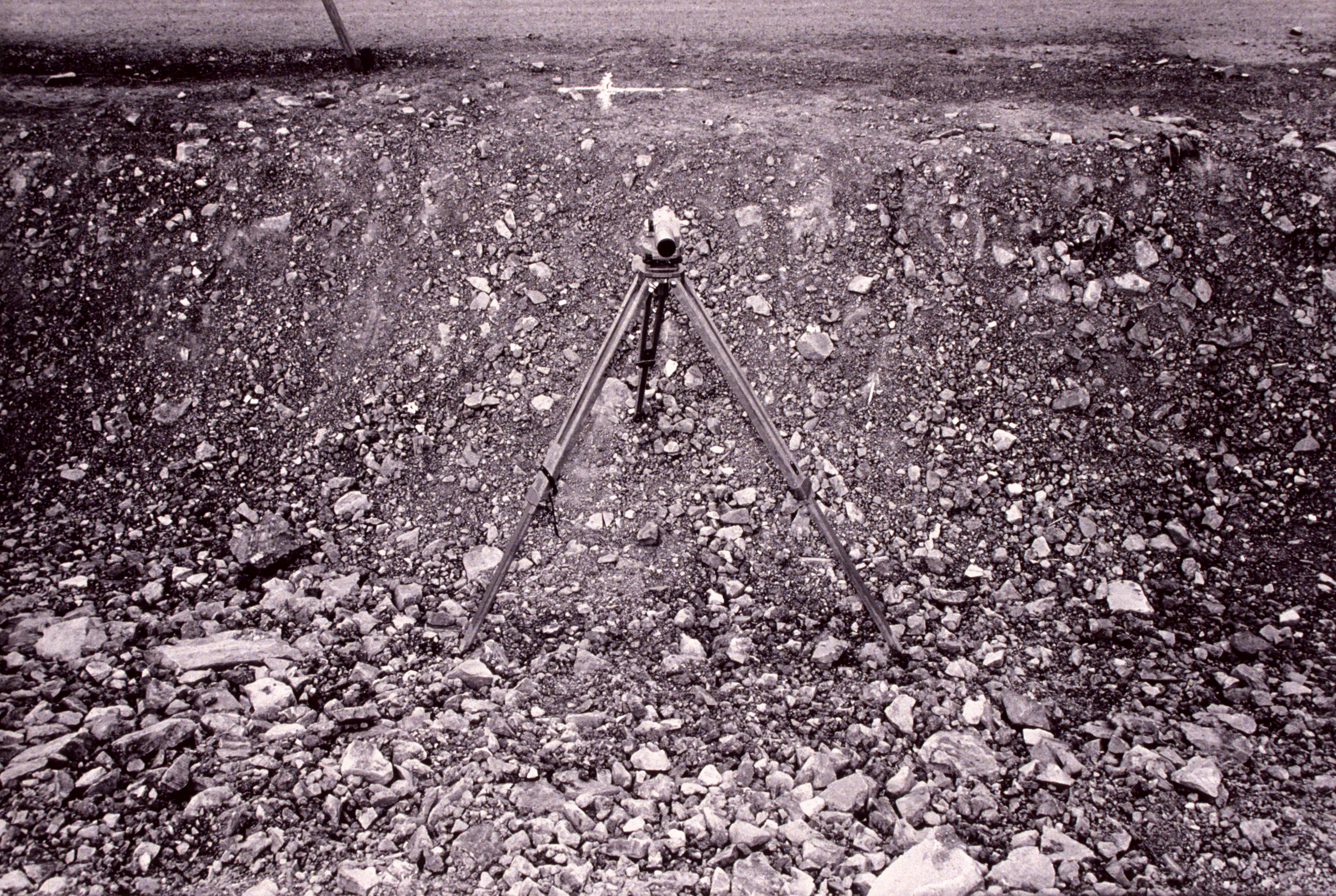
However, in 1978 one company, CSR, saw the advantage of uniting the benefits of the corporate philanthropy of Philip Morris with the opportunity to directly document the variety of their industrial activities. The story goes that they originally contacted the Australia Council to help them find a painter to celebrate the centenary of their Pyrmont refinery with a great big painting of the refinery. The council steered them toward getting more bang for their twelve thousand bucks by spending the same amount on a group of six photographers. The project, auspiced through Christine Godden, director of the Australian Centre for Photography, went on for a further four iterations. The project was structurally very similar to the future Parliament House Project, it commissioned emerging photographers, but also featured established photographers ‑ even towards the end getting Max Dupain to reprint some images originally taken in the 1950s. The emphasis was on a variety of approaches, from the traditional fine print to the more art school trained style of creative photography. Thus in 1978 Sandy Edwards broke the masculinist mold of the previous heroic mode by photographing the multicultural women on the production line. Micky Allan also broke the heroic mold of picturing workers as a mere manifestation of the Modernist imperative by incorporating noise andvibration — stilled in previous industrial photography — in her production line photographs. Even Bill Henson enveloped the younger workers in his trademark entropic twilight, making them not the vigorous propellers of progress, but the romantic bearers of a lugubrious weight. David Moore even assembled portrait-rows of them, matching the leatheriness of their multicultural faces with the marks on their multifunctional gloves. Also notable in the CSR collection was some of what was called at the time ‘constructed photography’, exemplified by Debra Phillips, who a decade before photoshop blended two separate photographs into the one experiential landscape; or Merryle Johnson who made multiple-viewpoint scenes of ordinary life. However the CSR commission also gave the opportunity for photographers like Grant Mudford to explore the formal properties of the medium using industrial materials and gravel.

Debra Phillips on CSR catalogue cover

Debra Phillips on CSR catalogue cover

Sandy Edwards 192 Cubes 1978. AGNSW Collection

Sandy Edwards 192 Cubes 1978. AGNSW Collection

Micky Allan 1978. AGNSW Collection

Micky Allan 1978. AGNSW Collection

Grant Mudford 1981. AGNSW Collection

Grant Mudford 1981. AGNSW Collection

The Parliament House commission had a lot in common with the CSR commission, and many photographers who worked on Parliament House had previously worked at CSR. However some, for instance Bill Henson, who worked on the CSR commission unfortunately did not come back for Parliament House, I wonder what he would have done if he had? Many of the twenty-eight photographers who shot on the site around the year 1986 worked in a hyper formalist style. One example amongst many is Tony Perry who revelled in the mud and hard shadows, and formally played the white of the concrete off against the dark patterns of reinforcing mesh. For others, like Steven Lojewski, on-camera flash often flattened space, and horizon lines were often pushed way up to force a tension between the 3D space depicted in the image, and the 2D surface of the print. To anybody who lived through this period this is all very, very, familiar, but scrolling through the images now the viewer feels the clench of a claustrophobic air. But nonetheless this style dominates the collection. Other examples in black and white are: Fiona Hall, Glen O’Malley, John Elliot and Charles Page ; and in colour: Douglass Holleley and Ed Douglas. In many of these shots workers are excluded entirely, and in others, such as Fiona Hall’s, they are reduced to tiny ciphers.

Steven Lojewski C1986 Parliament House Collection

Steven Lojewski C1986 Parliament House Collection

Only some photographers seem to capture the full scale and spatial weirdness of the building, most notably Gerrit Fokkema who gave his photographs his trademark surreal irony; and Debra Phillips who seems to have begun her photography by responding to the spaces she entered, rather than imposing her own pre-determined formal sensibility, like a net, over the spaces she looked down into— which many of the other photographers seemed to do.

Gerrit Fokkema C1986 Parliament House Collection

Gerrit Fokkema C1986 Parliament House Collection

Debra Phillips C1986 Parliament House Collection

Debra Phillips C1986 Parliament House Collection

This was a national commission, photographers went anywhere in Australia from which Parliament House’s construction materials were sought, but there was a politics here too. Take for example the sourcing of timber: Anthony Green photographed the dense Huon pine forests of Tasmania as though it was just another formalist exercise, and Richard Stringer’s photographed in the jungles of Kuranda, in far north Queensland, as though it was a postcard; but Gillian Gibb took individual tree portraits in Tasmania, baptising each one with their proper botanical name.

Gillian Gibb C1986 Parliament House Collection

Gillian Gibb C1986 Parliament House Collection

Anthony Green C1986 Parliament House Collection

Anthony Green C1986 Parliament House Collection

Workers are not excluded entirely: Mark Kimber did Sanderesque portraits of them, while Richard Woldendorp and John Williams photograph them emeshed in their environment. (It is only after a little while that we realize with a shock what is missing from these twenty-five year old images of workers, where are the hi-viz vests, today’s instantly recognizable symbol of labour worn by everyone from the prime minister down— here totally absent?). Merryl Johnson, one of several overtly feminist photographers who were chosen, places them as part of a dynamic environment.

Mark Kimber C1986 Parliament House Collection

Mark Kimber C1986 Parliament House Collection

Merryle Johnson C1986 Parliament House Collection

Merryle Johnson C1986 Parliament House Collection

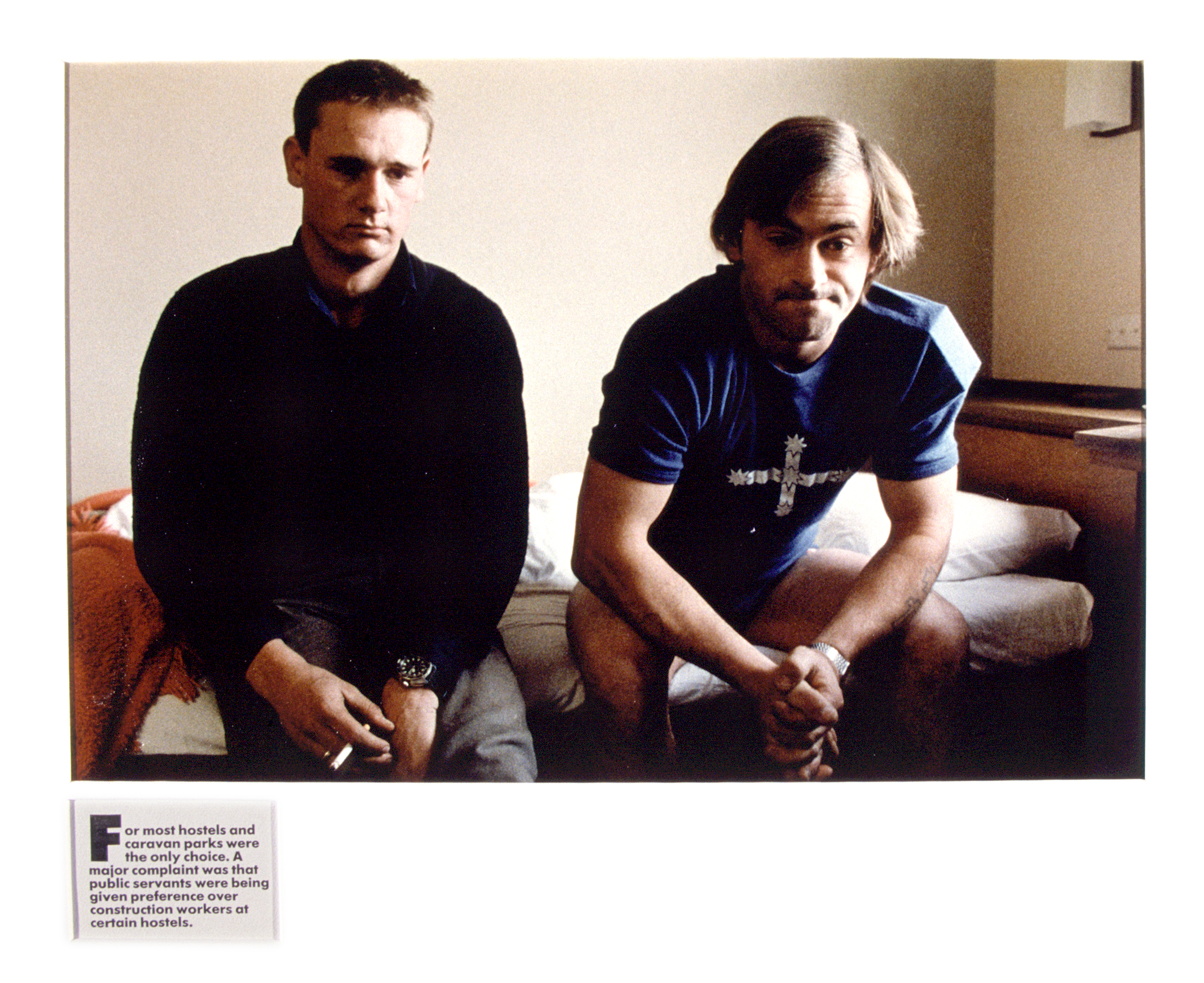
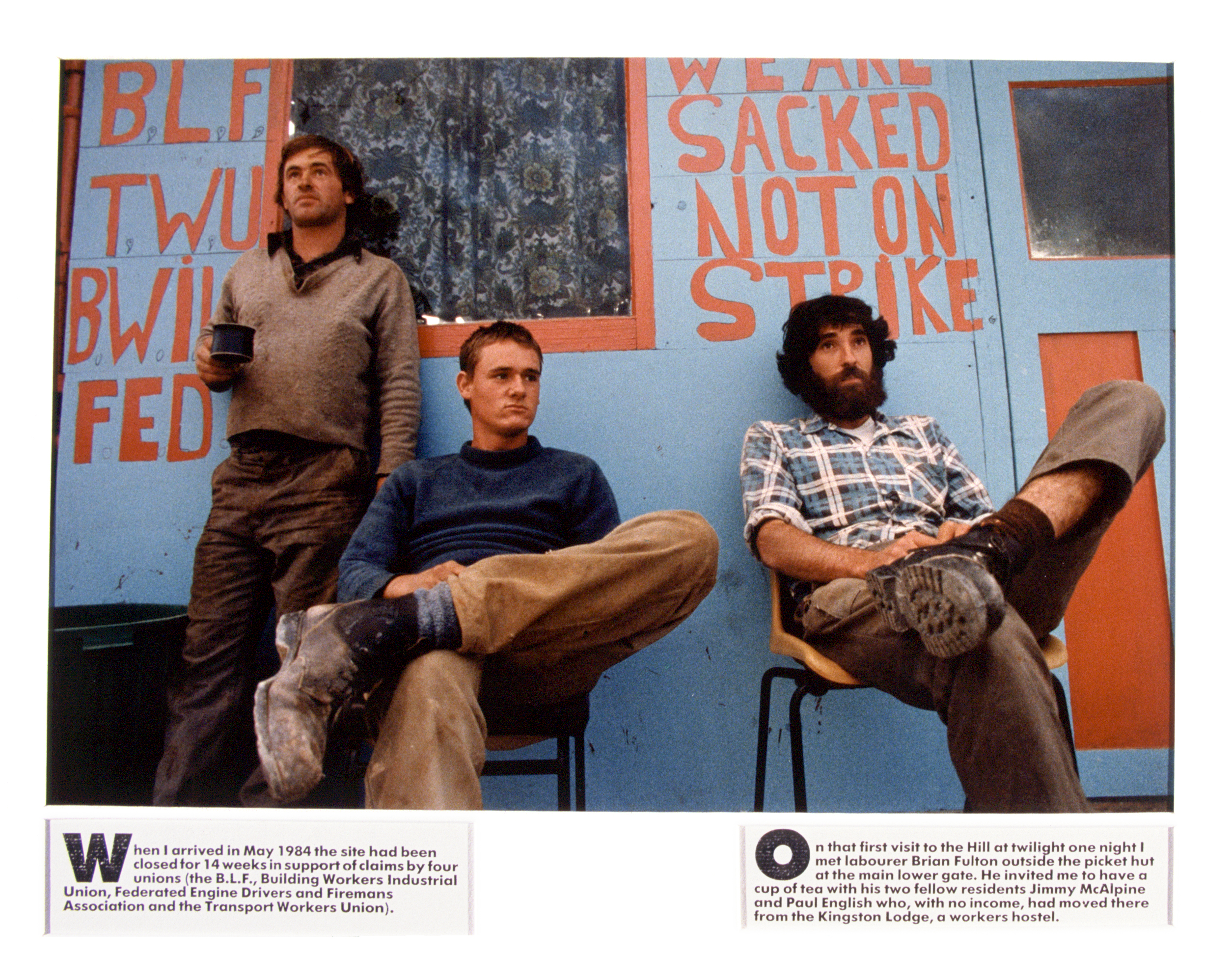
Standing out from all of the rest of the work is Sandy Edwards, who photographs workers not ‘on the job’, but involved in the controversial de-registering of the Builders Labourers Federation. She took photograph of three union members and other union activities in saturated colour. Beneath the images she placed labels filled with her own querulous first-hand experiences. I was around when this collection was first exhibited, and I’ve forgotten most of it, but I still remember the shock of seeing Sandy’s photographs. What comes through is her own tentative self-questioning, a self-conscious awareness of the fragility of the temporary relationships she forged with the unionists and strikers she photographed, and an acute awareness of the politics of the commission itself. (But now, encountering them 25 years later I can’t help but see them through the filter of all the all massive iconography of Thatcher’s Britain that has come out, particularly in cinema, since then. As always, it’s a tragedy that so much of Australia’s visual heritage remains hidden and dormant, while that of other countries spreads across the world.)

Sandy Edwards C1986 Parliament House Collection

Sandy Edwards C1986 Parliament House Collection

Sandy Edwards C1986 Parliament House Collection

Sandy Edwards C1986 Parliament House Collection

Sandy Edwards C1986 Parliament House Collection

Sandy Edwards C1986 Parliament House Collection

So, in these collections we can see larger political dramas — between feminism and patriarchy, between environmental consciousness and the perception of nature as imply a ‘resource’, between the historical project of modern development and the human experiences caught up in it — directly played out in the dialogue between the photographs.

Zahalka has inherited all of this. She, like photographers before her for over a century, has imported the logic of the studio into the workplace. Make no mistake, hers is an industrial photography. She, like photographers before her, has had to work out where to find the ‘dignity’ of labour. Not in the heroic tradition, where a worker’s labour and therefore their dignity is merely a product of a historical project far greater than the individual; and not either — at least in this case — in an oppositional tradition where the worker is cast as an actor in another historical drama of oppression resistance and rebellion. But rather, somewhere between them.

Martyn Jolly


My Anne Zahalka Parliament House 25th Anniversary Commission catalogue essay

Parliament House at Work, 25th Anniversary commission, Anne Zahalka

Anne Zahalka at Work

Everybody wants a behind the scenes tour. Documentary filmmakers and photographers have always catered to this desire to lift the hood on an institution and see how the human machinery underneath works. We all remember seeing documentaries about, for example, the ‘below stairs’ bustle of majestic mansions, the below decks drills of mighty warships at sea, the behind the scenes dramas of great opera houses, or the backroom machinations of political campaigns. Our Parliament House combines all of these aspects — from the aristocratic to the bellicose to the operatic to the Machiavellian  — in the one magnificent site that virtually every Australian has visited, or will visit, at one time or another. And even when we aren’t there in person — trailing through the public level in school groups, queuing for a spot in the public galleries, or attending a function in the Great Hall —we still see one or another of the several tips of the Parliamentary iceberg every night on TV: a shouting match in the chamber, a doorstop interview on a chilly Canberra morning, or the forced chit-chat of caucus or cabinet before the doors are closed on the cameras.

But how does it all run? Or, more specifically, who runs it all? Last year, twenty-five years after it opened, Anne Zahalka was commissioned to photograph Parliament House and, through a process of discussion and experimentation, eventually decided to work with the staff, the ordinary but essential people who keep the vast machinery of the legislature running day in day out, from year to year and from government to government. Of course Parliament House is an extraordinary piece of architecture, not so much a building set in a landscape as a citadel which is part building and part hill, a self-contained city voyaging through time on its own temporal rhythms driven by the imperatives of parliamentary sittings and legislative agendas. And photographers have always loved it; its flat planes, hard edges and abutted textures are made for the camera. Nor was Zahalka the first photographer to be commissioned to photograph it. As it was being built in the 1980s the Parliament House Construction Photography Project commissioned twenty-eight emerging and established photographers to respond to the construction process and the building as it grew into the hill. Most of the photographers concentrated on the tangled formal patterns which the concrete, reinforcing mesh, formwork, and so on made against the mud and bedrock. Only some, most notably Sandy Edwards, photographed the workers themselves — union members in her case — who were needed to actually do the work. As hill mutated into building other photographers, for instance Debra Phillips, got the opportunity to photograph the vast and complex cathedral like spaces that were opening themselves up beneath the buttresses and aprons of concrete above. These photographers can be seen as precedents to Zahalka’s anniversary commission.

But that heroic construction phase was long ago, the building and its staff have long since settled into a regular rhythm, chugging efficiently along as political storms rage above, and it is that on which Zahalka has concentrated. However in her work we still get a sense of the building’s full architectural scale, which so fascinated the construction phase photographers, through the building’s employees. A worker checks her phone in a storeroom for old furniture which has been built, at the lowest level of the building, into the roughly excavated bedrock of the hill itself. In another photograph another worker tugs apart the bus-sized flag which is about to fly high above the swards of rooftop grass, from the top of the massive quadrapod flagpole.

The architecture of the building has also written itself into the very compositional structure of Zahalka’s images. Like the building itself all of her images are strictly symmetrical and organised around a central axis which drives itself straight through the middle of her photographs. Some of her images are even bicameral like our Parliament house. The panoramas, made by digitally gluing several separate exposures together, seem to conjoin two visual halves into one unified image; and one image of the Parliamentary Library, made from two adjacent points of view, allows us to look down two bookshelf aisles at once.

There has always been a tableau-like quality to Zahalka’s photographs. For example in her series Welcome to Sydney, 2002, commissioned by Sydney Airport, new migrants to Sydney from different countries were posed against panoramic Sydney skylines as though they were giant postcards. Within the rectilinear pyramids of these Parliament House images the staff are arranged like actors on a well-lit stage waiting for the curtain to rise. Working with her subjects, Zahalka posed them in their work-settings, sometimes art-directing the furniture and ornaments, and sometimes styling vital details such as the orange electrical lead of the cleaner’s vacuum-cleaner which leads our eye in as it snakes across the carpet of the Prime Minister’s suite. As Zahalka works on the digital files after they had been captured she further controlled the final image.

This sense of the choreographed enactment of dignified work, rather than the instantaneous grabbing of workers from the midst of the mundanity of their labours, is not new in Australian photography. The photography of Wolfgang Sievers is another precedent to Zahalka’s approach. (Sievers did not participate in the 1980s Parliament House Construction Photography Project, though his contemporaries Max Dupain and David Moore did.) Sievers built his reputation constructing elaborate promotional photographs in factories, from which the worker-subjects were often sent home for clean shirts, shaved and cleaned-up, and posed as though they were masters of their machinery, which was dramatically lit against darkness. In front of Sievers’ camera even the grottiest factory looked dramatic, and the most grueling work felt heroic. No wonder Sievers’ photographs, originally taken to promote individual businesses, eventually became iconic images for Australia as a whole. Although not as extreme and artificial as this, Zahalka’s photographs do endow the staff of Parliament House with worth and national value. The image of the pond cleaner scrubbing the bottom of the ceremonial pond in the House’s forecourt, as the hose loops around his legs like a lazy eel, is not ironic. All edifices, no matter how grand, and all institutions, no matter how complex, require dedicated staff from top to bottom, and from outer perimeter garden to inner sanctum. All play their part. Even the cabinet table, around which crucial decisions will shortly be made ‘in camera’, needs to be cleaned, by somebody.

With a formally tuned, but visually witty, sensibility Zahalka has documented these diverse staff members in their diverse work environments; describing, twenty-five years after it was built, Parliament House not as simply a piece of architecture, and not as simply the seat of our government, but as a place, a symbiosis of people, power and architecture.

Martyn Jolly

‘The Face in Digital Space’, The Photographic Threat, chapter illustrations

Lillie Langtry in Pears Soap advertisement. nd

Lillie Langtry in Pears Soap advertisement. nd

Lillie Langtry

Lillie Langtry

A newspaper report from 25 February, 2010 on the Israeli theft of Nicole McCabe’s identity

A newspaper report from 25 February, 2010 on the Israeli theft of Nicole McCabe’s identity

Screen grab of Daily Telegraph website. 12 April, 2007

Screen grab of Daily Telegraph website. 12 April, 2007

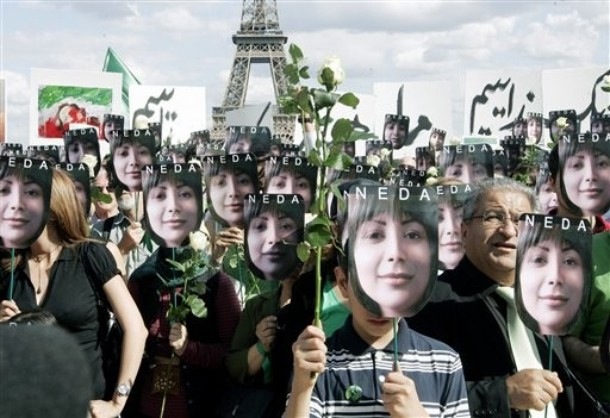
Widely circulated AP image of pro democracy demonstration in Paris, 25 July 2009

Widely circulated AP image of pro democracy demonstration in Paris, 25 July 2009

Edward Cranstone, Photographer

EDWARD CRANSTONE, PHOTOGRAPHER

Photofile, c1984

Recently the Australian National Gallery benefited from a gift by the photographer Edward Cranstone of seven spiral bound albums containing approximately 350 of his photographs from the Depression and Second World War years.

The albums contain three main groups of work: freelance photography from the late 1930s; photographs taken for the Department of Information between 1939 and 1941; and documentation of the work of the Allied Works Council in building strategic roads, aerodromes, etc. in Australia’s interior between 1942 and 1944.

The Second World War saw a flowering of documen­tary photography in Australia, with photographers like Max Dupain, Frank Hurley, Damien Parer, George Silk, Laurie Le Guay and Edward Cranstone all extensively documenting various aspect of the War. Little of this material has yet been seen in its entirety, and none of it has received the attention in deserves. In the case of Edward Cranstone a body of excellent photography and a fascinating document from war-time Australia’s visual culture is only now coming to light.

Born in 1903, Cranstone took up photography seriously at the onset of the Depression to supplement his income as a jazz drummer.’ Around 1935. to learn more about photographic technique, he approached the famous pioneering Melbourne Pictorialist John Kauffmann, who at the time, perhaps himself in straitened circumstances, was offering lessons. These lessons came for a fee Cranstone could not possibly afford, however a com­promise was soon reached whereby Cranstone worked un­paid in Kauffmann’s studio, and Kauffmann taught Cranstone photography. The relationship suited both par­ties: Kauffmann was still primarily involved in making art photographs, mainly close-up flower studies and views of picturesque Melbourne. The relationship, which lasted a year, is remembered as a very profitable one by Cranstone. Kauffmann lectured him about composition and lighting, took him to exhibitions, lent him books and showed him Pictorialist techniques.

Cranstone was soon freelancing, concentrating on portraiture. When Kauffmann retired in 1938, he sold his studio to one of his pay ing pupils who took Cranstone on as an assistant at a pound a week. Thereupon Cranstone’s work appeared under the studio owner’s name in a rented showcase in Collins Street, where Melbourne’s most prestigious photographic studios were located. At this time Cranstone also began a long association with Edna Walling, the avant-garde landscape gardener well known for her informal, naturally Australian gardens which Cranstone was to photograph for the rest of her career.

Later, towards the end of the war, Cranstone was to join the social circle that gathered around Danila Vassilieff, the flamboyant Russian painter who was a significant influence and inspiration to the expressionistic and politically left wing Melbourne painters of the 1940s. Cranstone’s closest photographic confederates at this time were Geoffrey Powell, Axel Poignant and Damien Parer. Although all were documentary photographers, approached their photography from significantly dif­ferent directions. Powell, politically active on the Left, pro­duced his photography within a particular political and social ideology. Poignant, on the other hand, developed a humanistic and pantheistic basis to his imagery. Damien Parer, who Cranstone first met at Kauffmann’s studio, photographed and filmed within ideas of clear, unen­cumbered reportage.

The polyphony of voices that Cranstone listened to and appreciated at this time reflected the unresolved and dissonant nature of the photographic discourse of the 1930s and ’40s. Pictorialism, which located photography within a traditional art discourse, was still a vital force; however it was increasingly being opposed by Modernist photography, the spare, reduced, flattened forms of which became the parlance for the fashion and magazine in­dustries both overseas and in Australia during the 1930s. The possibilities of a revitalized documentary photo­graphy, actively engaging in the world, were also being discussed at this time. Examples reached Australia mainly through such magazines as Life and Picture Post, for which photographers like Henri Cartier-Bresson and Bill Brandt worked.

Cranstone’s own photography from the ’30s echoes this commotion. His photographs range from extreme close-ups of Rolex watches to views of pastoral Australia elegantly seen through framing gum trees. Bird’s-eye views of bathers at the beach and documentary snapshots of life on Melbourne’s busy streets also feature. His most successful photographs from this period, however, are portraits. Waiting for the skipper, for in­stance, is a sophisticated Modernist image, being broken into strong verticals and horizontals by the yacht’s mast and the horizon line. As is characteristic of many of Cran­stone’s images, the space behind the figures is flattened into a single planar backdrop which emphasises the primary forms of the figures and mast.

In 1937, Cranstone joined the Department of Commerce, which with the beginning of the Second World War in 1939 became the Department of Information. As head photographer, Cranstone recruited two other photo­graphers to cover the War overseas, Damien Parer, who later became well known for his newsreel coverage of the War in New Guinea, and George Silk, who went on to photograph for Life magazine. Frank Hurley later took charge of these photographers in the Middle East.

For the first two years of the War, Cranstone photo­graphed in Australia, documenting the manufacture of munitions and Australia’s own ill-fated warplane, the Wirraway, as well as military training and embarkations. These two years saw the rapid development of Cranstone’s photography into very precisely evocative im­ages of strength and heroism constructed around strong diagonal compositons and severe upward looking camera angles. For instance, in one image a Wirraway sits on a tar­mac silhouetted against a backdrop of brooding storm clouds, its body and wing thrusting up and out of the photograph. In Making of an Anzac. originally taken for, but never published in, American Vogue, all the signs of ‘Australianness’ are present: the jaunty stance, the cocky look, the casually held cigarette, the gum-tree and the far horizon. But the extreme camera angle pushes the horizon line down so that the soldier almost floats above it against a clear sky; similarly, the gum tree becomes a dislocated com­positional element. This exaggerated viewpoint draws at­tention to the ‘gaze’ of the camera and gives an almost iconic force to the figure of the soldier, making him signify “Australian soldiery”.

Two of the best images from this period similarly give the figure iconic status. Both employ an upward looking camera, flattened space, and a backdrop of clear sky. In Naval training, (semaphore) elements of the ship frame the figures, and in their upward movement complement their actions. In Naval training, (foursailors) the figures casually disport themselves across the image, all emphasis is placed on their clear, angelic expressions as they gaze into space, connoting youth, strength and purity. In Munitions manufacture gleaming bomb shells are photographed so that as they are stacked in a spatially receding row they simultaneously fill the picture plane in an aggressive diagonal movement. All of Cranstone’s photography from this period has remarkable internal consistency; and is also consistent with much other imagery that had been produced in Europe, particularly Germany and the Soviet Union, dur­ing the 1920s and 30s.

The deployment of this particular, explicit form of ‘photographic seeing’ that characterises Cranstone’s im­agery had been an issue in Europe for thirty years. The story of its development, progress, and various permuta­tions is an extremely complex one. Briefly, its origins can be traced to the ideas of ‘ostranenie’, or ‘making strange’, developed by the pre-revolutionary Russian Futurists, which were subsequently taken up in the Soviet Union by such photographers as Alexander Rodchenko. These ideas also found voice in Germany, (with photographers like Laszlo Moholy-Nagy), where through the Bauhaus and New Objectiviey movements they eventually merged with the general Modernist canon, which by the 1930s had become thoroughly integrated into the cultural hegemony of the West.

Originally, this radical formalism was seen as being in­herently revolutionary, in fact an optical analogue of political revolution. However, this form of ‘photographic seeing’ began to come under attack in Europe in the 1920s and ’30s. The Russian Society for Proletarian Photojourn­alism and the German Worker Photographer movement accused it of being merely bourgeois formalism inaccess­ible to workers. However, some of its elements can still be found in the official propaganda imagery of both Stalinist Russia and Nazi Germany right up to the Second World War. These elements, (most notably the upward-looking camera angle, strong rising forms, and clear, direct lighting), became part of the rhetoric of the heroisation and iconisation of the worker, soldier and machine. At this particular historical instant, revolutionary formalism permutated into na­tionalistic formalism.

Cranstone’s specific access to this imagery is difficult to determine. Some sources, however, are clear. Through­out the War, Cranstone saw and was very impressed by the films of the Soviet Revolutionary director, Sergei Eisenstein, which were shown in Melbourne by the Australia-Soviet Friendship League, an organization of the Com­munist Party of Australia. He was particularly impressed by such films as “Ten days that shook the world” and “Bat­tleship Potemkin “. He may also have had access to official Soviet propaganda imagery, some of which was published in The Tribune during 1-9-39 and 1940, and which bears a close resemblance to his own work. From 1944, Cranstone himself contributed photographs to the Tribune. In any case his imagery has much in common, both conceptually and structurally, with the most sophisticated European propaganda photography of the 1920s and ’30s.

Early in 1942, Cranstone was transferred to the posi­tion of official photographer for the public relations depart­ment of the Allied Works Council (A.W.C.). The A.W.C. was formed as a result of General Macarthur’s discussions with Australia’s Prime Minister John Curtin, held in an ef­fort to expand Australia’s till then somewhat tardy war ef­fort.’ The A.W.C. was modelled on the Soviet Stakhanovites, the Nazi Todt Organization and the U.S. Civil Construction Corps. Under the leadership of the retired politician E.G. Theodore it called up men from the ages of 35 to 55. usually excluded from military service, to form the Australian Civil Construction Corps (C.C.C.). After call-up. men were sent to distant camps in Australia’s interior to begin work on strategic aerodromes, roads, etc. Conditions were harsh, and the conscripted men often in­itially unwilling. In addition there was considerable, and continuing, suspicion of the A.W.C.’s management: E.G. Theodore, who had a chequered past in politics and business, employed as his Director of Personnel a close business associate Frank Packer, the newspaper owner.3

The Unions involved frequently campaigned against what they saw as mismanagement, wastage and favouritism within the A.W.C. Disputes and stoppages were common. The A.W.C. management, in turn, accused the Unions and workers of hindering the war effort. In March 1943 a Commission of Inquiry was held under the National Security Regulations into “Certain Allegations Concerning   the   Administration    of   the   A.W.C.”* Although the Commission found no basis for the allega tions, the inquiry itself is indicative of considerable discon­tent.

A memo from Packer’s department in 1942 stated, “You should realise first that these men are human, and in many instances the circumstances of their call-up creates a certain quite natural feeling of resentment. Brusque, discourteous and overbearing methods in dealing with them only tend to aggravate this feeling. The result is a deep seated discontent which colours their whole future outlook and can cause an immense amount of trouble for officers of the C.C.C. who have to exercise authority over them.”5

All of this added up to a serious P. R. problem for the A. W.C. both internally and externally, and it was into this situation that Cranstone was transferred. Cranstone moved into premises in Collins Street with a small darkroom and an assistant, Vera Hodgson (whom he later married), to process the films, print the negatives and file the photographs. Cranstone was able to move quite freely around Australia with the full support of the A. W.C. He always travelled with the public relations officer, Frank Clancy, who planned the team’s itinerary and wrote the captions for the photographs. In the far north they travel­led very lightly, with only one Rolliflex, a few filters and film kept dry in bags of tea.

Cranstone exposed almost 2,000 negatives for the A.W.C, and approximately 7,000 prints a year were distributed from the department, both in Australia and overseas. At the end of the war it was estimated that ap- proximately 6,000 inches of Australian newspaper space were occupied by Cranstone’s photography per year.6

The most successful publicity project, however, was a travelling exhibition which toured to Brisbane, Sydney, Melbourne and Canberra in 1944. It comprised up to 500 of Cranstone’s photographs, some enlarged to 1.5 x 2.0 metres, with accompanying texts. Paintings by William Dobell and Herbert McClintock were also exhibited. The exhibition was enthusiastically received by the press and seen by approximately 80,000 people.

Cranstone’s photography can therefore be seen to have played a vital role in an extensive and well-orchestrated public relations campaign. The thrust of the campaign is summed up in another memo emanating from Packer’s department. “In so far as it is possible to do so you must, at all times, strive to impress on the men that they are not mere drudges performing a dull and routine task, but Australians, carrying out work of the first importance, without which the nation’s ability to defend itself adequately, or to launch an offensive, will be hamstrung. Everything possible should be done to make the men see themselves as civilian shock troops standing immediately behind the fighting services.”7

These themes of the “army behind the army”8 and “white collar shock troops”‘ are taken up in Cranstone’s photography of the C.C.C. workers and their projects. His imagery exhibits strong affinities with images of the pro­letariat worker used in Europe and the U.S.S.R. between the wars. It redeploys this imagery from a revolutionary, class-conscious context into the context of Australia’s na­tionalistic war-effort. In C.C.C. worker, a diagonal composition and up­ward looking camera angle are again used. Strips of shadow twisting across the worker’s bare torso emphasise his strength and physicality as he pushes a spanner forward and out of the picture plane. This action links, composi-tionally and connotatively, his right hand, as it easily grasps the tool, to his face, as it looks up into the distance. All this iconises the worker — his strength, his skill and his commitment to his task.

Cranstone also photographed the machinery and con­struction work of the C.C.C. In C.C.C. Construction the workers are supported, both physically and compositional-ly, by the beams of a building firmly criss-crossing between the edges of the photograph. In another image of a worker with a drill the worker almost becomes part of the machine, connoting a symbiotic relationship between workers and their tools (front cover). Cranstone’s photography can therefore be seen to have operated along two axes. In his highly codified treat­ment of the specifics of the A.W.C.’s activities he con­structed nationalistic metaphors for strength and commit­ment that could then be metonymically deployed within the documentary narrative structures of contemporary newspaper reports on the A.W.C. as well as the travelling exhibition. Or, to use a different terminology, Cranstone’s photographs were deployed syntagmatically as documents of the strategic works of the A.W.C. and paradigmatically as evocations of a nationalistically committed Australian worker. This paradigm excluded the worker as a classed, aged or self-aware individual.'”

As a reviewer of the exhibition for the Melbourne Herald wrote, “it would be surprising if most people did not take away a warm impression of that typical Australian, stripped to the waist, working on untouched land, levelling it, digging into it or building up from it. In a real immediate way, the show tells the story of how Australia — the coun­try itself — has gone to war.””

After the war Cranstone became a cinematographer for the Commonwealth Film Unit, now Film Australia, until his retirement in 1966. Immediately following the war he continued some politically conscious documentary photography in the slums of Sydney for a short time. However he eventually gave up serious photography.

He regards his photography for the A.W.C. as his most important work, and it remains an impressive body of imagery even today. As he wrote at the end of the spiral bound albums that are the only remaining record of the ex­hibition: “Exhibitied in the capital cities of Australia, they have been able to change completely the attitude of the public towards the C.C.C. This attitude, created entirely by the repeated attacks of the newspapers, persisted right up to the time the exhibition was first shown. This demonstrates very plainly that documentary photography can be a real factor because of its ability to bare the truth.”13

1. I would like to thank Edward and Vera Cranstone for the time they have spent with me. Most of the following biographical information is obtained from an interview recorded with them in March 1983 and an autobiographical manuscript supplied by Edward Cranstone. See also Edward Cranstone, “Documentary Assignment”, Contemporary Photography, vol. 1, no. 2, 1947.

2. Lloyd Ross. John Curtin — a biography. Macmillan. 1977. p.288 See also J.A. Morley, “The Allied Works Council”. Rydge’s Magazine. November 1942.

3. Irwin Young. Theodore — his Life and Times. Alpha Books.! 971. pp.

4. H.P. Brown (Commissioner). Inquiry under the National Security Regulations into the Administration of the Allied Works Council. 5 March 1942. National Library of Australia.

5. W. Steward Howard Manner of dealing with recruits. A.W.C. Person nel Department Circular No. 1. Australian Archives. Brighton, Victoria, ac cession no. M.P. 72, series 1-18.

6. F. Clancy. A Report upon the Photographic Activities of the Allied Works Council 15/12/42 — 30/6/45. Department of Works. Australian Ar chives, op. cit.

7. Quoted in ” “White Collar” Troops Carry On” The Sun 3/8/42.

8. “The civilian army behind the fighting army.” The Sydney Morning Herald 1/8/42.

9. The Sun op. cit.

10. See Roland Barthes. Elements of Semiology. Hill and Wang, 1968.

11. K..K. “Australia Portrayed Stripped to the Waist”. Herald. 3/8/44.

12. Edward Cranstone. Design for War. Vol. 3. Collection: Australian National Gallery.     MARTYN JOLLY

Martyn Jolly is Curatorial Assistant in the Depart­ment of Photography, Australia National Gallery.

The Time Machine, 1988

The Time Machine

‘South Australia Rephotographed’, catalogue, 1988


“Nearly all civilized countries preserve their records with care, and in doing so they are working not only in accordance with scientific needs, but also in obedience to a deep-grained instinct.”

G.C. Henderson

Chairman of the Library and Archives Committee, Public

Library, Museum and Art Gallery of South Australia. 1920

ABOUT THE PHOTOGRAPH The American semiotician Charles Peirce described three modalities in which the sign stood for entities in the real world. The first, the symbol, was an arbitrary sign which functioned because of a conventional association between it and its referant. The second, the icon, referred to its object through resemblance. The third, the index, had a direct, causal connection with its object.

The photograph incorporates all three modalities of the sign, but in a dramatically ascending scale of potency. The much discussed representational power of the photograph lies in its symbolic nature, but more in its iconic nature, and more still in its indexical nature. The photograph’s optical and chemical causality, the fact that its referant adheres (to use Barthes’ term) distinguishes it from all other forms of visual record. It also grants it a privileged intimacy with the past.

A STORY OF THE PAST A dinosaur wanders through a pre-historic swamp. It places one of its huge feet in some soft mud and leaves both an iconic and indexical sign of its existence. A volcano explodes, covering the mud with lava, and fixing the footprint for ever. Time passes. A paleontologist excavates the fossilized footprint. He makes a plaster cast and places it in a museum. We come to visit the dinosaur exhibit. As we look at the footprint we shudder slightly. We can almost feel the ground shake under us as the ghostly dinosaur lumbers past. We shake our heads in wonderment: “so long ago, so much time has passed, yet it seems so close”.

Now it is no longer pre-history, no longer the Pleistocene Period. Now it is History, history with a capital H, Australia’s Official Bicentennial History — the Sepia-Toned Period. A photographer wanders through South Australia with social habits and a perceptual apparatus almost as open to speculation

as the dinosaur’s. He places the legs of his tripod on the ground, they leave a faint impression. He takes a photograph. Eventually it finds its way into a museum. We visit. We feel a slight shudder: “so long ago, so much time, yet it seems so close”.

Then we dream: what if we went back to that spot, got down on our hands and knees, gently ran our fingers over the ground and, by some miracle, found those three faint impres­sions from the feet of the photographer’s tripod. And what if we put our camera there, and took another photograph of exactly the same scene, but one hundred years, and several historical and social cataclysms later?

What if we displayed both photographs side by side in a museum? What shudders we would feel! What glowing auras of proximate distance we would bathe in! What mysteries of history we would create!

THE SOUTH AUSTRALIA

REPHOTOGRAPHED PROJECT Despite the Project’s prosaic title and its pretentions to scientific validity, it is essentially this intoxicating dream which underlies South Australia Rephotographed.

By presenting two photographs of the same scene, but separated by approximately a century’s worth of time, the Project may well teach us something about South Australian History. On the level of the photographs’ symbolic modality we may perhaps learn the extent to which South Australia’s social customs have changed. On the level of the photographs’ iconic modality we may perhaps learn the extent to which the topography and architecture of South Australia has changed. However it will be on the level of the photographs’ indexical modality that our essential fascination with the Project will lie. This fascination will remain unutterable, outside the Project’s pedagogics. Our fascination is with time itself, rather than history. Our thrill comes from time travel, rather than the specifics of historical change.

Our Time Machine is obviously the camera. But the force which propels it is the interaction of two interdependent systems: the photograph and the archive. The photographs mark — symbolically, iconically and indexically — two points in the flow of time, and the archival repository allows us to connect them. The simultaneous proximity and distance of the twinned images react off each other, giving the ‘that has been’ of the photograph a double valency.

THE MEANING OF TIME In his essay Photography Between Labour and Capital2 Allan Sekula discusses the relationship between the photograph and the archive. Sekula describes an archive as a ‘clearing house of meaning’, where any original function an image may have had is supplanted by its ‘semantic availability’. The image’s meaning is now up for grabs to anybody who cares to penetrate the ‘territory of images’ which constitutes the archive. This territory is a flat, featureless plain. It doesn’t matter whether the constituent photographs were initially personal snapshots, scientific documents, topographical views, or even artworks, they all end up with an ‘abstract visual equivalence’ within the archive. They are all, equally, only potential statements awaiting enunciation.

Within the archive, Sekula says, “the spectator is flung into a condition of imaginary temporal and geographical mobility. In this dislocated and disoriented state, the only coherence offered is that provided by the constantly shifting position of the camera, which provides the spectator with a kind of powerless omniscience. Thus the spectator comes to identify with the technical apparatus, with the authoritative institution of photography. In the face of this authority all forms of telling and remembering begin to fade. But the machine establishes its truth.”

As far as the retrieval systems of the Mortlock Library’s photographic archive allow us to determine, most of the historical images used in this Project (except those used by Ian North and Fiona Hall) were made by Samuel Sweet or Ernest Gall between the 1860s and the First World War. They are primarily views of Adelaide and its surrounds taken for sale through the photographers’ city studios. The clients for this view trade were mainly travellers collecting interesting and informative souvenirs of their visit, and settlers seeking visual descriptions of their new home to send back to friends and relatives in Europe.

South Australia was a product of the Systematic Colon­ization schemes of early nineteenth century Britain. These schemes involved the selling of regulated parcels of ‘wasteland’ to young, appropriately skilled colonists. The proceeds of these sales would in turn pay for the passage of further colonists. Thus an efficient pastoral yeomanry would be formed, avoiding the ad hocery of both convict transportation and the squatter system. The ideology informing this process was one of civilizing, Christianizing and colonizing the primitive vacancy

that was Australia. This was to be followed by the natural development and progress of the Colony in a British mould.

In this context the view trade’s function can be seen as basically propagandistic. The photographs may appear to be simple documents of Adelaide’s major new buildings; its handsome, well laid out thoroughfares; its busy port; and its picturesque, pastoral hinterlands. Their job, however, was to proselytize the Colony of South Australia back in Europe. They present South Australia as a potential space: empty, but ripe. The photographs were initially read within the rhetoric of the ‘New World’, one awakening from dormancy to activity, flowering from wilderness to a garden, growing from primi-tivism to civilization, and converting from paganism to Christianity: a world strange, but slowly and systematically transforming itself into a simulacrum of Europe. The archival images used in this project were originally invitations to participate in this transformation. They were forward looking, taken and sold to aid the teleological thrust of South Australia into prosperity, from the past to the future.

However, once embedded in the archives of the Mortlock library their forward thrust is halted. They become markers lodged in the past. Their meaning is placed on auction to the various users of the Library. Perhaps they become a nostalgic image for a picture postcard or a calendar, perhaps hard evidence for a thesis on architectural style, perhaps even part of the artistic vision of Samuel Sweet or Ernest Gall. Or, as in this case, they become a point of reference, one terminus of a joy-ride through time.

The spectator’s gaze travels on a photographic time-shuttle as it flicks from the archival to the contemporary image and back again, comparing this detail to that. The two terminuses share many characteristics. Each is, of course, of the same geographical location, and each depends on the other for its presence on the gallery wall. But more importantly, even though the origins and original meanings of the archival images lie outside the Project, they are now just as dependent on it as the contemporary, commissioned images for the potential readings they may make available to us.

However in this neat symmetry there is one wild card. The authors of the older images were undistinguished, even anonymous artisans. Simply two more names from the general category of ‘Nineteenth Century Photographer’. To maintain appropriate, scientifically neutral conditions for the Project, to

minimize the variables in the experiment, similarly artisanal photographers should have been chosen to carry out the rephotography. In fact six artist photographers were com­missioned, complete with all their fierce independence and restlessly individual styles. They were chosen because, like Samuel Sweet and Ernest Gall were in their time, they are the State’s foremost photographers. But their work is the product of an art discourse, rather than the commercial discourse in which Sweet and Gall were leaders. Artists and not, say, South Australia’s leading commercial or postcard and calendar photographers were chosen to participate, even though the latter are the true inheritors of the tradition of Sweet and Gall —the popular circulation of images of a picturesque and prosperous State.

This ambiguity of purpose within the Project reveals a more fundamental ambiguity within photography itself. Photography, as we all know, is a mechanical art, combining the discourses of ‘objective truth’ and ‘artistic vision’ in an uneasy alliance. It is precisely this alliance which has allowed South Australia Rephotographed to have a dollar each way, to invest in both the supposed impartiality of photographic truth and the privileged subjective impressions of the photographic artist. Within the seamless, symmetrical enclosure of the Project one redeems the other. The divergent discourses of historical fact and artistic truth are bonded together in an unassailable unit of mutual validation.

This monogamous pair-bonding asserts another neat symmetry for the two types of author involved in the Project —the artist and the artisan. Each becomes the privileged Voice of their time. Because an individualist personality is denied the anonymous artisan of the past their photographs attain a Positivist truth as historical artefacts. Like archeological relics they become passive ciphers standing in for a complete culture — mute, elliptical documents unproblematically containing, but not exceeding, all our assumptions about their historical period. However the present is not as complete, or as containable as the past. It automatically exceeds any single images attempts to contain it. Here the individualist, author­itative voice of the artist is privileged — blessed with perspicacity and acuity. Within the symmetrical terms of the Project these two privileged voices — the emblematic, artisanal voice of the past and the acute, artistic voice of the present —are married.

THE ARCHIVE OF ELAPSATIONS The Project is, in a sense, not so much an independent artistic or historiographic statement derived from an archive as a subset of that archive. The Mortlock Library has been extensively searched, and the historical images carefully selected by the Project’s director. However they were chosen solely on the basis of their amenability to rephotography. Images were chosen if they aesthetically appealed to contemporary photo-

graphic tastes, if it was physically possible to re-locate am. re-photograph them, and if this rephotography would evince the feeling of substantial historical change. The criteria for selection was primarily the efficiency with which the images would operate within the Project’s time-shuttle mechanism, rather than any specific social, cultural or historical arguments they might make. (Nor were the images selected to describe any particular photographer’s oeuvre, or any particularly photo­graphic style or concern, as has been the case in similar projects carried out in the United States.) They have simply been transferred from one totalizing system — the archive — to another — the South Australia Rephotographed Project.

However this subset of the larger archive is not an archive of images so much as an archive of ‘elapsations’ — the time-shuttle between twinned images. It is an archive not of clearly authored interpretations of reality, but of immutable, trans­cendent lines between moments of time — ‘now’ and ‘then’. As spectators we no longer read historical writings, but seem to experience History itself. The frictionless connection between two instants valorizes the Historical Moment as Truth. This new archive structures itself as a Positivist entity, dealing only in facts, denying variant readings, and placing absolute faith in the self-evidentiality of perceptual experience.

In the presence of this ‘archive of elapsations’ we feel something like the same dumb awe we feel before a dinosaur’s footprint. It is an awe that lies outside knowledge, created by the immediate presence of unconscionable oceans of time, and the aura of proximate distance.

But all ineffable experiences remain embedded in the social. They are produced within institutions such as the church, theatre, gallery or museum. Our audience with the dinosaur’s footprint comes courtesy of the intersection of the science of paleontology and the institution of the museum. The South Australia Rephotographed Project’s legitimating discourses are History and Art. Its supporting institutions are the gallery, Library archive and, more pervasively, the Australian Bicentennial Authority.

The Bicentenary was initially intended to celebrate a nationalistic, trans-class, trans-cultural unity, grounded in the supposedly a-historical verities of shared national ‘character’ and ‘experience’. Recently such celebrations have become the site of conflict, centred on Aboriginal Land Rights, but also including charges of cynical party-political opportunism.

The Official Bicentennial Celebration is essentially a process of erasure and conflation: the erasure of social and cultural difference and oppression, and the conflation of variant histories — British, Aboriginal and Immigrant — into a normative historical narrative. The anti-Bicentennial protests are essentially attempts at re-inscription and re-incision: the re-introduction of repressed historical events into the normative flow of the dominant historical narrative, the re-assertion of fundamental social and cultural differences, and the public proclamation of continuing inequalities and oppressions.

It is in this context that the true Janus-like character of the ‘archive of elapsations’ reveals itself. The historical images proudly looked forward, towards us, for their fulfilment in unified progress and stable prosperity. The contemporary images nervously look back, from uncertainty of identity and conflict of interest, into an unchangeable past where stability and meaning can perhaps be found within an original, historical truth. The twinned images stare each other in the face, what have they been allowed to see?

READING REPHOTOGRAPHY The structure of the Project tends to work for the processes of historical erasure and conflation. Although archival images of Aborigines were not deliberately excluded from the Project, none were found that were suitable for rephotography. However, once absent from the archival images they are excluded from the rephotographs. They remain absent from the Project’s history, but their absence is now a glaring one. It becomes a shadowy presence. Aborigines were at best quaint anachronisms to the view trade’s white clientele. They were the remnants of the pre-historic, potential space of Australia, the civilization and pastoralization of which the images recorded. Now their absence from the Project underlines their very survival of this genocidal history, as well as their prior ownership of ‘Terra Nullius’.

Two essential questions must be asked of all archival photographs: what meanings did they produce when they were originally published? What meanings can we produce from them now? Rephotography may redouble the indexical power of the photograph, and it may record superficial changes in the environment, but it is basically a historically passive activity. It does not, in itself, interrogate the original function of the archival images, nor does it seem to provide a fruitful enunciative context in which new readings may be produced. Because it places its faith in photographic self-evidentiality it is only through irony and disfunction that readings, outside the thrill of seeing time pass before our very eyes, can be made. However on closer examination these ironies and disfunctions fertilize the ‘archive of elapsations’, allowing unexpected readings to grow in the cracks between its temporal poles.

For instance one pervasive irony seems to confound our assumptions about the steady progress of history. Many of the contemporary photographs, particularly those of coastal and rural towns, have a leisurely nostalgic air to them, compared with the strenuous bustle of the archival images. This reversal of our normal conception of the respective ‘pace’ of the past and the present ironically underscores the decay of many South Australian industries.

The Project seems to record the replacement of commerce


with recreation as the prime picturable outdoor activity. Economic activity has now largely disappeared from the picturable — absorbed into computer circuitry, or hidden within unintelligible robotic functions; whilst recreation has come out from the parlour and away from the occasional picnic to almost totally define the space of the outdoors.

In the nineteenth century the outdoors was synonymous with economic production — farming, grazing, timber-getting, railway and steamer trade, mining, etc. The productive system mapped the outdoors. Roads, railways, sea-ways, ports and jetties all had primarily economic meanings within nineteenth century visual culture. Now the outdoors is synonymous with recreation — swimming, boating, sightseeing, bushwalking etc. Recreation maps the outdoors. Surf beaches, fishing jetties, marinas, highways and national parks all have primarily recreational meanings within contemporary visual culture.

The many new readings the project does make available are produced not so much when the contemporary photo­graphers dutifully follow the scientific guidelines of the Project, as when they deviate from them. Six artists may have been chosen for the Project in order to encode the two discourses of photography — objective truth and artistic vision — within its structure, but it is precisely their precocious artistry which saves the Project from a relentless scientism that would otherwise be stultifying.

Each artist has brought varying degrees of historical accuracy to their rephotography. Some, for instance Martin Smith and Alan Cruickshank, have been scrupulous in their detailed research, but have been thwarted at the last moment in their attempts to find that magical ‘exact same spot’. They have discovered the limits of even the photograph’s indexical power and have been reduced to the tentative nomination of a particular spot as ‘the spot’ within a range of relative uncertainty. (Very much in the manner of a physicist who is unable to locate the sub-atomic building blocks of matter with certainty, and can only theoretically predict their presence.) And, of course, in nominating, from a range of possible spots, the one spot which is to bear all the indexical magic of photographic time-travel, matters of personal taste — which reside in the photograph’s symbolic modality — must inevitably be crucial. Yet hitherto the whole complex of reasons why a particular view is chosen by a particular photographer at a particular historical and cultural juncture were excluded from the Project. Their re-appearance, even as a disfunction, opens up a space for the spectator to critically insert themself between the bonded images: why was that spot chosen and not another?

Another major disfunction occurs around the issue of the disposition of human figures within the various views. Unlike buildings or topographical features, passers-by have to be directed by the photographer to adopt certain positions within the overall scene.

The original photographers were making architectural and topographical views, they weren’t making sociological documents. People were subordinate to the scene, which was generally chosen to emphasise depth and scale. If onlookers were present at the time of the photograph’s execution they may have been included, but only as figures to further articulate the spectator’s sense of ‘view’: they were either indicators of scale, surrogate spectators, or perhaps evidence of a sober, industrious citizenry.

The scenes the artist photographers approached were predetermined by the archival images, but the directions they gave the inevitable onlookers were left up to their culturally and historically specific taste and judgement, and their interpretation of the ‘rules’ of the Project. Mark Kimber often directed onlookers to pose in exactly the same positions as the figures in the archival images. But, ironically, this obviously theatrical connection with the past reads as somehow fraudulent amidst so much indexical verisimilitude, thereby applying the brakes to the photographic time-shuttle.

Photographing passers-by as just that, passers-by, rankled with some photographers. The archival photograph’s dour descriptive views, arranged around the Claudian perspectival scemas favoured by nineteenth century photographers, were not to the taste of the contemporary artists who cut their teeth on the planar compositional strategies of twentieth century Modernism. To simply allow the figures to be caught where they stood would, for them, result in an image totally devoid of personal significance. Stephanie Valentin and Mark Kimber solved the problem by referring back to their personal photographic styles and introducing figures in the foreground of the scene, thus producing a kind of hybrid rephotograph/ sociological portrait. Both artists have been at pains to place markers of contemporaneity — ghetto-blasters, surf-mats, etc — in their rephotographs. Yet, once more, in an image charged with temporal flux such deliberate sociological declarations on the part of the artist photographers appear oddly gratuitous.

Two artists, Ian North and Fiona Hall, opted out of these irresolvable dilemmas by totally refusing the Project’s scientism and instead applying the ‘spirit’ of the project to their individual oeuvres.

Fiona Hall extended the interventions of Valentin and Kimber but couched her photographs entirely within the theatrical, creating tableaus based on early twentieth century snapshots. Her twinned images become humanist allegories, playing off the unchanging, casual ambience of ‘people at leisure’ against the radical changes to their dress and leisure time activities in the intervening years. She thereby asserts a behavioural commonality which transcends the historical particularity of social habits. A nationalistic commonality is further celebrated in another image where a family, replete with Anglo-Saxon members, is replaced by a family identically


replete with ‘multi-cultural’ members (including an Aboriginal boy). Basic familial norms are asserted over the cultural diversification of the Australian nation, which is now, allegorically, one big family.

Ian North’s combination of three South Australian landscapes, one each by Hans Heysen, Harold Cazneaux, and himself, are not concerned with topographical change through time. Rather they engage with the historical process through which a picturing system developed in the 1900s to 1930s becomes the most pervasively popular image of ‘South Australia’. The landscape paintings of Heysen, perhaps South Australia’s best known artist, and the Pictoralist photographs of Cazneaux, have become emblematic of South Australia’s ‘rugged north’. Ian North’s quasi-expressionist overlay of brush work visually links the three images. It also intervenes in the pictorial self-sufficiency of each landscape, flirting with the historical contingency of all picturing systems, even those which, by virtue of History, have acquired their own meta­phorical overlay.

The work produced by the six artists commissioned by South Australia Rephotographed has far exceeded the terms within which it was initially conceived. The sheer intoxication of time-travel remains, but in addition the archive of elapsations becomes a fertile terrain which, through irony and disfunction, is capable of producing many variant, even contradictory readings. The Project was inspired by photography’s privileged intimacy with the past, it attempted to contain history within time and the photograph within truth. It was bound to fail. But it is precisely within its failure, through the historical mobility and semiotic plurality of all photographs, that its success can be found.

Martyn Jolly

1.  G. C. Henderson. The Archives Department of South Australia.

(An appeal on behalf of the Board of Governors of the Public Library, Museum, and Art Gallery of South Australia to all who have in their possession original documents relating to the history of South Australia). Adelaide. 1920. Thanks to Margy Burn of the Mortlock Library for this reference.

2.  Allan Sekula. Photography Between Labour and Capital. In
Mining Photographs and other Picture 1948-1968. Nova Scotia
College of Art and Design.
 

My City of Sydney, 1994

‘My City of Sydney’, 1994

Sydney Photographed catalogue, Museum of Contemporary Art, Sydney. pp 59-67

A SECOND-HAND COPY OF FRANK HURLEY’S PICTURE BOOK Sydney: A Camera Study is held in the library of the National Gallery of Australia.1 Between its pages are four pieces of toilet paper.  Presumably they were put there by Derek, who, going by his inscription on the fly leaf, originally gave the book, ‘with love to Mum and Dad and Shirley’ at Christmas 1948.  He has used the toilet paper as improvised tracing paper to add a personal overlay to the grand civic vistas in the book.

For instance we can orient a square of paper over the full colour photograph ‘The Spit, Middle Harbour’2 by the traced outlines of Clontarf, Middle Head and a sail boat. Once it is positioned we can locate Derek’s superimposed comments. An arrow points from the inscription ‘This is where Jim Miller has his block of land where we nearly built a duplex’ to a spot in Clontarf. Another inscription above Spit Road says: ‘I pass along this road everytime I go to White’s’. And another, in the top left hand corner reads: ‘Arthur -Marjorie’s brother lives just off the picture’. This is a wonderful example of somebody tactically re-using civic photography to record their own sense of space within its hegemonic view of an urban place. But it also points to a dialectic which perhaps affects all Sydney photographers who try to photograph their city: ‘Sydney’ is both a space in which some of us live, and a place in which a certain national iconography is staged.

After its publication in 1948, Sydney: A Camera Study was reprinted three times, completely revised in 1958, and eventually sold 50,000 copies.3 Countless similar books, primarily intended to be given by Australians to friends and family overseas, have been published since, but none have the authority of Hurley. A veteran propagandist of the Antarctic, New Guinea, and various theatres of the First and Second World Wars, Hurley defined our official visual culture for decades, with his operatic stagings and heroic deeds and monumental edifices. Hurley’s photographs are horribly oppressive, monumental things.  Each of his images is arranged like an over-designed stage set: foreground forms frame a receding plane which forces the eye back towards infinity.  Every building is on the square, every landscape is crowned with piles of creamy cloud, and every citizen is frozen looking purposively somewhere, either diligently down at their work if it is a factory shot, or deeply into space if it is a landscape.  Every single element of every single one of his photographs is relentlessly bound into an obsessive, almost paranoid national enactment. Every beach, every lifesaver, every street, every building, every factory, every mountain, every valley, every koala – they all serve Australian progress.

Hurley roamed throughout Australia in the 1950s and 1960s, producing a whole set of picture books in every State of the Commonwealth. However, because Sydney is Australia’s pre-eminent city, Hurley’s Sydney images and similar images by other photographers had a defining role to play within a more broadly nationalist iconography. Sydney is the stage on which Australian progress has been primarily displayed. Unlike say, Melbourne’s discursive micro-mythologies of various gnostic places within the metropolis – this or that separate street or locality – Sydney’s special places are all oriented within the nationalist stage directions of Our Harbour, Our Beaches and Our Monuments.

But Sydney still has no equivalent to the Eiffel Tower, which is both a universal symbol of Paris as well as offering a panoramic perspective on it. Sydney may have its complement of skyscrapers built by ‘corporate high-flyers’, but these towers tend to constitute merely an undifferentiated vertical skyline, a generic backdrop to the ‘real’ Sydney rather than its central motif. Despite the recent popularity of Centrepoint Tower’s viewing platform there has been no consistent physical point from which to view Sydney panoptically. However, it is still remarkably easy to conceptualise Sydney in the mintd’s eye from an aerial perspective, with a panoramic view of its places. Because Sydney not only a physical, topographic, sociogeographic site for living, but also a giant, virtual amphitheatre of national imagining, it is easy to imagine it from this ideal perspective with all of its diverse places conceptually ordered within its twin destinies as Austral birthplace and gateway.

In the imperial histories of most Australiana picture books Sydney is not the scandalous Fatal Shore of recent popular historical revisions, but a sacred birthplace, a kind of 18th-century geo-political manger. And in the imagination of these books, Sydney’s manifest destiny reaches back deep into its rock strata. As L Cotton, Professor of Geology and Physical Geography at The University of Sydney, wrote in ‘As It Was

the Beginning’, the first chapter of Sydney: A Camera Study: ‘According to a time scale now generally accepted by geologists, it was nearly 200,000,000 years ago when nature laid the foundations of our city.’4 Those rocks then sat and waited, ignoring the Aborigines, for the First Fleet to arrive. As C H Bertie, past president and Fellow, Royal Australian Historical Society wrote in his chapter, ‘A City and a Nation are Built’: ‘We have no record of the ejaculations of the men as they entered the heads and discovered the extent and beauty of Port Jackson, but Phillip adequately summed up their impressions when he wrote, some months later in a report to Lord Sydney “We got into Port Jackson early in the afternoon and had the satisfaction of finding the finest harbour in the world”.’5

This kind of history telling has been described by Paul Carter in the Road to Botany Bay as ‘diorama history’: a mythological history which invents a point of view, a panoramic eye before whose gaze the historical facts unfold.  History becomes a sublime working model which renders time clockwork and miniaturises space.6 Diorama history continues to affect our relationship to our city. As John Thompson wrote of Sydney in his poem accompaniment to Max Dupain’s 1966 book Soul of a City:

Much of your pride is new-fangled, yet histories hide in your bricks.

Archway, balcony, staircase, paths of the poor and the rich,

Fill with echoes and shadows, the brave rough ghosts of the earlies,

Wherever a Sydneysider may pause and lean and muse.

A double lifetime ago there were trees where the traffic rolls;

A lifetime ago it was only the fearless who sped so far…7 Australian progress has always relied upon, but also feared, mass mobilisations of people.  For most of this century that unthinkable migration coming down upon us on a broad front from the north was only conceptually containable when countered by another controlled migration funnelled in through Sydney Heads. As John Thompson put it:

O beautiful, affirmative city!

O brooch on the breast of a continent in the caress of the sea!

Hub of exchanges, ideas and antilogies, eldest and freshest

Of all the brash clan of young cities that shine in the clean dry South!8 In this imagining Sydney was, in Ross Gibson’s words, safely South of the West, not vulnerably South of the East.9

Of course government policy has now changed our cultural longitude, and migration has made Sydney much more polyglot than in Hurley’s day.  But the carnival of nations is still drawn into the cradling arms of Sydney’s imperial history.  For example, there is currently a dispute between the multicultural festival Carnivale and the anglo-centric Festival of Sydney over just this question.  Should Carnivale stay dispersed amongst the various ethnic condensations on the invisible plain of Sydney’s flat suburbs, and remain a ‘community’ event for its participants; or should it be brought into coherent view within the already inscribed, defined, predetermined ground of Sydney City and become a ‘internationally prestigious’ event to benefit all of Australia?

Sydney has not only retained the original moment of colonisation, it has also remained the first point of penetration, physically and conceptually, into the heart of the country itself. To the rest of the world Australia is undoubtedly the Bush rather than Sydney, but nonetheless today’s tourists need to touch down at Kingsford Smith before flying on to the desert, and more importantly can only reach the ancient wonder of Uluru through a prior conceptualisation of the modern wonder of the Opera House.

To live in Sydney is to act as an Australian for others overseas. As Hurley says in his introduction to Sydney: A Camera Study. ‘I hope that those who study this book will feel a glow of civic pride, and appreciate more fully the splendid work done by our public services and institutions that have contributed so much to the citizen’s well being, safety, and convenience. I hope too, that when the pages of Sydney: A Camera Study are turned by friends overseas, the contents will rouse in them an urge to come and join us in Sydney, or in some other of our cities or towns.’10 Derek’s traced overlays, intended to illustrate his new spatial world for Mum, Dad and Shirley, are a personal, epistolary adumbration of this colonial relationship.

Since then, of course, Australia has become increasingly reliant on touristic, rather than colonial population mobilisation. As Meaghan Morris wrote in ‘Panorama: The Live, The Dead and The Living’: ‘Where imperialism wanted settlers for security, tourism needs visitors for endorsement. One regime values permanence and accumulation, the other transience and turnover, one fears invasion, the other metaphorically solicits it. Threatened by the ‘foreign’, the ‘primitive’, and by ‘ghosts’, imperialist discourse tends towards closure: it paranoically defends the borders it creates. A touristic space must be liberal, and open: the foreign and the primitive are commodified and promoted, ghosts are special effects: the only ‘barrier’ officially admitted is strictly economic.’11

The Sydney amphitheatre is still a node within this touristic space. Its job now is to be not so much a crowded city, as a city where crowds are deployed and made visible, just as the outback’s job in both nationalist and touristic imagining is to be empty except for either ghostly or intrepid presences.  Melbourne is a crowded city, but not a city of crowds. Its apocalyptic evacuation in On the Beach seemed to be its natural role (at least according to Ava Gardner), however the panoramic image of a nuked and desert-like Sydney on an old Midnight Oil record cover was meant to rouse us to indignation.

The crowds of Sydney aren’t just currents of teeming citizens, they are self-conscious festivals. Sydney’s crowds are there to enact a purpose: the crowds at the Mardi Gras, the Bicentenary, the footy, the Sydney to Hobart Yacht Race, and the countdown to the announcement of the Olympic 2000 bid are all there to be seen to be there. Even when Sydney is exhorted to ‘let its hair down’ it does so in order to be admired by others.

The natural position for photographing this city seems to be up in the air, not only in a plane flying over the glinting harbour, but up with History itself, gazing over the shining events that make up the grand imperial narrative of Australia.  Countless images have pictured Sydney thus: ranged like stack seating around the Harbour, waiting for another First Fleet re-enactment or another Midget Sub attack. And countless other images -subversive collages or cheeky advertisements – have played with this repertoire, therefore reinforcing its primacy.

But of course if Sydney is a national diorama, for us who live here it is also a lived psychogeography.  Derek, in 1948, lived in the vista of Middle Harbour which he sent to his parents. He knew its contours, internal forces, and micro-histories intimately, and at the same time was proud of it as an abstract sign of his adopted country’s progress. Similarly we live, at one and the same time, in the abstract ‘Sydney’ and in our own locality, either on the North Shore, or in the Eastern Suburbs, the Western suburbs, or the Southern Suburbs. These sociomagnetic poles become the cardinal points of our: navigation: rich or poor, new or old money, working class or bourgeois, anglo or etr young or old, homely or trendy. Then there are the local ‘areas’, delicate atmosphe that ignore postcode boundaries. These are the sub-cultural enclaves: the residues outposts, the dying limbs and sprouting tendrils of any city. These differing urban densities and temperatures are the lacunae and folds of the city’s fabric which the panoramic view smooths away.

So the panoramic view of Sydney implies another, picturesque view, from down amongst it. It may be tempting to imagine that for every photographer ponderously positioning their camera on some eminent vantage-point in order to capture the monumental spectacle of Sydney, others have actively written their city of Sydney following personal paths within it. Many photographers appear to have inverted th unifying, prospective vision of Hurley’s dioramic photography of Sydney and sougf the fragmentary, the anecdotal, and the tangential.

There are several famous historical examples of this ‘other’ Sydney, for instance Harold Cazneaux’s middle-class dalliance with the besmirched, but pictorial, popp( the Rocks. Cazneaux lived on the North Shore, and in the 1900s photographed the children of the Rocks on his way to and from work in the city. In an article ‘In and i the City With a Hand Camera’ he described his techniques for hunting in these ne^ ‘picture grounds’ and warned his fellow amateur Pictorialists: ‘A trip down to the R | Area and Argyle Cut will convince any worker with pictorial imagination of what is I—I had, but photography is difficult in this neighbourhood. To be successful the work should have had some experience, as any nervousness of manner and lack of tact working here will only end by being ridiculed.  However go by all means and get broken in. Tact and expert manipulation of one’s camera is necessary if we wish to deal successfully with side street work in this locality.  Still the chances are that you may not like to return again.’12

Thirty-eight years later David Moore was out looking for American-style documentary poverty in Redfern on one of his weekends off from Max Dupain’s studio, with a Speed Graphic borrowed from Dupain. Suddenly he was yanked from the ‘cramped and sordid Redfern Lane’ and into the bedroom of Redfern Interior by a woman who mistook him for a newspaper photographer and demanded that he ‘take a picture and print it’.13

Although it may initially be tempting to see such photographic detours as the subjective, experiential reply to the demands of the panoptic, ideal Sydney, these photographers were not on a Situationist derive, or practising de Certeau’s ‘long poem of walking’.  If they were driven by any romantic desire it was the libidinous voyeurism of the flaneur. Their encounters were shot through with power, cliche, and stereotype, and were motivated by a pornographic desire to know the Other of civic place. Their reigning spatial metaphor is penetration, not drift. Thus they were always fully incorporated into Hurley’s imperial Sydney, analogous, in a way, to the discreet ads for ‘Naughty Sydney’s escort service’ at the back of the Tourist Guides left in hotel rooms.

Today Sydney has become as ‘overexposed’ as any other postmodern Western city. Our public life has shifted from the streets and plazas of our city to the screens and channels of our living rooms. Sydney’s famous crowds are now media, not civic events. In Meaghan Morris’s words, the media’s current demand ‘is for crowds, not population: people are needed to pass through a space (and be filmed or photographed), rather than inhabit it with communities.’14

The growth of the corporate towers that now form the backdrop in these images h meant that Sydney City has become evacuated of authentic ‘life’ (the town planner’s dreaded Doughnut Effect).  But although no longer ‘organically’ alive, Sydney City is i experientially dead. Those of us who may still, from time to time, walk in the cold an windy shadows of its office blocks, now find that its streets are being directly ‘theme a 1990s revision of Hurley’s dioramic national narrative.  For instance walkers occasionally come across a strategically placed sign-board, part of Westpac Bank’s Heritage Walk, which shows a photograph of the view from that exact spot a hundred years earlier.  If we wish we may go one step further and loll in a convict hammock at Hyde Park Barracks.  Soon, visitors to the Museum of Sydney, which has been incorporated into Governor Phillip Tower, will be able to interact with historical characters created by actors, scripts and computer technology. Visitors may even imagine them be phantoms rising directly from the soil of the archaeological site of first Govemment House, upon which the tower and the museum are built. Sydneysiders are no longer allowed to simply ‘pause and lean and muse’ on the ‘brave rough ghosts of the earlies’ as in John Thompson’s day. Now they must re-embody and re-enact, under controlled, sanitised conditions, the experience of those ghosts (now of both invaders, immigrants and Aborigines) as their civic duty to the commodified spectacle of Sydney.

Within the new historiographic logic of this theming, Sydney is now a compacted, archeological layering of contradictory historical moments, rather than simply the em stage for the perpetual unfolding of our imperial destiny. Yet it remains a mythic site the spectacle-culture of our nation.  Its potent vitality has been hollowed out into a shell a ruin. Sydney is now, more even than in Hurley’s heyday, an abstract space beyond contestation, waiting to be deployed within a primarily televisual spectacle of nationhood.  Reduced by cartoonist’s shorthand into the logo of a grafted Bridge/Opera House silhouette, or simply into an Opera House-shaped ribbon of exuberance for the Sydney 2000 Olympic bid, Sydney is now probably recognisable in a nano-second anywhere in the West.   Recent noisy conflict between the Federal, State and Local governments over the future of the Circular Quay precinct – the Cahill Expressway, the Customs House, East Circular Quay, even the Casino and the wharves – point to this intensifying national potency. The terms of the argument – universal aesthetic values,: amenability for promenading crowds, the need to have it all finished before ‘they’ arrive   in the year 2000 – all confirm Sydney City’s status as Australia’s televisual shop wine

It is this Sydney which is the site for current urban tactics. Some examples already present themselves. On Invasion Day 1988, Aboriginal protesters not only marched from Redfern to Hyde Park (tangentially, across the usual celebratory civic vectors, rather than, say, down George Street) but also invaded Mrs Macquarie’s Chair. What would have been a prime viewing balcony for proud white Australians became itself a stage for a protest which was televisually viewed by the world.

The televising of the Gay and Lesbian Mardi Gras seemed to be the inevitable culmination of its history of contesting the straight’s hegemony over a particular urban place. After winning the right to march up Oxford Street, successfully claiming it as a gay and lesbian place, the next space to dance into is our living rooms, and the next place to claim a right to is television. But by covering the event in exactly the same way as an ANZAC Day march, perhaps the ABC withheld from the Mardi Gras the ultimate right to transform its televisual place.

It is within an urban dialectic that Sydney photographers work. Are they citizens or civic actors? inhabitants of a space they know like the back of their hand? or extras in perpetual civic festival? Or are they both?

Notes

Frank Hurley,  Sydney: A Camera Study, Sydney, Angus & Robertson, Sydney, 1948

Frank Hurley,  Sydney: A Camera Study, p. 13

David P Millar, From Snowdrift to Shellflre, Sydney, 1984, p. 136

Frank Hurley,   Sydney: A Camera Study, p.10

Frank Hurley,  Sydney: A,Camera Study, p. 16

Paul Carter,  The Road to Botany Bay, London, Faber & Faber, 1987, pp. xix-xx

Oswald Ziegler, Max Dupain, John Thompson, Soul of a City, Sydney, Oswald Ziegler, 1966, unpaginated

Oswald Ziegler, Max Dupain, John Thompson, Soul of a City, unpaginated

Ross Gibson,  South of the West: Post Colonialization and the Narrative Construction of Australia, Indiana University Press, 1992

Frank Hurley,  Sydney: A Camera Study, p.7

Meaghan Morris, ‘Panorama: The Live, The Dead and The Living’, in Paul Foss (ed.) Island in the Stream, Sydney, Pluto Press, 1988, p. 182

Harold Cazneaux, ‘In and About the City with a Hand Camera’ in Australasian Photo Review, August and September 1910

David Moore,  David Moore: Australian Photographer, Sydney, Chapter & Verse, 1988, p.24

Meaghan Morris, ‘Panorama: The Live, The Dead and The Living’ p.182

The Lives of Max Dupain, 1986

The Lives of Max Dupain

Max Dupain’s Australia Viking, Australia, 1986. $39.95

‘Photofile’, Vol 4, No 4, 1987

Max Dupain’s eminence has been with him for over fifty years. In the 1930s, inspired by the Modernist movement of Europe and America, he first began to champion the New Photography against the remnants of Pictorialism. His eminence continued into the 1940s when, through his first monograph published in 1948 and the Australian Pho­tography 1947 annual, he espoused the ‘creative treatment of actuality’ dictums of the Documentary Movement. Later, in the 1960s and 70s, he was honoured by the architectural profession as Austra­lia’s foremost interpreter of their work.

More recently, however, his eminence has been taken out of his own hands. Gael Newton’s excellent exhibition at the AGNSW in 1980, with its accompanying monograph (his second), re-asserted the importance of the purely Modernist Dupain. Treating her work much more cursorily than it deserves, Gael Newton inserted Dupain into a worldwide Modernist Movement and constructed an artistic oeuvre for him which was fundamentally defined by the purist Modernist motivations of transcendant truth, beauty and form. His career as a commercial photographer, his documentary work of the 40s and 50s, and his later architectural work were all incorporated into the development of his larger artistic presence as Australia’s most eminent Modernist photographer.

This scholarly and useful approach has largely defined Dupain’s subsequent, and growing, eminence. However Max Dupain’s Australia operates tangentially to this familiar construction of Dupain’s importance as an Australian artist.

Although it is his third monograph Max Dupain’s Australia, as its title suggests, functions primarily as a picture book about Australia. Dupain’s artistic eminence is used to privilege his ‘personal’ view of Australia. Throughout the book’s text his personal artistic vision effortlessly transmutes into historical annecdote and commentary and then out of it again. The book’s extended captions often discuss his formalist reasons for composing and exposing a photograph in a certain way, and then go on to discuss the social configurations depicted in the image, all without changing register.

Therefore as a monograph, as a book about Dupain the photographer, Max Dupain’s Australia acts as the re-assertion of the voice of the artist — in the face of written history, and by claiming to be ‘raw’ history. In contrast to the careful scholarship of his second monograph, Max Dupain’s self-commentary is discursive, even eccentric. Yet even in its wilful idiosyncrasy this voice is immediately familiar to any who have read his newspaper reviews.1 It therefore re-asserts his eminence, but now on his own terms. Dupain the critic reclaims Dupain the artist for his own.

In terms of oeuvre Max Dupain’s Australia concentrates on his documentary imagery, particularly from the 1940s — the period of his first monograph    when    he    was    overtly

championing the Documentary Movement. The ideological rationale for the book is based in the 1940s, when truth was integral to the appearance of things, only waiting to be revealed by the perspicacity of an artist. In light of the encroaching Bicentennial celebrations it is significant that much of the book’s content comes from the 40s and 50s. In the postwar period industrial growth, progress, and a single, almost legendary ‘national character’ were valorized. The book also includes substantial amounts of Dupain’s later industrial and architectural work, however, in the context of the books narrative progression, these also become inscribed within its essentially 1940s vision of Australia’s nationhood — a simple people, a rugged land, and an ever expanding economic growth.

Although many of the same images appear in all three of Dupain’s monographs as well as his other books and exhibitions, their different contexts and accompanying commentaries give different inflections to Dupain’s eminence — nurturer of an artistic vision born within 1930s Modernism, or Documentary photographer revealing his country’s Nationhood. The Dupain of the 1980 monograph was a completed historical figure, with all of his influences and developments neatly incorporated into the whole. The Dupain of Max Dupain’s Australia tears at these contrasting historiographic ligaments and a re-animated voice rages from within.

For instance Dupain’s studio work of the 1930s, which is vital to the Dupain of the 1980 monograph because it provides him with a direct link to the Modern Photography Movements of Europe and America, is contemptuously dismissed by the Dupain of Max Dupain’s Australia with just one image and one line: “This typifies the glamour period which I endured at the early stages of my development. It was all about creating a make-believe atmosphere. The silhouette in dress suit and top hat is a rear projection onto a glass screen.”

MAGNUM: THOSE OTHERS WHO LIVE IN OUR TIME, 1991

Magnum PDF 1991

MAGNUM: THOSE OTHERS WHO LIVE IN OUR TIME


Photofile 34, December 1991


FITTING THE LEGEND


The legend of the Magnum photo agency revolves around two heroic figures: Robert Capa and Henri Cartier-Bresson. Capa was an itinerant who invented for himself both a new name and a charismatic persona. He’s the one who is said to have said: “If your pictures aren’t good enough, you’re not close enough.” Capa “hated war buy he had to be there; his photographs were protests, those of a passionate pacifist.”1


I was therefore surprised to read that during 1954, just before he stepped on that fatal landmine in Indochina, Capa predicted that photojournalism was finished and the future for photographers like him lay in TV.2 Since


then, of course, photojournalism, as embodied in Capa, has become redolent with goodness and ‘truth’, whereas TV news has become associated with the trivial and prurient. The Jekyll to Hyde vision of Robert Capa transmogrifying into Derryn Hinch therefore seems slightly scandalous.


Cartier-Bresson and Capa complemented each other. They were “structure and movement, culture and nature, water and fire”.5 Cartier-Bresson was an aesthete with a surrealist heritage: “he was detached, he recorded seren­ity and peace, and he was the first to see the romantic mystery of everyday things.”4 He carefully enunciated an artistic philosophy of’the decisive moment’:


To me, photography is the simultaneous recognition, in a fraction of a second, of the significance of an event as well as of a precise organization of forms which give that event its proper expression.5


In the USA this fed into the formalist aesthetics of 1960s and ’70s museum art photography. The scandal of Capa’s interest in TV, and the art-historical periodisation of Cartier-Bresson’s ‘decisive moment’, prompts the question of why didn’t photo­journalism just go away like Capa predicted? Why isn’t In our Time: The World as Seen by Magnum Photographers a historical show like the Art Gallery of New South Wales’ other blockbuster, Masterpieces from the Guggenheim? Why is Magnum presented as a potent lineage, still producing “some of the world’s most celebrated photog­raphers”?6


CRITICISING THE LEGEND


It’s not as if the Magnum tradition hasn’t been the object of criticism for many years. From the 1950s onwards, the problematic semiotics of ‘truth’ in photojournalism be­came a favourite object of critique for cultural theorists like Roland Barthes.7 Meanwhile, historians of art pho­tography had extended the ‘tradition’ of photographic formalism back, far beyond Cartier-Bresson himself, into the nineteenth century and towards the very ‘core’ of photography as an art category. In 1966 the Director of Photography at the Museum of Modern Art wrote: “It should be possible to consider the history of the medium in terms of photographers’ progressive awareness of characteristics and problems that have seemed inherent to the medium.”8 Lately, this institutionalised valorisa-


\tion of a picture’s formal architecture and choreography has also been severely criticised for its reductivism.9


Rather than reiterate these perpetual but seemingly ineffective critiques, I want to answer the question ‘why doesn’t Magnum just go away?’ by placing it within the context of our contemporary visual environment. In par­ticular I want to discuss war photography. It is perhaps too easy to conflate the Magnum tradition with ‘war photography’ in general, but a glance at the exhibition confirms that battles of various sorts, be they the psycho­logical battles of the lunatic, or the gun battles of an army, are the paradigmatic Magnum subject. After all, battles provide the stock-in-trade of the visual media: visceral immediacy, visual movement, and a ready-made narrative trajectory inevitably leading to either resolution or yet more conflict.


THE THREE AGES OF PHOTOJOURNALISM


As the layout of the show makes clear, the first period of photojournalism – before Capa’s crucifixion – was its golden age. The baddies were bad, the goodies were good, and photographs of war had a kind of virginal freshness about them: “Robert Capa’s camera captures a Spanish soldier the instant he is dropped by a bullet through the head in the Front of Cordoba”, read the 1937 LIFE caption to the single nascent image of the Magnum tradition. In 1938, Picture Post upped the ante with a screaming headline “This is War!” for the same series of pictures. Another caption claimed: “You can almost smell the powder in this picture.” These tropes of immediate experience quite deliberately prompted the reader to compare the picture magazine favourably to the rival new technology of live radio broadcast. But Picture Post was also careful to place its readers in an experientially frighten­ing, but ideologically safe, position. It claimed that these “finest pictures of front-line action ever taken…are not presented as propaganda for, or against, either side. They are simply a record of modern war from the inside.” Being down on the ground gave you front-line thrills along with a safe position beyond mere ‘polities’.


By the 1950s, this relationship between the viewer and the viewed had become corporatised. For magazines like LIFE, the “life” referred to in its title was, more often than not, their lives which were lived elsewhere for us to visit. In Henry Luce’s words,


To see life; to see the world; to eyewitness great events; to watch the faces of the poor and the gestures of the proud; to see strange things – machines, armies, multitudes, shadows in the jungle and on the moon … to see and to take pleasure in seeing; to see and to be amazed; to see and to be instructed.10


This kind of journalism used the language of specta­cle: it spoke of ‘theatres of war’, ‘picture stories’ and events on ‘the world stage’. The one stable spot in this life was the Western living room from which our gaze was projected on successive trouble spots flaring up randomly around the world – as though we were somehow off its surface. The ‘world’ revealed to us may have been as far away as China, or as close as Harlem, but it never intruded on our own domestic sphere – the middle class living room where LIFE magazine was first stacked on the coffee table and then underneath the TV set.


The actors on this stage were diverse: they were the poor or the rich, the young or the old, the insane or the powerful, and the quaint or the radical. Their differentia­tion not only followed the marketing logic of’something new every week’, but the inchoate diversity of those who lived elsewhere also marked their Otherness from us. In their unstable difference they helped define our singular identity.


The Australian version of the exhibition is divided into decades, and each decade is introduced with a wall panel that parallels advances in Kodak technology (a sponsor) with events on the world stage and then with local events – Phar Lap winning the Melbourne Cup, the opening of the Sydney Opera House, etc. This is peculiar since, as far as In Our Time is concerned, Australia does not exist. But then, as far as In Our Time is concerned, the Western middle class hardly exists either: it is the ground zero from which the world is seen.


In a geo-political sense this is also a form of neo­colonialism. Many of the conflicts of world politics are the result of European imperialism. The concerned writ­ers and photographers of the 20th Century have only followed in the footsteps of the Sahibs and Bwanas of the 19th Century. The spectacle of Third World struggle is stripped from the the strugglers within exactly the same power structure as their raw materials were stripped before (and are still stripped). Such global politics have also imploded into the nation state, providing the spec­tacles of slums or political protest.


Of course, towards the end of this second period of photojournalism the TV camera and satellite dish became much more important than the Leica and the scribbled caption, just as Capa had predicted. Ironically, this al­lowed photojournalism to clamber up onto some higher moral ground and claim the museum wall and glossy book – rather than the throw-away magazine – as the proper space for its display. As the introductory wall panel for In Our Time states,


In the past couple of decades the photography field has become increasingly complex. The commercial interests of many magazines have tended more than ever to obscure visual information, and in covering news events, photogra­phers have had to contend with manipulated photo oppor­tunities imposed by governments and public relations officials. The generation of photographers who entered Magnum during the seventies and eighties has had to respond to such challenges. A surge in the publication of illustrated books has presented outlets that have been expanded on by photographers who have revealed their major coverages in the form of personal diaries, testaments or extended studies.


Hence we get the third period: the so called New Photojournalism of the 1980s where Magnum photogra­phers like Susan Meiselas or Gilles Peress combined a formal adroitness, only possible after a thorough training in modern art photography, with the conceptual motiva­tion of’concern’ unchanged since Capa. Thus, there is no question of whether In Our Time ‘belongs’ in an art mu­seum. Of course it does. The progenitors of Magnum have been tightly stitched into the history of art photog­raphy, and their inheritors fit the bill for a postmodern museum artist: they self-consciously combine ‘quotes’ from both historicised passions and historicised styles. Much of their imagery returns to the surrealist alienation that always lay just behind the origins of photojournalism. Their captions have become cryptic and many of their photographs, for example those taken by Gilles Peress in Iran, are indistinguishable from the sophisticated urban ennui of a Garry Winnogrand.


TWO TV WARS


Magnum may have been able to evade the bad smell of heartless exploitation which has popularly hung around television reporting, in fact it has probably only retained its halo by defining itself in opposition to television, but has it been able to evade the implications of the latest phase in the global trade in images of conflict?


Ken Jarecke was just one of the 750 journalists accredited to the Pentagon dur­ing the Gulf War. Though not a mem­ber of Magnum, he was under contract to Time. Only twenty-eight years old, his big break had come with a stakeout of Oliver North’s home during the Iran Contra he­arings. Journalists


covering the Gulf War were strictly controlled by the Military. They were ‘pooled’ with other journalists and escorted by press officers from either the U.S. Military, the Saudis, or the Washington public relations firm re­tained by the Kuwaitis. While returning to Saudi Arabia from Kuwait, Jarecke took the picture “Iraqi soldier, killed in a truck on Highway 8 near Nasiriya, Iraq”. In the photographer’s own words:


We stopped at about 9.30 in the morning and photo­graphed some U.S. medics tending wounded Iraqis, al­though we weren’t supposed to photograph causalities. Then I noticed something: a body lying on the road … Now I thought what I was seeing was compelling. While still in our vehicle surveying the scene one of our Press Affairs Officers told me that making pictures of dead guys didn’t excite him. I told him that it didn’t get me off either… But I told him that if I didn’t make these pictures it would be a distortion of reality … He knew that I was going to make the picture but he had to put his two cents in. Down the road just a little further there was a truck that had been bombed while trying to escape from Kuwait into Iraq. I made a shot of the truck from where I wras standing using a Canon EOS-1 with a 35mm lens … it was a while before I noticed the burned guy in the truck… I changed lens and shot some black and white and colour and got back into our vehicle and we left. I wasn’t thinking at all about what was there; if I had thought about how horrific the guy looked I wouldn’t have been able to make the picture. I just concentrated on the technical problems … I didn’t start thinking of the picture as symbolic, though, until later when I was talking to Jim Helling, the CBS cameraman in my pool … He said he wanted a print of the soldier in the truck. At first I didn’t understand why. When I asked him he said something that really hit me: ‘because that’s the face of war.’ He had realized how powerful the scene was immediately … as a photographer I began to get ticked off about the picture of the burned Iraqi before I even got home. I figured it would never get published in this country. In fact when Associated Press in Dhahran transmitted the picture, some editor in New York took it off the wire. It wasn’t even distributed in the US until my agency got it. But I think people should see this. This is what our smart bombs did. If we’re big enough to fight a war we should be big enough to look at it.”


In its laconic off-handedness, this is a very familiar account of “How I Made That Great Picture”.12 But in another sense this is also a very unusual photographer’s description, because any sense of the ‘fierce independ­ence’, so celebrated within the Magnum tradition, is almost totally absent. Although he expresses a commit­ment to undistortedness, Jarecke is resigned to the fact that his images are thoroughly militarised. There is none of the ‘no taking sides’ philosophy of 1937 Picture Post; each of his shots is completely articulated within, and by, Desert Storm. Although his colleague at CBS may have seen the image as a direct equivalent to Capa’s ‘Loyalist Soldier, Spain’, he too realised that it was not destined to shock the world. So he asked for his own print.


The journalistic pool system was the Pentagon’s response to the freedom of movement journalists had enjoyed during the Vietnam War. Although the same freedom existed in previous wars, the popularisation of television was seen to have fuelled the anti-war move­ment. In the Gulf War the very real likelihood of a growing domestic peace movement was immediately factored into the military strategy. Images were stock­piled and deployed like any other ordnance. Who can forget Stormin’ Norman’s press briefings where the lat­est Slam Cam footage of a successful Smart Bomb surgi­cal strike was shown on a TV monitor sitting on a plinth like a piece of video art? The Iraqis even attempted to use images ballistically, sending video images of downed airmen, via CNN, to the allies. When photographs of the bruised pilots were solidified out of the flow of the video signal and printed in all their pathetic glory in newspa­pers throughout the western world, the tactic backfired on Hussein and domestic support for the War effort strengthened.


This image feedback between the two sides goes beyond good old fashioned propaganda because both sides are happy to share the same media conduit. CNN was invited to stay in Baghdad. And the restriction on journalistic activity goes beyond mere censorship. Rather it is a bureaucratised management of images. Plenty of close-up action shots were published, but they were taken during training, not battle. The direct militarisation of the media’s hyperspace extends the development of technological vectors of vision contiguous to technologi­cal vectors of destruction, as outlined by Paul Virilio.13 It constitutes an expansion of ‘the theatre of war’ into domestic space and a direct and tactical enlistment of public opinion. It declares a state of emergency in the domain of images and suspends the sanctity of journalis­tic truth.


As was frequently noted around our dinner tables at the time, for us at home the Gulf War was not a visceral war. It was an abstracted war. The flat plains of the desert became continuous with the green screen of the compu­ter. But another war was shown on our screens about eight months after the Gulf War, and in that war pho­tography’s power to tell the truth and not take sides was triumphant. We saw the suffering of war etched on innocent faces, we saw the horror of war in the form of bloated bodies about to burst their uniforms, we saw the futility of war in the strangely silent aftermath of battles, and we saw the resilient heroicism of war in the details of


camp life camaraderie. As TV critic after TV critic wrote: we not only saw, we felt. In the tradition of Magnum that war was photography’s finest hour. But that war was the American Civil War, fought in the 1860s and telecast by SBS-TV. The TV critics yearned for the pure motives of the freelance photographer trailing after the marching armies in his caravan, they celebrated the ennobling effects of the wet plate’s extended exposures, and they responded to the surreal melancholy of the tableau. They wanted, and they got, a real war. A war totally unlike the Gulf War.


NOSTALGIA FOR OUR TIME


In Our Time was launched on its world tour way back in 1989 when the Gulf War was just a gleam in Saddam’s eye. We can’t expect it to engage with this new politics of the image. But the unprecedented popularity of the show in Australia has to be accounted for in the wake of the War. It seems to have touched off a nostalgia for political spectacle on the world stage. Perhaps this nostalgia is an attempt to restabilise the centre of the world – our own living rooms. We have now become as spectral as those others who once lived in our time. And Magnum is still complicit.


NOTES


  1. Gael Elton Mayo, “The Magnum photographic group”, Apollo, September, 1989.
  2. Fred Ritchin, “What is Magnum?”, In Our Time: The World as Seen by Magnum Photographers^ Andre Deutsch, 1989.
  3. Jean Lacouture “The Founders”, Ibid.
  4. Mayo, Op Cit.
    1. Henri Cartier-Bresson, The Decisive Moment^ Simon & Schuster, N.Y., 1952.
    2. In Our Time, brochure.
    3. Roland Barthes, Mythologies^ Hill and Wang, N.Y., 1972.
      1. John Szarkowski, The Photographer’s Eyex Museum of Modern Art, N.Y., 1966
      2. Rosalind Krauss, “Photography’s Discursive Spaces”, The Originality of the Avant-Garde and Other Modernist Mythsx MIT Press, 1985.
      3. Fred Ritchin, “What is Magnum?”, Op. Cit.
      4. “The Image of War”, American Photo, August 1991.
        1. Dorothea Lange, “The Assignment I’ll Never Forget”, Popular Photography, February 1960; Robert Capa, Slightly OutofFocuSiN.Y. 1947.
        2. Paul Virilio, War and Cinema:The Logistics of Perception^ Verso, London, 1989.


From the Empire’s End, 1993

From the Empire’s End, 1993

Judith Ahem. Bill Henson, Rozalind Drummond.

Adrian Hall. Linda Dement. Helen Grace.

Tracey Moffatt. Sue Ford, and Peter Elliston

Madrid, 7 March-14 April, 1991 NSW Regional Eaileries tour and IVan Dougherty Gallery. Sydney 30 Sept-23 Oct 1993

Photofile 39 July 1993

Lately the idea of interna­tional cultural exchange has become fundamental to Australian art. The tail end of one such exchange is currently touring Australia. In early 1991 an exhibition of ten Spanish photographers came to Australia and an Australian exhibition went to Spain. However, rather than being driven by the ‘soft diplomacy’ policy of the Depart­ment of Foreign Affairs and Trade (DFAT), as is our current arts push into Asia, this exchange came about entirely through the personal enthusi­asms of individuals in Australia and Spain. It therefore had a pleasingly quixotic air to it.

The Spanish show, On the Shadow Line arrived in Australia with its curator Alejandro Castellote in early 1991. The curatorial rationale of his show was to demonstrate that Spanish photography was still in a con­vulsive state as Spain slowly pulled itself out of the shadowy past of Franco towards the future of Modern Europe.

However, the Australian audience appeared unable to translate this moment of cultur­al transformation into the photography itself. To many of them the extreme diversity of work in On the Shadow Line read merely as unsatisfactory eclecticism. Fot instance what many, quite rightly, wanted to know was: if this was meant to be a survey of the current developing state of Spanish photography then where were the women photog­raphers?

Terence Maloon’s selection of Australian photographers From the Empire’s End was just as eclectic. But it did not claim to represent any totalised idea of Australian photography. Those curatorially proper things which group shows such as this are normally meant to be about -an assessment of the state of photography as a discipline, a prediction of the next big thing, a debut of new talent, a sniffing of the air in the current Zeitgeist – all appear to be the very last things on Maloon’s mind. The artists Maloon selected for the exhibition may just have been the artists Maloon liked at the time. Or the wilful and extreme contrasts between them – in style, tone, mood, ideology, content, medium, genre, and generation – could be an attempt to present them not just as a pool of talent, but as a deliberate battlefield.

He refused to present Aus­tralia as an exotic Other to Europe, he refused to claim that Australian photographers could collectively represent the state of being either the colonised or coloniser, and he refused the consolation of landscape as the great redeemer of all our bewil­dering differences. These refusals added up to the reigning metaphor for the exhibition: deterritorialisation. Every photographer in the show, Maloon claimed in the introduction, upsets some accepted notion of the proper place of things: the place of the viewer and the viewed on either side of the image, the place of the body out­side language, the place of gen­der or race to one side of power, the place of the mutually exclu­sive immigrant and indigenous peoples within the Empire, and the place of landscape as the ground of nationhood.

This clearly bemused the Spanish reviewers of the show. Few did more than summarise the show’s catalogue and describe some of the works, and none dared to make any more than the most parochial of assessments of its quality (which was exactly the Aus­tralian critical reaction to the Spanish show).

But now, two years later and after bumping round Spain, the show is back in Australia and set for a tour lasting until well into next year. Perhaps, ironically, Australia will provide its own best audience for the work. After three years has worn the dazzle of currency off the works, and after the diplomatic proto­cols of national ‘presentation’ implicit in any cultural exchange have faded into histo­ry, perhaps the audacity of Mal­oon’s selection can be assessed.

The photographers in the exhibition are certainly undiplo­matic. Helen Grace’s frenetic, xerox-coloured stockbrokers yell at the melancholic citizens of Bill Henson’s own private entropic nation. Judith Ahern’s found images of hapless Kodak customers, permanently trapped in the surreal world created when their snapshots were arbi­trarily sandwiched together by a fault in Kodak’s processing machine, look out at Adrian Hall’s careful and deliberate self presentation in his cibachrome theatres of symbol, expressionis-tic gesture and performance. Tracey Moffatt’s composite characters – rich compendiums of stereotypes displaced onto a narrative of the self- act out in front of Linda Dement’s clinical self-dissection of her body as cultural text. The pristine irony of warships looming on the hori­zon behind the beach in Peter Elliston’s landscapes contrasts with the cinematic, vertiginous point of view of Rozalind Drum-mond’s cities. Whilst all the time Sue Ford’s apparently ‘ordi­nary’ documentary shots of a supposed reconciliation between white and black just refuse to settle down in their frames.

The exhibition, Maloon says in the catalogue, was ‘about dif­ferences, but it was conceived to avoid the kind of presentation that European audiences could construe as Difference pure and simple’. Now it is the turn of Australian audiences to con­strue these differences. Aus­tralians are used to imagining themselves as others see them. Perhaps the benefits of this cul­tural exchange will be all one sided, having returned to Aus­tralia from beneath Europe’s bemused gaze the arguments between Australia’s differences may finally become a debate.

Marryn Jolly


Face to Face, Jon lewis, 1988

Face to Face

Jon Lewis Coventry Gallery September 20-24, 1988

Martyn Jolly


Back in 1883 the British eugenicist Sir Francis Galton published Inquiries into Human Faculty and its Development in which he described his method of ‘composite portraiture’.1 In order to deter­mine the essential physiognomical characteristics of any given social class, racial strain or behavioural type, Galton had devised a fiendish photographic method exactly analogous to statistical distribution analysis.

First he collected individual portraits of members of a designated character type. From a Lieutenant in the Royal Engineers he obtained portraits of ‘the vigorous’, from the Director of Prisons he obtained portraits of ‘the villainous’ (which he subdivided into murderers and thieves), and from Guys Hospital he obtained portraits of ‘the diseased’ (sufferers of tuberculosis). All the portraits of each character type were copied onto a single photographic plate. Those features held most in common built up density to become more distinct than the individually variant physical characteristics. Thus the overall impression of the composite would represent the innate norm around which the individual samples deviated. It would be a generic portrait — the physiognomical index of the qualities of each character type.

Composite portraiture was only part of Galton’s detailed anthropometric investigations which were undertaken to aid natural evolution by enabling the British race to breed deviance and degeneracy out of itself.

On a pleasant Saturday afternoon I stood in a pleasant Paddington art gallery looking at a fascinat­ing exhibition by one of Sydney’s nicest photo­graphers. Why couldn’t I get the cold gothic horror of Galton out of my mind?

Surely the comparison was perverse and gratuitous. Jon Lewis’ 200 portraits, although all photographed at the same proximity and under the same lighting conditions as required by Galton’s composite portrai­ture, celebrate diversity, not some ideal racial norm.

But then Lewis did see his work, in some sense, as a ‘national portrait’. He told The Australian:

I was able to say it’s time to have a really hard look at ourselves … and start thinking ‘what are we all about? what are we really celebrating’. I don’t think the Bicentennial has produced any-real tough works of art, someone really saying something.2

Even if this ‘ourselves’ had both its geographical and cultural epicentre at Bondi Junction, the highly potent figure of ‘200’ portraits, repeated in all the press publicity, implied national coverage by way of Bicentennial metonymy and sheer magnitude.

The edge to edge, wall to wall, floor to ceiling hang of the tightly framed faces, divided into alphabetical sections for ease of reference to the accompaying checklist of names, suggested the logic and structure of a photographic archive and catalogue. This, and the obviously considered punctuation of the unrelent­ing rows and columns with the faces of the young, the old, the famous, the aboriginal and the ‘multi­cultural’, urged us to invest a certain, almost scientific comprehensiveness in the project.

What is this Bicentennial ‘we’ about? Face to face with this tough question the press was in remarkable consensus, The Sydney Morning Herald was “moved by the sudden intimacy these photographs permit” by which “controversial people become more human … it is … a rich experience of people — the famous, the infamous and the unknown.”3 For The Australian “it is a measure of the man’s humanity that he extracts such distilled, accurate moments from his subjects, coupled with an intimacy that is sometimes extremely moving.”4 On the Street quotes Lewis himself: “There is a precise moment following some deep breathing when a person first opens their eyes that they display a state of peaceful ‘nothingness’ which for me reveals something which is quite innate.”5

Despite its diagnostic failure it was the persistent invocation of innate humanity which perversely recalled Galton: Face to Face seemed to allow intimate access to Australia’s humanity, just as Galton’s method provided statistical knowledge of the generic characteristics of a range of human types. Both photographers presuppose a faith in the face as the index of a pre-existent nature, brought to light by the act of deep breathing and the method of generic composites.

Yet while Galton’s eugenic agenda is hierarchical and instrumental, in Lewis’ phrenological democracy every face has the same value — ‘humanity’ — and offers the same reading — ‘intimacy’. The immediate diversity of this Bicentennial ‘we’ is atomized, consensual, normatively distributed by the mute logic of warm, human egalitarianism.

Galton’s experiments, forerunners of more sophisti­cated developments in juridical realism and the regulatory sciences, cast an odd light on Face to Face.6 But Lewis’ investigation borrows from the empiricist surveillance and control strategies of science and government only to affirm a democracy of personal intimacy.

In the end all that Lewis’ extravagant survey presents us with is the same familiar thrill photogra­phy has always offered — corporeal presence. No­thing to be afraid of at all, really.

End Notes

  1. Sir Francis Galton, Inquiries into Human Faculty and its Development, Macmillan and Co.. New York  1883.
  2. Robert Macfarlane, “A journey into the human face,” The Weekend Australian,  September 10-11  1988.
  3. Christine Godden, The Sydney Morning Herald, Septem­ber 16, 1988.
  4. Robert Macfarlane, Op cit.
  5. “Face to Face”, On the Street,  September 7, 1988.
  6. Allan Sekula, “The Body and the Archive.” October 39, MIT Press, Winter 1986.