Camera Obscuras and Brisbane at Cloud Land show

For Robyn Stacey’s upcoming show Cloud Land at the Museum of Brisbane I have written an essay about the history of camera obscuras, Brisbane and Robyn. It was great to get the opportunity to spend a little more Trove-time looking into Brisbane’s own Whites Hill Camera Obscura, to the remains of which which I had previously made a pilgrimage. Thanks to the research of the Museum of Brisbane team we were able to find lovely, high resolution images of Brisbane’s one and only camera obscura:

From the tourist guide 'The Pocket Brisbane', 1913

From the tourist guide ‘The Pocket Brisbane’, 1913

Whites Hill Camera Obscura, c1924

Whites Hill Camera Obscura, c1924

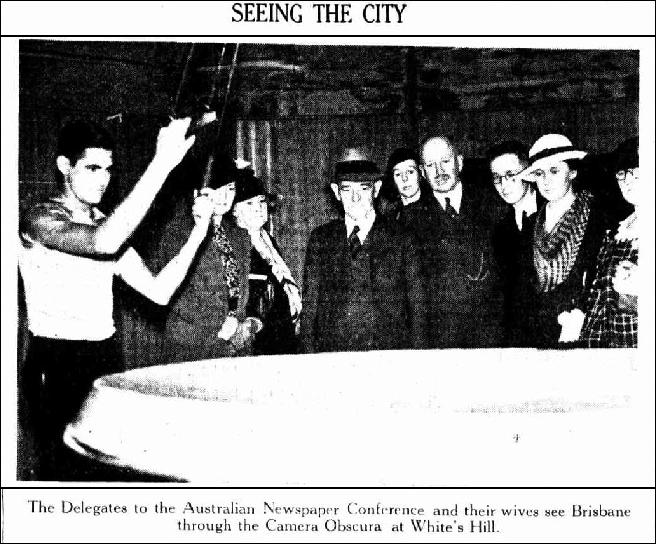
‘Seeing the City, The Delegates to the Australian Newspaper Conference and their wives see Brisbane through the Camera Obscura at White’s Hill’, The Telegraph, 1 June 1935 p13.

‘Seeing the City, The Delegates to the Australian Newspaper Conference and their wives see Brisbane through the Camera Obscura at White’s Hill’, The Telegraph, 1 June 1935 p13.

‘Children from the South Brisbane Intermediate School Rambling Club view the surroundings through the camera obscura at White’s Hill’, The Telegraph, 18 July 1936, p30

‘Children from the South Brisbane Intermediate School Rambling Club view the surroundings through the camera obscura at White’s Hill’, The Telegraph, 18 July 1936, p30

You’ll have to buy the Cloud Land catalogue to read about the history of Bob White, his camera obscura, and his telescopes — and their small but significant role in the psychogeography of Brisbane.  Some things still intrigue me. Why, for instance, in the Tele shots (which I think was the newspaper you read on the tram home from work) is the man operating the camera obscura only wearing a singlet, even though it is June, and possibly quite chilly. Is it some insolent semiotics directed to the well dressed southerners who look gingerly into the image? A year later, in July, the same man is dressed snugly and neatly for the visiting ramblers, who peer appreciatively into the bowl shaped image, which is duly blasted away by the flash of the Tele photographer’s Speed Graphic.

As a child I think I was dimly aware of the the long-ago existence of the hilltop machine. We lived not far from Whites Hill, but it was beyond the reach of our bikes. Although my father did occasionally drive us to the Whites Hill dump at the foot of the hill we never went up — but perhaps he mentioned the long-demolished camera obscura to me on the drive out, he was certainly the right age to have visited it as a kid. (Once, I remember, we  brought a load of broken-up concrete pathway to the Whites Hill dump, as we over-enthusiastically under-armed the chunks from the car boot my father accidentally whacked me on the shoulder with a flat piece, he was mortified, but after the initial shock, I found myself remarkably unharmed.)  The dump, chockers with rubbish culled from a thousand sixties backyards, has been smoothed over for playing fields, and is now barely a memory, less so, even, than the camera obscura.

Two suns at Tianjin

Thanks to my Hong Kong friends for pointing this out to me. They joke that when the Chinese leadership visited the site of Tianjin’s ‘Big Bang’, they commanded two suns to appear in the sky (check out the arm shadows). However Reuters still seems to be using the image without comment.

The image as it appears on Hong Kong's TVmost site.

The image as it appears on Hong Kong’s TVmost site.

TVmost's comment

TVmost’s comment

The image supplied by Reuters and used without comment by the South China Morning Post.

The image supplied by Reuters and used without comment by the South China Morning Post.

Paparazzi could be mistaken for terrorists and SHOT

So, the British Royal family has managed to avoid the real possibility of a slump, precipitated by Charles’s behaviour, back into a Georgian paradigm of mad kings and their mistresses. But the price of their successful reboot into Royal Family 2.0 has been that the new Royals must now be celebrities. Uber celebrities certainly, but celebrities nonetheless. And celebrities live or die by the camera. The work of the celebrity is to control the supply and demand for their photographs by a constant, daily labour of withholding, release and spin. This applies to every celebrity, from Lara Bingle (herself now rebooted as Lara Worthington) to Prince George. Perhaps Royal family 2.0 telegraphed their intention to rewrite the rulebook too obviously when they got, with too obvious a strategic calculation, Kate’s father and George’s grandfather to ineptly snap the first official photographs of the tot. Michael Middleton’s domestic photography, complete with bleached backgrounds and murky shadows, was meant to authentically read across to our own baby snaps, as though the Royals had somehow stumbled across a Jo Spence article in an old copy of TEN 8 magazine from the 1980s, or been given a Martin Parr book for Christmas. But, as every tabloid was forced to ask, were the first official photographs of George pleasingly cozy, or just bad?. Was their strategic calculation a miscalculation?

Then this week we see another egregious swing where, not the cozy power of domestic Britain, but the global power of terrorist-target Britain, is brought into play. A Kensington Palace encyclical warns off non-British paps. The commonwealth ones are thanked for following the script and waiting patiently for regular releases of new Prince George material, they way that grateful Apple users patiently wait for software upgrades. But the non-British paps are warned, in the words of The Mirror, that ‘they could be mistaken for terrorists, and SHOT” if they stalk George. So, in a Royal-created market where new images of George are the most prized on the planet, impoverished international paps are told to accept the steady corporate diet of regular updates on George’s progress, or place themselves in the same extra-judicial category as terrorists or refugees,

Clearly this Royal  reboot isn’t going to be all plain sailing, as the logic of celebrity culture and the global tabloid market for photographs clashes with the logic of state security. Could anyone at The Firm’s headquarters, Kensington Palace, have predicted these complications five years ago?

The Lights of London Town

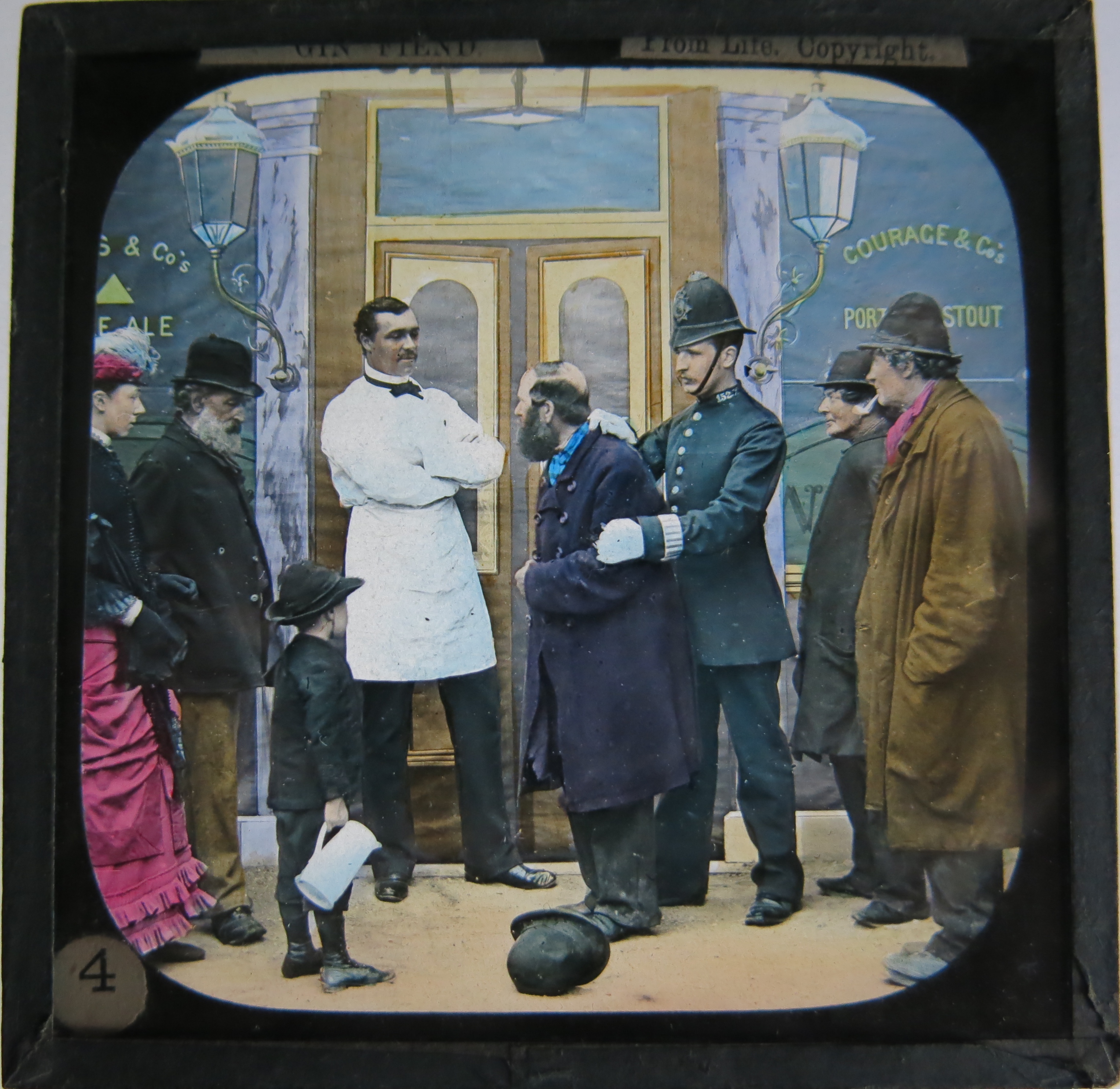
I am continually failing at controlling my addiction to buying magic lantern slides on ebay. I have just received in the post two remaining life-model slides out of what had originally been a set of four made, Richard Crangle’s estimable Lucerna magic lantern web resource tells me, by York & Son in 1892 to illustrate the 1880 poem by the massively famous melodramatist and social reformer George R Sims.


The Lights of London Town


The way was long and weary,

But gallantly they strode,

A country lad and lassie,

Along the weary road.

The night was dark and stormy,

But blithe of heart were they,

For shining in the distance

The Lights of London lay.


O gleaming lamps of London,

That gem the City’s crown,

What fortunes lie within you,

O Lights of London town.


The years passed on and found them

Within the mighty fold,

The years had brought them trouble,

But brought them little gold.

Oft from their garret window,

On long still summer nights,

They’d seek the far-off country,

Beyond the London Lights.


O mocking lamps of London,

What weary eyes look down,

And mourn the day they saw you,

O lights of London town


With faces worn and weary,

That told of sorrow’s load,

One day a man and woman

Crept down a country road.

They sought their native village,

Heart broken from the fray;

Yet shining still behind them,

The Lights of London lay.


O cruel lamps of London,

If tears your light could drown,

Your victims’ eyes would weep them,

O lights of London Town.


George R. Sims 1880


I love the zoom-in from distant St Pauls, framed by trees in the first slide and barely visible except perhaps in projection, to close-up St Pauls (in exactly the same spot on the screen) framed by the garret window in the second slide. I love the way, in the second slide, the poverty-signifier of the bare walls visually constricts London down to the single schematic London logo. Sims used the same theme for his smash hit play The Lights of London, which was filmed twice in the twentieth century, most recently in 1923. Of course subsequently these something more, walk on the wild side thematics permeated popular culture. Although, perhaps nowadays the urban moths of pop songs, films and art are more likely to be single chancers, rather than eloping couples.

The Lights of London, slide 2 of 4.

The Lights of London, slide 2 of 4.

The Lights of London, slide 3 of 4.

The Lights of London, slide 3 of 4.

Google Photos app tags black couple as gorillas

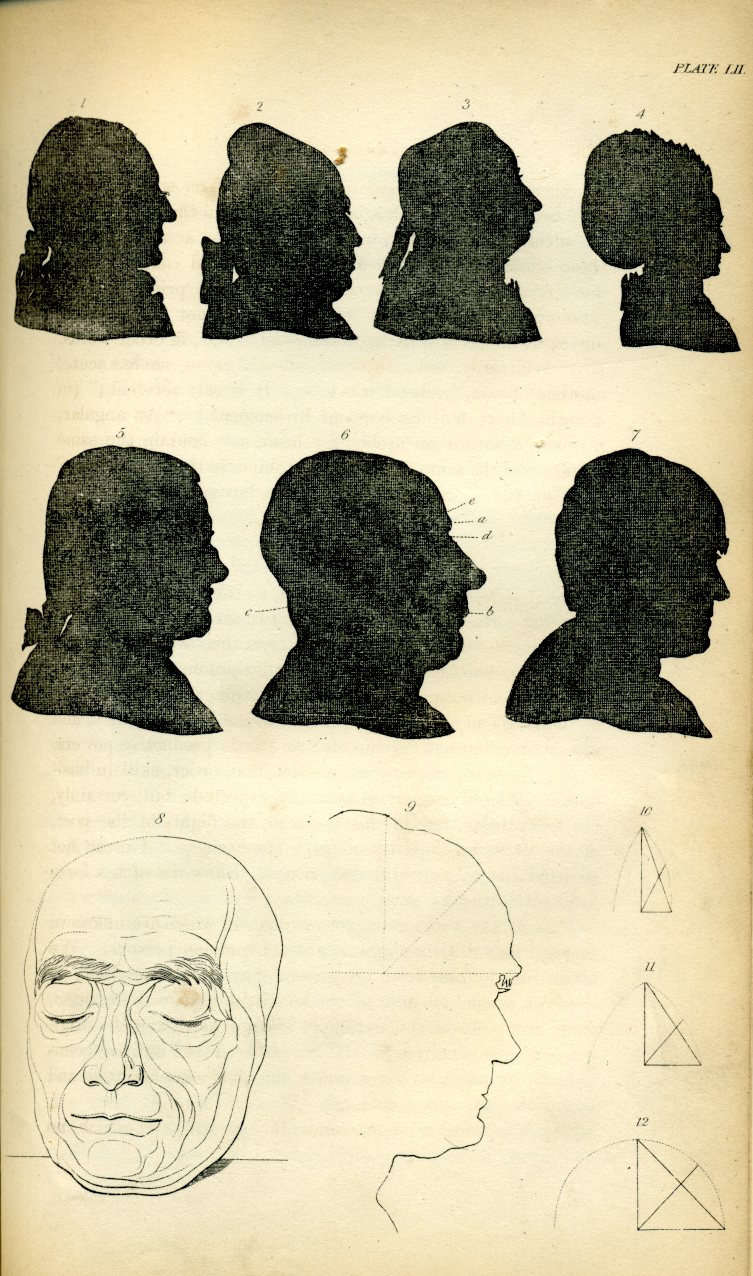
As discussed in my chapter ‘The Face in Digital Space‘ in the book The Culture of Photography in Public Space, the human face first entered abstract matrices of comparison in the late eighteenth century with the pioneering physiognomist Johann Kaspar Lavatar.  He placed the face in a psychological hierarchy using either zoological analogies or biometric algorithms. As a coda to my analysis is the recent news reports concerning Jacky Alcine, an early adopter of Google Photos, which automatically placed photos of him and his African-American friend in a folder called ‘Gorillas’. It is not possible for an algorithm to be in and of itself racist, but nonetheless Google scrambled to roll out a fix within two hours. However Google’s first fix led to yet more human faces to be categorised as gorillas, so it had to temporarily remove the word ‘gorilla’ as a category while they worked on more nuanced face recognition algorithms. These accidents point to how ‘live’ and ‘hot’ pseudo-Darwinian narratives still are in popular race discourse, such that Google quickly confessed to  being ‘appalled’ by the unintended result of their algorithmic facial analysis. It also points to how easily automatic tagging and profiling systems can overreach themselves in the newly fluid context of face recognition. The face is never neutral, therefore mathematical error quickly transcodes and multiplies itself into linguistic disaster.

Google Photos' algorithmic tagging of Jacky Alcine and friend.

Google Photos’ algorithmic tagging of Jacky Alcine and friend.

Johannes Kaspar Lavater, 'Essays in Physiognomy', plate 52.

Johannes Kaspar Lavater, ‘Essays in Physiognomy’, plate 52.

Johannes Kaspar Lavater, 'Essays in Physiognomy', plate 29.

Johannes Kaspar Lavater, ‘Essays in Physiognomy’, plate 29.

Ghost of Gallipoli formed on Wall at Australian War Memorial

I’m Canberra’s ‘ghost guy’, so when staff from the Faculty of Art and Design at the University of Canberra wanted somebody to open their exhibition Traces and Hauntings at Belconnen Arts Centre who were they going to call? I was delighted to, of course. When thinking about which angle on their work I could take I was pleased to come across this photograph in the Sun Herald (02/08/2015).  The shot was taken by Phillip Gordon of Newcastle, who observed and photographed figures with rifles and their kit by their sides who appeared on the Memorial wall in light rain. Spookily, the person Mr Gordon had come to pay his respects to, Bert Keepence, who had been killed at Lone Pine 100 years before almost to the week, had worked for the Water Board! A spokesperson for the War Memorial said it was just water stains on the sandstone, but as Mr Gordon said, “It blew me away for a bit”. Magical images persist, and are still reported on in our newspapers.

Ghosts of Gallipoli formed on the wall of the Australian War memorial, Sun Herald, 2 August 2015

Ghosts of Gallipoli formed on the wall of the Australian War Memorial, Sun Herald, 2 August 2015

Iconoclasm at the National Portrait Gallery

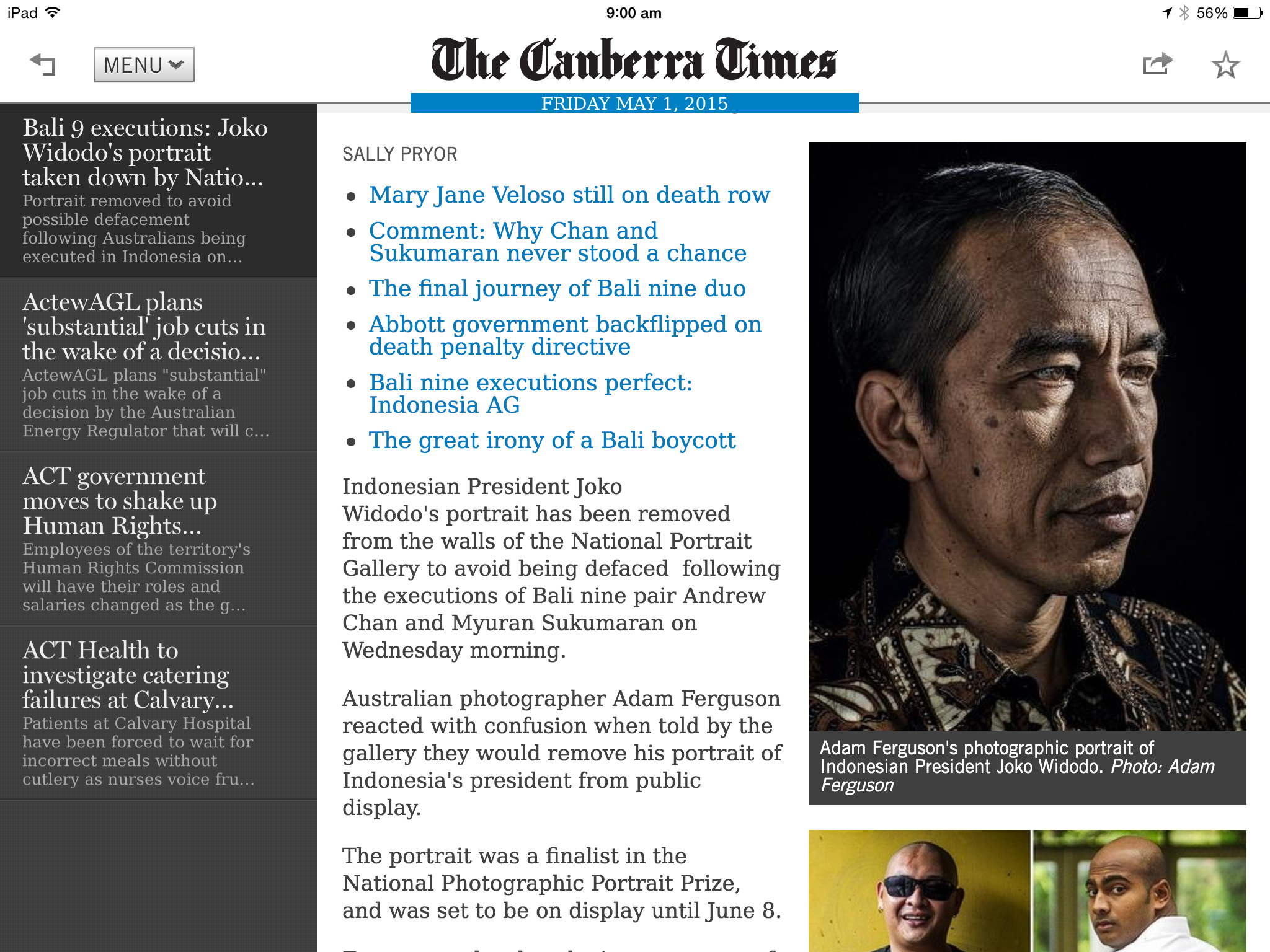
Why are the medieval forces of iconoclasm gaining strength in a visual environment which is reportedly becoming increasingly virtual and digital? After the spate of Rolfoclasm, previously reported on twice in this blog, comes Angus Trumble’s decision to remove Widodo’s portrait from the National Portrait Prize even though they don’t own it, and against the wishes of the person who does (and has already paid the gallery the competition entry fee and freight charges for the privilege of being considered for the prize) — Adam Ferguson. Part of Trumble’s reason was to protect it from rogue iconoclasm; and yes, Diane Arbuses were once spat on in New York, and Andreas Serrano’s Piss Christ was once attacked with an axe in Melbourne, but even if the worst happened Ferguson need only press the Start button on his printer once more to get his print back. However part of Trumble’s reason also appears to be to indulge in a bit of iconoclasm of his own, to align the Canberra gallery, and the honorific power of its walls, with the general anti-Wididodo mood of the nation and its politicians. But Trumble’s remarkable action does make us look at Ferguson’s picture again, with its heavy-handed use of photoshop to give Widodo’s face a Yousuf Karshian makeover of Statesman like gravitas. Trumble should have let Ferguson’s portrait remain on the wall, and let its overblown digital-Pictorialism provide the irony.

Canberra Times, 1 May, 2015

Canberra Times, 1 May, 2015

IMG_1380

Should art museums think of themselves as ‘collections’ or ‘archives’?

Should art museums think of themselves as ‘collections’ or ‘archives’?
Martyn Jolly
Photography has always been a numbers game, and the bigger the number the better. In the context where words like ‘exponential’ or ‘ballooning’ barely begin to describe the current state of the medium, is the notion of a photographic ‘collection’ relevant any more?

I’m talking along with Robyn Stacey

Art Gallery of New South wales, this Sunday 10.30am.

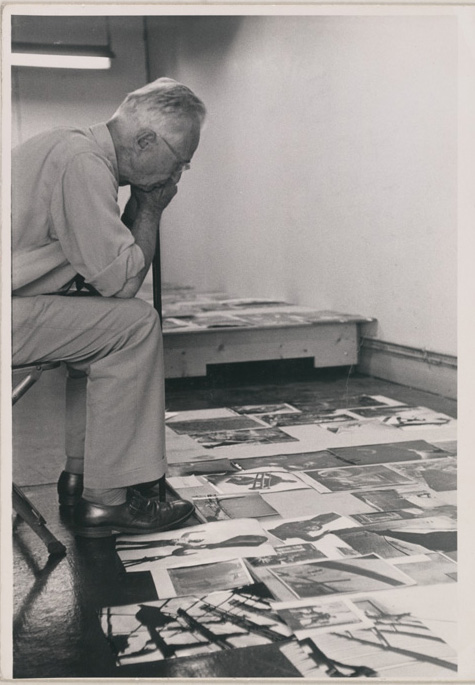
Edward Steichen at work in the Family of Man

Edward Steichen at work on the Family of Man

Rolfoclasm Continues

The Variety Club mural before the Rolfoclasm

The Variety Club mural before the Rolfoclasm

Rolfoclasm continues. Not only has he now been stripped of his Australian Honours, but he’s been painted out of the Variety mural at Victoria Markets and replaced with Stuart Wagstaff! But, hang on a minute, wasn’t Wagstaff the face of Benson and Hedges for decades? Didn’t the 116 ciggie ads — ‘when only the best will do’ —  which he knowingly made right up until the day cigarette advertising was finally banned in 1976 (then remaining on the B & H payroll until 1993) lead to the deaths of thousands of innocent Aussies? This shows the moral ambiguities which await any ‘clast when they self righteously take upon themselves the power of ‘clasm.

My Enlighten Canberra Projection

Martyn Jolly NLA projection for Enlighten Canberra

Martyn Jolly NLA projection for Enlighten Canberra

My ANU colleagues Lucien Leon, Kit Devine, Marcia Lochhead, Zoe Tulip, and myself, each designed an Enlighten Canberra projection for the National Library of Australia. Mine was derived from one of the hundreds of beautiful hand tinted magic lantern slides in the Library.

The explanatory text: The Reverend John Flynn was Superintendent of the Australian Inland Mission for almost forty years from 1912. A keen photographer, Flynn used magic lantern slides in the lectures he gave to publicise the work of the mission in providing medical, nursing and pastoral services to the people of the inland. The Library now holds a large collection of these beautifully hand-tinted images. The one used for this projection was taken in 1926 by a ‘Miss Colley’ and documents the Oodnadatta to Alice Springs Mail. Presumably it was used by Flynn to illustrate the vast distances  of the inland.